God is our home, and from birth to death, the whole of our lives is a journey to return home.
• Lisa Sharon Harper
• • •
On Sundays in Easter, we are hearing from Lisa Sharon Harper about The Very Good Gospel: How Everything Wrong Can Be Made Right. Her book is about the fullness of the good news that Jesus lived, died, rose again, and ascended into heaven to give us. Harper tells us that God’s good news is about shalom, the opposite of our often “thin” understanding of the gospel.
In chapter four of The Very Good Gospel, to illustrate the concept of shalom with God — the most fundamental relationship in need of restoration — Lisa Harper tells her own story of conversion and the ongoing healing of her relationship with God.
Until the end of the American Civil War, slaves were not permitted to legally marry. So rather than conducting a typical marriage ceremony, men and women who vowed to love, serve, and protect each other till death, the master’s whip, or their sale made them part signified their commitment by jumping over a handcrafted broom. On one side of the broom, they were single; on the other, the two became one in the spiritual realm. I’ve come to refer to the night I walked down the aisle at the church camp meeting as the night I jumped the broom with Jesus. That night Jesus said, “I love you, Lisa. You are worth pursuing. I have pursued you across two thousand years. I broke the barriers of time and space to be with you again.” That night I said yes to Jesus. I dropped my well water at the altar, and Jesus’s living water began to trickle up from my soul.
…My problems, issues, and brokenness weren’t all taken away that night. But something real— something transformative— had happened at the altar. I entered back into relationship with God through the person of Jesus. In the decades since August 21, 1983, God has revealed the presence and impact of broken relationships in my life. God revealed a deep sense of self-hatred and shame as well as broken relationships with men that stemmed from childhood abuse. God revealed a penchant toward overconsumption and a disregard for the rest of creation. God revealed hopelessness for the healing of my fractured family as well as the reality of my social, economic, and political status as an African American in the United States and within the evangelical church. God also revealed my American privilege on the global stage.
The revelations came slowly as I was able to handle them and with guidance from others who had trod the paths before me. In the chapters that follow, I will share some of what God has shown me on this journey. With each revelation, God has given me light, healing, and redemption. The healing has come in God’s way, in God’s time. And thirty-two years later, I am still waiting on God for some of the most stubborn brokenness in my soul and life to be healed. Meanwhile, I partner with God to bring healing to some of the most broken corners of our society and world.
Hello, friends, and welcome to the weekend. Hungry for some brunch?
In the true spirit of brunch, we have tried to offer up a little of everything: pictures, odd stories, serious issues, potty humor, beautiful cars, shower thoughts, and whatever else comes to my mind.
A friend from Brazil posted this on Facebook last night. And you thought your commute was bad:
When they first invented the clock, how did they know what time to set it to?
Is a cashless society a good thing? William J. Luther defends cash in Reason, not, primarily on utilitarian grounds, but for far deeper reasons:
The case for cash presumes that we should be free to go about our lives so long as our actions do not harm others. It maintains that governments are not entitled to the intimate details of people’s lives.
Whether they realize it or not, Rogoff and other demonetization advocates hold a progressive view of government. They think that existing laws and regulations have been rationally constructed by enlightened experts or are the product of an enlightened electorate. Adjust the requisite policy levers and one can fine-tune the social system.
Demonetization advocates are not utopian, to be sure. They understand that the world is complicated, that bad rules are occasionally adopted and once-good rules can persist long after their usefulness ends. But that just means a little more adjusting is in order. Eliminating cash, in their view, patches the hole in an otherwise well-designed system.
There is, of course, an alternative view of government—one that is skeptical that laws and regulations are so rationally designed. It maintains that they are far more likely to be a hodgepodge passed down and amended over time. Some of these rules do promote just conduct between individuals. But others merely reflect existing power structures: They were constructed to benefit some at the expense of others or to bolster a set of values that are not universally shared.
Classical liberals believe an individual has the right to pursue her own ends up to the point where her actions violate the rights of another. In general, therefore, they think the power of the state should be limited. Sure, governments might be used for good. But both theory and experience show that they will not always make the right choices. It is more important to limit the harm such a powerful institution might cause.
It is easy to see how these two views can lead to opposite conclusions regarding the desirability of cash. Physical currency enables one to disobey the government. If the government is a force for good, efforts to circumvent its orders are generally bad for society. On the other hand, if the government must have a compelling interest before it can justifiably interfere in people’s lives, a blanket ban on cash is too broad. Individuals should be more or less free to act privately. And governments should only invade those private spaces if there is sufficient reason to believe someone is being harmed by someone else. Call it a moral presumption of liberty.
Importantly, this argument for cash is not merely a defense of crime and tax evasion, as some on the other side might have you believe. It is a case for due process and financial privacy—bedrock jurisprudential principles in the West.
Thoughts?
From my sermon prep this week: “The tragedy that attends the rather thoroughgoing loss of hope in contemporary Western culture is that we are now trying to make the present eternal” — Gordon Fee, Paul’s letter to the Philippians
Why is the letter “W” in English pronounced “double-U”? Shouldn’t it be called “double-V”?
Well, we have some scienty news. Scientists have discovered that Uranus stinks. The finding comes courtesy of a study in Nature Astronomy, revealing that the cloud tops of Uranus are made principally of hydrogen sulfide, the gas that is principally responsible for the foul smell of rotten eggs and, yes, human flatulence. Of course, I only mention it here so I can reprint some of the headlines reporting this news:
The Senate this week confirmed CIA director Mike Pompeo as secretary of state. Trump says he’s excited, and looks forward to working with him for the next week or so.
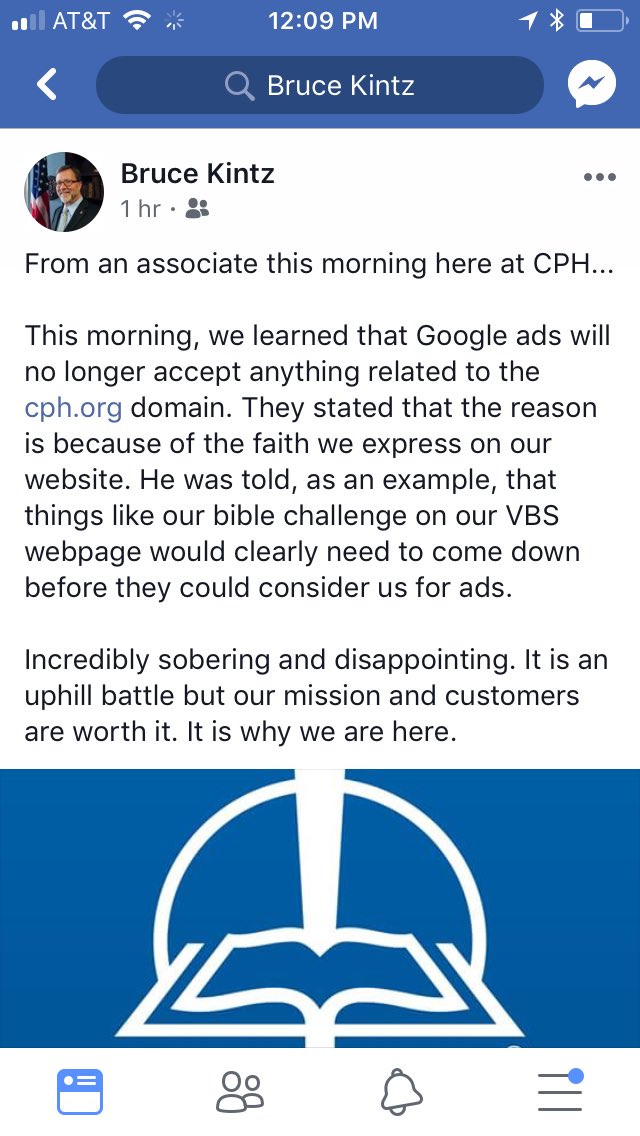
Lutheran Concordia Publishing House (CPH) says Google has refused to let them advertise:
You can distinguish between an alligator and a crocodile by paying attention to whether the animal sees you later or after a while.
Check out this guy:
This is the Mary river turtle, which is only found on the Mary river in Queensland, Australia. It made the news this week, as, unfortunately, part of a new list of the most vulnerable reptile species compiled by the Zoological Society of London (ZSL). It sports a green mohican, fleshy finger-like growths under its chin and can breathe through its genitals.
The Pew Research Center has released a large and detailed study of the religious beliefs of Americans. You can find the details here. Here are some of the more interesting infographics:
The Mayor of Hobeken, New Jersey has declared that all city-owned, single-occupancy restrooms, will be “gender-neutral” and will have signage to that effect. And Mayor Ravinder S. Bhalla plans to take it a step further asking the city council to vote for an ordinance that will make all bathrooms, including those in private establishments, accessible to all gender identities. After announcing the sweeping new policy, Bhalla then went on to complain that conservatives were obsessed with bathrooms. Okay, he didn’t really say that. Yet.
Big news from Korea, of course. The 65-year war between the north and south is over, after a historic meeting between the two presidents
893.35 quadrillion to one. That’s the likelihood of one person being attacked by a bear, a rattlesnake, and a shark. Guess what’s happened to Dylan McWilliams…all in just over three years. The 20-year-old man from Colorado recently survived a shark bite in Hawaii [1 chance in 11.5 million]. Less than a year before that, he was attacked by a 300-pound black bear [1 chance in 2.1 million]. And a few years before that, he was bitten by a rattlesnake while hiking [1 chance in 37,500]. People who do math say that works out to 893.35 quadrillion to one. Which is … a lot of zeros. So Dylan McWilliams is either the most unlikely man on earth…or the most tasty.
“In Italy, there was the pope and then there was Enzo.” This from Luca Dal Monte, biographer of Enzo Ferrari. His massive (over 1,000 pages in Italian) bio of the legendary car-maker has won rave reviews in Italy, and has just now been translated into English. You can read a fine review here, or you can just gaze at some of the most beautiful Ferrari’s ever built. Let us know your favorites in the comments:
Ferrari 125 S, 1947(the first ever road Ferrari)250 Mille Miglia Berlinetta (1953)250 GT California Spyder (1959)1961 Ferrari 250 GT SWB California Spider250 GTO, 1962-1964. The rarest. One recently sold for $52 million.Ferarri 275 (1967)
One of this year’s most talked-about books is Why Liberalism Failed, by the political scientist Patrick Deneen. To summarize all too briefly: The book makes the case that the American political tradition of individual rights and liberties—a tradition many regard as, well, liberating—is in fact responsible for much of what ails America today. In a review in Christianity Today, Jonathan Leeman agrees with much of Deneen’s critique
At its best, Patrick Deneen’s Why Liberalism Failed is a book that helps fish like us see the water. For that reason alone, you will benefit from it. The water in question here is the political philosophy of liberalism, what Deneen calls “an encompassing political ecosystem in which we have swum, unaware of its existence.”
When Deneen, who teaches political science at Notre Dame, writes of “liberalism,” he isn’t writing about the views held by contemporary Democratic politicians or self-described “progressives” (at least not directly). Instead, he has in mind the governing philosophy that animated the American Founders and has defined America ever since, influencing modern conservatives and liberals alike. Think freedom of speech and religion, individual liberty, equality under the law, private property rights, and other values most Americans take for granted. Think “life, liberty, and the pursuit of happiness.” Looking at the Western world more broadly, “liberalism” evokes the legacy of the Enlightenment, with its commitments to reason, scientific progress, tolerance, and liberation from all the allegedly oppressive traditions (political, social, ecclesiastical) of the past.
His argument is straightforward: Liberalism has failed by succeeding. It achieved what it set out to achieve, and we are all worse off for it.
Liberalism, for instance, claims to limit government and keep it accountable to the people. But now the state expands into nearly every area of our lives. And it’s run by an unaccountable executive-branch bureaucracy.
It affirms the equality of all people and seeks better standards of living. But it generates growing economic inequality and anxiety.
It pays lip-service to diversity and multi-culturalism. But beneath the different clothes, it homogenizes our worldviews. We all think the same.
It seeks to free us from the constraints of nature through science and technology. But it turns us into consumers who rob the future for the sake of immediate gratification.
In short, liberalism aspires to free us as individuals from all the traditions, values, judgments, and relationships that burden us, but we’re left feeling lonely, empty, and unfree.
How did this happen?
The basic problem of liberalism, argues Deneen, is its individualistic anthropology. It views human beings as fundamentally autonomous….No duties, responsibilities, debts, or relationships must finally define me. I must be free to define myself. The government’s job, furthermore, is to remove such obstacles to my freedom.
Ironically, as Deneen observes, the growth of individual freedom is connected to the growth of the state. The state moves into more and more areas of life to ensure people remain “free.” In other words: “Statism enables individualism, individualism demands statism.” No longer do we view ourselves in relationship to this middle layer of community and culture—churches, families, and all the cultural institutions which comprise our local communities. Rather, we become dependent on this large, abstract, impersonal state to maximize our freedom.
Both sides of today’s culture war, moreover, have been duped. The only real difference is method. Conservatives work for individual liberty and equal opportunity through a free market. Progressives aim at economic equality and freedom from traditional social norms through the government. Yet right and left are the two sides of “the same counterfeit coin,” says Deneen.
Liberalism might pretend to be neutral between different views of the good life, but in fact, it colonizes our institutions. It shapes how we think. It’s a sectarian wolf in a non-sectarian sheep’s clothing.
Leeman agrees with this analysis so far, but he adds:
Any view of government that does not place government under a higher authority makes government absolute. This is what liberalism has done. The original liberal theorists might have offered nice-sounding toasts to the laws of the Almighty. (Consider the Declaration of Independence, with its invocation of “Nature’s God” and inalienable rights endowed by our “Creator”). But they didn’t actually write God into the social contract. The contract is for believers and unbelievers alike. It stipulates that our obligation to obey government doesn’t come from God (how could you require that of an unbeliever?). It comes from our own consent.
Once a people view themselves as their own highest authority, whatever they most value becomes their god. And that god will rule their nation. Indeed, such a nation will even take good, God-given gifts and turn them into tyrannical idols. Communism did this with equality. Liberalism does this with liberty.
The culprit is not anthropology, per se. In fact, liberalism learned to affirm the dignity of every individual from Christianity. Liberalism’s trouble is that it wants the flower (the dignity of every individual) while cutting off its roots (the fact that we’re created in God’s image). It wants the anthropology without the theology. And such flowers never last.
Don’t you hate when you out in the woods, shirtless, when the Abercrombie photographers keep following you? I know I do.
Men, haven’t you wanted more advertising in your life? I mean, the stupid video ads blaring over the gas station pump are nice, but don’t you just wish for something more intrusive? Well, your prayers have been answered:
Mr. Friendly is a waterless public urinal that integrates a video screen to show you ads while you pee. From the Dutch manufacturer:
Every gentleman knows that a toilet break is a moment of relaxation. This is when we have “time on our hands”. We seize that perfect moment with our unique Mr.Friendly urinal. Sponsors of environmentally friendly urinals are happy with that moment when they can display a nice video to introduce themselves.
As a location holder you can also use the built-in display. Communicate your message at a unique moment.
But really, why stop here? Why not a projection into the bowl itself? That would be epic. I can see specially-produced ads that get your attention with a moving target . Sort of like Pong, with urine: Pee-Pong! And, coming soon, no doubt, some sort of ad playing in the poo stall. While you’re pooping it’s quietly whispers from behind.“You know what would be great after this? Ben and Jerry’s”.
Yes, I’m basically a middle-school boy.
Some pictures of the week, courtesy of the Atlantic:
Members of the Honourable Artillery Company fire a 62 gun salute from the Tower of London to welcome the birth of Prince Wiliam and Catherine, the Duchess of Cambridge’s third child, in London, Britain April 24, 2018. REUTERS/Hannah McKay – RC14D8FF2AC0A migrant, part of a group intercepted aboard two dinghies off the coast in the Mediterranean Sea, rests on a rescue boat upon arrival at the port of Malaga, Spain April 26, 2018. REUTERS/Jon Nazca TPX IMAGES OF THE DAY – RC199AD50190PORTADOWN, NORTHERN IRELAND – APRIL 22: Competitors take part in the annual Mud Madness event at Foymore Lodge on April 22, 2018 in Portadown, Northern Ireland. The adult version of the event includes two laps of an 8km course through 25 obstacles while the kids event is run over 2kms. The race is in it’s eleventh year and is sponsored by McVities Jaffa Cakes and event charity partner Marie Curie together with other numerous charities and fundraising groups. (Photo by Charles McQuillan/Getty Images)This photo taken on April 25, 2018 shows people rock climbing past a 100-meter-high convenience store on a cliff in Pingjiang in China’s central Hunan province. – The store was opened to offer food and water for rock climbers. (Photo by – / AFP) / China OUT (Photo credit should read -/AFP/Getty Images)A man enjoys the sunset at Pescadores beach in the Chorrillos district of Lima, Peru April 24, 2018. REUTERS/Mariana Bazo – RC1A5CB2CF80Newly ordained priests lie on the floor as Pope Francis leads a mass in Saint Peter’s Basilica at the Vatican, April 22, 2018. REUTERS/Tony Gentile – RC1D40B5DFA0A statue of a chained man is on display at the National Memorial for Peace and Justice, a new memorial to honor thousands of people killed in racist lynchings, Sunday, April 22, 2018, in Montgomery, Ala. The national memorial aims to teach about America’s past in hope of promoting understanding and healing. It’s scheduled to open on Thursday. (AP Photo/Brynn Anderson)A worker drives a vineyard fumigation tractor to spread an initial phytosanitary treatment against mildew and powdery mildew, two of the main diseases which threaten vines and develop notably due to rain, in the Bordeaux wine-growing region in southwestern France, on April 24, 2018. (Photo by GEORGES GOBET / AFP) (Photo credit should read GEORGES GOBET/AFP/Getty Images)PHILOMATH, OR – APRIL 25: Delivery robot ‘DAX’ rolls down a neighborhood street on April 25, 2018 in Philomath, Oregon. Joseph Sullivan, the inventor of DAX is a native of the small town. He says he plans to deploy 30 DAX-like robots to perform various delivery tasks in the next few months. Sullivan says with more Americans shopping online, delivery robots could reduce traffic and pollution. (Photo by Natalie Behring/Getty Images)SEOUL, SOUTH KOREA – APRIL 27: A South Korean weeps watching Kim Jung-Un’s crossing the MDL(Military Demarcation Line) for Inter-Korean Summit in live news streams through television broadcast at the Seoul Railway station on April 27, 2018 in Seoul, South Korea.
Finally, I hope you will take the time to listen to this amazing worship song, paired with some wonderful pictures:
Well, that’s it for this week, friends. Be nice in the comments, and we’ll see you next week.
Note from CM: I wrote this essay many, many years ago, I think in the late 1990s. Now that we have a new house, with a fine yard that requires a lot of mowing, I thought it might be time to dig this out. One very definite change: at my age, and with a new yard that is twice as big as I’ve ever owned, I will be looking to purchase a riding mower. But I’ll still mow some of it walking.
• • •
Mowing Lawn
Something there is that makes me sigh with pleasure over a newly mown lawn.
As long as they live with me, my children will probably be spared one of suburbia’s common chores. I will never let them mow lawn. It happens to be one of the favorite activities in my life, and I’m not giving it up.
I once heard a preacher talk about his father, also a minister. He said his dad loved to mow lawn and do yard work because, when he was finished he could stand back, look it over, and say like God after a day of creation, “It is good!” Something accomplished. A task completed. In a life filled with jobs that never got done, what with Sunday coming every week without fail and, of course, people work being what it is, it was good for the old man to have an assignment he could finish and be satisfied with.
That’s part of it, I guess. I reckon I do walk around after the mowing’s done to admire the neatness and order that’s been restored. Preacher or not, Lord knows that few things in anyone’s life these days are tidily arranged or brought to closure. Something there is that makes me sigh with pleasure over a newly mown lawn. Chaos subdued, that’s what it is.
Here is another reason: walking behind that mower just happens to be one of my prime thinking times. I’ve probably composed more songs, developed more new ideas, solved more problems, and gained more insight while mowing lawn than during any other activity. My boss should pay me to go home and mow. When following that machine, the drone of that Briggs and Stratton blocking out distractions, I am a monk, a Desert Father, a contemplative. Visions come to me. Answers to questions in my life somehow become clear when I’m trekking back and forth across my backyard, pulled by that machine.
I’ve always been able to think best when walking. In college, when pulling all-night marathon cram sessions, I would secure permission from a security guard, go to one of the empty classrooms and pace all night. From blackboard to last row, from one side of the room to the other, around and around, I would read through my notes, memorize, talk through concepts, make up acrostic devices to help me remember, set the material to song or rhyme — whatever it took to etch it into my mind.
The same pattern stood me in good stead when I took biblical Hebrew in summer school at seminary — a year of language learning (a challenge for me at any pace) in six weeks. I wrote so many songs out of my rhythmic walking meditations that I put them on tape.
Learning has always come by a walking beat for me. I will never, I repeat never, get a riding mower. Only by strict doctor’s orders.
My kids sometimes beg me to let them mow. Not very often, mind you, but once in a while. They’re still small enough that the big self-propelled mower I have is too powerful for them to control for very long. That’s good — I have a ready excuse for saying no. And when that doesn’t work, I usually mumble something about not having enough time to let them do it, and, you know, I can get it done more quickly if I just do it myself. Occasionally, I’ll mow off a square, reluctantly hand the mower over to one of them and let them do a spot. But that’s all. Then it’s my turn again. It’s time to return to my cloister walk, time to pull up the hood on my cloak and start chanting.
Come to think of it, I never actually could have been a Desert Father. Not enough grass. I would only work if some nearby oasis would let me come on Saturdays to mow.
The Lost World of the Flood: Mythology, Theology, and the Deluge Debate by Tremper Longman III and John H. Walton, Part 1- Proposition 3
We are blogging through the book: The Lost World of the Flood: Mythology, Theology, and the Deluge Debate by Tremper Longman III and John H. Walton. Today we will look at Proposition 3- Genesis 1-11 Uses Rhetorical Devices. A rhetorical device uses words in a certain way to convey meaning or to persuade. It can also be a technique to evoke an emotion on the part of the reader or audience. Common examples of rhetorical devices would be: analogy, allusion, hyperbole, metaphor, parallelism, simile, and understatement. While Walton and Longman note that the writers of Genesis mean to invoke events in a real past, there are clear signals that the writings aren’t particularly interested in reconstructing the past event as much as interpreting the past event in a way that furthers their theological message.
Not only biblical history—but in reality, all history is the author giving their perspective on the event. This is accomplished through selection—what is included as well as what’s left out—and what the author chooses to emphasize. In that sense all history is interpretation and all historical writing is rhetorically shaped. No author can be exhaustive in their telling of the event, so they are forced to choose what they think is important about the event. A moment’s reflection on this shows it cannot be any other way. Furthermore, they tell the story out of their worldview.
Walton and Longman assert that biblical authors are not particularly interested in recreating the event in its pure facticity; rather to use the event to communicate their theological message. They make the point that the event is not inspired; it’s the interpretation of the event that is inspired. For example, they cite John 20:30-31, “Jesus performed many other signs in the presence of his disciples, which are not recorded in this book. But these are written that you may believe that Jesus is the Messiah, the Son of God, and that by believing you may have life in his name.” The gospel author is selective in his choosing of what to report for the purpose of emphasizing the message of “Jesus in Messiah” is the important thing.
Another New Testament example is Matthew and Luke’s report of Jesus’ Sermon on the Mount. Among the differences in the two accounts is the location of where the sermon was given. Matthew says in 5:1 that “Now when Jesus saw the crowds, he went up on a mountainside and sat down.” Luke 6:17, however, says, “He went down with them and stood on a level place”. So can we reliably reconstruct the setting of the historical event? Not without a lot of arm waving and speculation. But do we need to? All we really need to do is acknowledge a historical event behind the text, while putting the interpretation of the text as the main thing. Walton and Longman say:
What is more important is the theological message communicated by this rhetorically shaped presentation of the historical event. What is the significance of the place where Jesus spoke the sermon? We can identify the theological purpose of Matthew quite easily once we remember he directs his Gospel at Jewish Christian readers. The location of the Sermon on the Mount, as we have come to refer to it, contributes to the presentation of Jesus as the fulfillment of the exodus. After having been baptized in the Jordan River (his Red Sea crossing) and being tempted in the wilderness for forty days and forty nights (as the Israelites spent forty years in the wilderness), Jesus then picked twelve disciples (reflecting the twelve tribes of Israel), and then delivered the Sermon on the Mount, where he spoke about the Law. No Jewish Christian could miss it. Jesus on a mountain talking about the law would make them think of God giving the law to Moses on Mount Sinai. Parallels with the exodus continue and culminate in Jesus’ crucifixion on the eve of the Passover, the annual celebration of the exodus.
Walton and Longman say they are particularly struck by the pervasive and intense use of figurative language used in the depiction of the past in Genesis 1-11. How do we know when an author intends to be figurative? One way is to acknowledge that we’d have to work hard to take it any other way. Like Psalm 23- “The Lord is my shepherd” is obviously meant to be a metaphor. God is not literally a shepherd and we are not literally sheep. So what is the obviously figurative language in Genesis 1-11? How about animals come forth from the ground (Gen. 2:19). God “opened” the eyes of Adam and Eve (Gen. 3:7), and God’s claim to Cain that Abel’s blood was crying out from the ground (Gen. 4:10).
Another example, which should be obvious, but is denied by young earth creationists, are the days of Genesis 1. Creation is described as taking place over a normal 6-day work week with a day of rest on the 7th. This rhetorical shaping of the event should help us see that the creation account is not a material account of origins but equates to a 7-day temple or palace inauguration. In the ANE when a palace or temple was dedicated the king or god was said to sit on his throne and “take his rest”. It means the god or king has completed his tasks, set everything in order, and now begins his normal rule and reign. Some examples from Scripture:
Psalm 132:7 We will go into his tabernacles: we will worship at his footstool. 8 Arise, O Lord, into thy rest; thou, and the ark of thy strength… 13 For the Lord hath chosen Zion; he hath desired it for his habitation. 14 This is my rest for ever: here will I dwell; for I have desired it.
Hebrews 4:10 For he that is entered into his rest, he also hath ceased from his own works, as God did from his.
Isaiah 66:1 Thus saith the Lord, The heaven is my throne, and the earth is my footstool: where is the house that ye build unto me? And where is the place of my rest?
The 7 days relate to the Cosmic Temple Inauguration. Man is installed in the temple as God’s Image i.e. His likeness, representative, priest, and caretaker. The use of rhetorical devices in the opening chapter of Genesis is much more obvious in the Hebrew than in the English translations. It is well known that in Hebrew thought the number seven symbolizes ‘wholeness’ as a characteristic of God’s perfection. A well-known example is the seven-candle lamp stand, or Menorah, which has long been a symbol of the Jewish faith and is the emblem of the modern State of Israel. In Genesis 1, multiples of seven appear in extraordinary ways. For ancient readers, who were accustomed to taking notice of such things, these multiples of seven conveyed a powerful message. Seven was the divine number, the number of goodness and perfection. Its omnipresence in the opening chapter of the Bible makes an unmistakable rhetorical point about the origin and nature of the universe itself. Consider the following:
The first sentence of Genesis 1 consists of seven Hebrew words. Instantly, the ancient reader’s attention is focused.
The second sentence contains exactly fourteen words. A rhetorical pattern is developing.
The word ‘earth’—one half of the created sphere—appears in the chapter 21 times.
The word ‘heaven’—the other half of the created sphere—also appears 21 times.
‘God’, the lead actor, is mentioned exactly 35 times (7 x 5)
The refrain ‘and it was so’, which concludes each creative act, occurs exactly seven times.
The summary statement ‘God saw that it was good’ also occurs seven times.
It hardly needs to be pointed out that the whole account is structured around seven scenes or seven days of the week.
To argue that the 7 days must be literal is a huge exercise in missing the point, especially since the sun, moon, and stars don’t come into being until the fourth day. Evening and morning are defined by the rising and setting of the sun. The hoop-jumping and arm-waving employed to explain how you can have a “day” without a sun are the prime example of what Walton and Longman are saying is “working too hard to take it any other way”. It is simply more natural to read the days of creation not as an actual week but as a figurative description of creation based on the common work week.
And lest anyone argue that the recognition of figurative language is only a modern invention, the authors quote Origen (On First Principles 4.3.1):
And who will be found simple enough to believe that like some farmer “God planted trees in the garden of Eden” and that he planted “the tree of life” in it, that is a visible tree that could be touched, so that someone could eat of this tree with corporeal teeth and gain life, and further could eat of another tree and receive the knowledge of “good and evil”? Moreover, we find God is said to stroll in the garden in the afternoon and Adam to hide under the tree. Surely, I think no one doubts that these statements are made by Scripture in the form of a figure by which they point to certain mysteries.
And what about Genesis 2:7? “And the Lord God formed man of the dust of the ground, and breathed into his nostrils the breath of life; and man became a living soul.” Walton and Longman say:
Such a description of the first man is patently figurative once we realize that God is a spiritual being and does not have lungs. Could God have taken human form to do this? I guess so, but why would we think so? Why should we presume that the ancient author has any interest in telling us how God actually did it?
The author is not particularly interested in giving us the data that would allow us to reconstruct the event behind the text in any kind of detail. Rather, the author wants us to understand the theological significance of these events, and he utilizes figurative language that ancient readers did (and modern readers should) recognize.
Somebody appears on your front stoop speaking your name, say, and you go down to open the door to see what’s up. Sometimes while it’s still raining, the sun comes out from behind the clouds, and suddenly, arching against the gray sky, there is a rainbow, which people stop doing whatever they’re doing to look at. They lay down their fishing nets, their tax forms, their bridge hands, their golf clubs, their newspapers to gaze at the sky because what is happening up there is so marvelous they can’t help themselves. Something like that, I think, is the way those twelve men Matthew names were called to become a church, plus Mary, Martha, Joanna, and all the other women and men who one way or another became part of it too. One way or another Christ called them. That’s how it happened. They saw the marvel of him arch across the grayness of things — the grayness of their own lives, perhaps, of life itself. They heard his voice calling their names. And they went.
They seem to have gone right on working at pretty much whatever they’d been working at before, which means that he didn’t so much call them out of their ordinary lives as he called them out of believing that ordinary life is ordinary. He called them to see that no matter how ordinary it may seem to us as we live it, life is extraordinary. “The Kingdom of God is at hand” is the way he put it to them, and the way he told them to put it to others. Life even at its most monotonous and backbreaking and heart-numbing has the Kingdom buried in it the way a field has treasures buried in it, he said. The Kingdom of God is as close to us as some precious keepsake we’ve been looking for for years, which is lying just in the next room under the rug all but crying out to us to come find it. If we only had eyes to see and ears to hear and wits to understand, we would know that the Kingdom of God in the sense of holiness, goodness, beauty is as close as breathing and is crying out to be born both within ourselves and within the world; we would know that the Kingdom of God is what we all of us hunger for above all other things even when we don’t know its name or realize that it’s what we’re starving to death for. The Kingdom of God is where our best dreams come from and our truest prayers. We glimpse it at those moments when we find ourselves being better than we are and wiser than we know. We catch sight of it when at some moment of crisis a strength seems to come to us that is greater than our own strength. The Kingdom of God is where we belong. It is home, and whether we realize it or not, I think we are all of us homesick for it.
There’s a nice article at Christianity Today challenging the prevalent, ongoing “focus on the family” mentality of the American church. In it, Rebecca McLaughlin gives five reasons “Why I Don’t Sit with My Husband at Church” on Sunday mornings.
There’s one big reason: McLaughlin believes that congregations must be more open to showing hospitality to strangers who visit or to ministering to others in the congregation who might have needs. This may mean separating from our spouses or children while at church in order to have the freedom to serve others.
Here are her five reasons under that umbrella:
Outsiders should not be outsiders.
Every Sunday, my husband and I walk into church and see someone new sitting alone. If possible, we go and sit with them. If there are two people, we divide. It’s often awkward and uncomfortable but nonetheless worth it. Why? Because the gospel is a story of juxtaposition in community: Jesus sat with a Samaritan woman and asked her for a drink. Phillip got into the chariot with an Ethiopian eunuch. The early church ate together.
Our Sunday mornings do not require “having it together,” but they do require being together. Newcomers need us and we need them.
Family is more than immediate family.
…the Christian family is not a closed unit but rather part of a larger ecosystem. Community starts now.
Although being a healthy family sometimes requires drawing boundaries, we must be careful how we operate in community. If we close off in biological pods every Sunday, we leave out singles, newcomers, and others. If we open up, we experience a gospel gift—the body of Christ in all its fullness.
Your spouse is too much like you.
If our churches are in the messy gospel business of fostering family across differences, then it makes sense to sit with others unlike us.
McLaughlin specifically mentions sitting with people of other races and cultural backgrounds, as well as joining people from various socioeconomic situations.
Your marriage isn’t only for your benefit.
Marriage is a gift that we steward not just for ourselves and our children but also for the church. People in healthy marriages are outward-looking, spurring [others] on to love and good deeds (Heb. 10:24).
We all need disillusionment with church.
Rebecca McLaughlin ends her article by reminding us that the church family itself is a community of the broken, who need each other to be available for mutual edification.
My hope is that, in the midst of our disillusionment with church, all of us—marrieds, singles, and kids—will grow in our sacrificial love for each other as we reach across our differences.
• • •
This piece resonates strongly with me.
Gail and I have always been partners in ministry, finding ways of reaching out to others when the church has gathered. We always viewed our relationship with each other and our children as part of a bigger web of relationships in which we were called to serve. We’ve depended on each other to allow the other a measure of independence so that we might be free to be available to those in need.
Even now, when we are no longer a pastoral couple in parish ministry, we actually attend different churches so that each of us can use our gifts in ministry. We attend and serve together when we’re able, but even then, it is not unusual that we find ourselves separately seeking out people who may need companionship or conversation.
And… I actually don’t think this is all that extraordinary in church communities. But it’s not the standard rhetoric, and I’m grateful that Rebecca McLaughlin had the courage to challenge us to see the bigger family perspective.
Some of you won’t like what I’m about to say, but trust me, I’m not shooting at you. I’m not shooting at anyone. I’m trying to be pastoral, if there’s any hope that I have any pastoral instincts left.
Here’s the word: Some of us need to let go of some of our theology.
***bottle flies through air***
No, seriously. Some of us need to get to the trash can and empty out some of what’s in the theology file.
***tomato in flight***
Some of you people have got some seriously bad theology, and it’s stinkin’ up your life.
***pitchforks and torches sighted***
I’m telling you this for your own good. Some- not all- but some of what you’re holding on to so tenaciously is messing you up. It may be messing up your life, the lives of others and its going to spread to your children and those you minister to.
***angry voices***
Looks like I better get this said before the rocks start flying.
I believe what Christians believe. It’s what my life is founded on.
My Christian faith is like a map. It tells me where I am, who I am, where I’ve been, where I’m going and what it’s all about.
But I don’t believe everything Christians teach. I don’t believe everything I used to believe. Maybe it’s my own critical, skeptical nature. Maybe it’s the “sola scriptura” Protestant in me. Maybe it’s living awhile and drawing some conclusions. Maybe it’s learning something about what matters.
Maybe it’s the Holy Spirit.
Or maybe, as some of you will conclude, I’m some kind of post modern jellyfish who quits the team when things get tough. One of those post-evangelical emerging liberals who prefers a big hug to a good systematic theology lecture.
I don’t understand our loyalty to things that make God so unlike the one who revealed God on earth. Why we take on whole planks of Christianity that Jesus wouldn’t endorse or recognize.
Personal reference. When I discovered that God wasn’t going to stop something that I believed with all my heart and mind he had to stop, I was really pulled up short. My “map” was well worn with 30+ years of telling who I was and what God was supposed to do for me.
And now, I was discovering that my map was flawed. I’d believed it, and I had a choice. I could deny what was happening around me, in me and in others.
Or I could throw out some theology.
That meant admitting some of my teachers were wrong. Or at the least, didn’t know all there was to know.
It meant that some of what I was sure God had showed to me wasn’t God at all. It was me, or someone else.
I was wrong. My theology was wrong. My collection of Bible verses was wrong.
I hadn’t quite arrived. I didn’t have all the answers.
Part of my misery in the situation I was facing was my collection of theology.
There’s a moment when you realize things aren’t as certain as you thought they were. It’s a scary moment, and you want to blame someone. This collection of verses, statements and opinions was supposed to keep this from happening. The right theology was supposed to keep the sky from falling; it was supposed to keep the trap doors from opening up under my feet.
It makes more than a few people angry to hear that following Jesus is less like math and more like white water rafting. It’s less like writing down the right answers to a test and more like trusting yourself into the hands of a doctor. It’s less like standing on concrete and more like bungee jumping.
It’s less like what you think it is and lot more like something you never thought about.
Some of you have been beating your head against the wall of your bad theology for years. You’ve beaten your head against that wall until you aren’t a very pleasant person to be around. You’ve made yourself and some other people miserable. You’ve been like the Pharisees: you gave others the burden you’d chosen to carry and more. You’ve taken your misery and made others more miserable.
You’ve blamed others. You’ve silently accused God. You’ve sat there, arrogantly, insisting that you were right no matter what was happening. You’ve sought out arguments to assure yourself that you were right.
But the whole time, there was the trash, and some of that trash was theology that needed to go.
I’ve thrown out some of my theology, and I haven’t replaced it all. As much as I would like to know the answer to some questions, I’ve concluded I’m not going to know the answer to them all. I’ve concluded that lots of the theology I’ve been exposed to and taught falls considerably far shorter of perfection than I ever imagined. Some of it hasn’t served anyone very well. Some of it was nothing more than my way of jumping on a passing bandwagon.
The other day, someone who knew a bit about me wrote me to question why I didn’t believe in “limited atonement.” He wanted my verses and my theology. He wanted me to debate, and if he won, to adopt his theology.
I couldn’t explain myself very well to this questioner. My reasons aren’t all about verses. They are about who God is; who I believe God shows himself to be in Jesus. It’s biblical, but it’s also existential. It’s about the shape and flavor of truth, not about who wins the debate.
I can’t bend my faith into the shape of a “limited atonement” Jesus. And I can’t explain that. I only know that I needed to throw that away, because it was shaping me and my world in a way that was taking me away from Jesus.
I don’t expect anyone to understand. It’s inside of me that, ultimately, his song has to ring true. If you can’t hear it, that doesn’t mean I don’t. Having everyone else tell me all about the music was taking away my desire to sing. And I am here to sing, not study music.
I’m pretty sure my questioner wrote me off because I wouldn’t sign up. That’s OK. I respect him, but here me clearly: I don’t need my theology — my opinion of my theology especially — to be that important. It’s unhealthy.
I believe a lot of things. I could teach through a course on theology without any problems. But the difference between myself now and myself in the past is that much of that theology is less essential than it used to be. It does not equal God and I won’t speak as if it does. I won’t pretend that my own thoughts about God are the place I ought to stop and announce what God is always thinking and doing.
Hopefully, it’s going to be a lot easier to have a theological housecleaning. In the future, I don’t plan to fall for the flattery that I’ve never changed my mind or said “I don’t know.”
I know. That’s me. The way too emotional, way too flexible, over-reacting Internet Monk. Baptist one day. Calvinist the next. Catholic tomorrow. Talking about being “Jesus shaped,” whatever that means.
And that’s my trash can in the corner, and what you’re smelling is what I finally threw out.
It was long overdue.
By the way, guess what? I’m still here, believing. Following Jesus, loving Jesus, wanting more of Jesus than ever before.
I don’t recommend my path be your path. I only ask if you’ve opened yourself to the possibility that a spiritual renovation in your life can’t keep all the old junk. Yes, you may upset someone or some important, self-validating group. You may, for a moment, wonder if you know who you are and where you are. It may frighten you to consider that Brother so and so or a sincere family member were wrong.
You may not be excited to discover that all that accumulated trash does not equal God.
I hope that soon you are excited. I am sad to see and hear some of you involved with a God that increasingly holds you hostage in a theological extortion scheme.
That’s not the God who came to us in Jesus. It’s not.
Sin is not about the personal imperfection of the self. Rather, sin is any act that breaks any of the relationships God declared very good in the beginning.
• Lisa Sharon Harper
• • •
On Sundays in Easter, we are hearing from Lisa Sharon Harper about The Very Good Gospel: How Everything Wrong Can Be Made Right. Her book is about the fullness of the good news that Jesus lived, died, rose again, and ascended into heaven to give us. Harper tells us that this good news is about shalom, the opposite of our often “thin” understanding of the gospel.
Chapter three has Lisa Harper exploring Genesis 2, a more intimate look at God’s good creation and the calling of humans to live in relationship with each other and the abundant creation in which he placed them.
On our most basic level, we were created for relationship with God, within community, with the rest of creation, and between genders. And on a deeper level, all human relationships depend on one central relationship: humanity’s relationship with God. After all, our life breath— life itself— was given by God. The community of the rest of creation was given by God. And, ultimately, the extravagant gift of bonded human companionship was the gift of God. What human fulfillment can there be apart from God?
The test that Adam and Eve faced was a test of their loving relationship with God. As Harper notes, two of the most fundamental characteristics of an adult love relationship are trust and choice. The couple in the garden was presented with an opportunity to trust God’s word, even when it involved a prohibition of something enticing, and to choose to act on that trust by not eating from the Tree of the Knowledge of Good and Evil.
At root the question they faced was “Do I love God?” This question is at the heart of all our relationships, and how we exercise trust and choice in the context of those relationships determines whether or not they advance shalom and strengthen the web of relationships in which we live.
Genesis 1 and 2 offer clear pictures of the Kingdom of God, showing what it looks like and what it requires of its citizens. God created us in an interconnected web of overwhelmingly good relationships, and love is the powerful tie that binds us together. The choices we make regarding how we gain peace reveal whether or not we trust God and choose God’s ways to peace and fulfillment. To choose the Tree of the Knowledge of Good and Evil— which results in greed, consumption, exploitation, nationalism, misogyny, and other-ism— is to become an enemy of God’s purposes in our world.
However, we all know what happened…
Love would have led the man and woman to ask God about the tree before eating from it. Love would have led them to trust God’s heart and intentions. But they didn’t love God with their actions, and down went the interconnected web of relationships that God had created. The relationships were ripped apart, separated by sin.
Lisa Harper observes that, in the biblical story, it is only thirteen chapters from “very good” to nations at war.
At root, this anti-shalom situation springs from the failure to love through trusting and choosing to honor love by our actions.
Hello, friends, and welcome to the weekend. Ready for some brunch?
We’ve got some silly stuff, some serious stuff, some sporty stuff. Let’s start with a public service announcement:
Scientists in New York have a polite request for you: STOP PEEING IN WALDEN POND. Well, they phrased more scienty: It will be “prudent to further reduce the flow of anthropogenic nutrients to Walden Pond under the warmer, wetter conditions that most climate models project for New England during the 21st century,” said the study, which was published in the journal PLOS One. Apparently, swimming in Walden Pond is a local family tradition (like cow-tipping here in central Indiana). And, as Curt Stager, the lead researcher, noted, “a certain percentage of the swimmers pee.” The urine, combined with warmer water, creates too much algae growth. So Stop, already.
Pictured: NOT your toilet!
Chaplain Mike loves something called, “baseball”. Apparently it involves a base and a ball. I don’t know. I never watch. I just write condescending things about it to piss him off. But I did find this article about it that some of you might find interesting. Apparently, some players of this game throw the ball towards another player who tries to hit it with a “bat” (I was confused until I realized they were not talking about the kind of bats that live in caves). Anyway, the article notes that some of the guys who throw the ball (called “pitchers”) can throw at over 100 miles an hour, but that they will never be able to throw it much faster than that:
Similar retroactive estimates have put Cleveland Indians pitcher Bob Feller’s fastest fastball at 107.6 miles per hour—and that was all the way back in 1946. Walter Johnson, who played from 1907 to 1927, is also thought to have thrown pitches at 100 mph or more. All of which is to say: Pitchers have been throwing north of 100-mph for the past 100 years. Over the same time period, advances in training, technology, nutrition, and, yes, drugs, have fueled a dramatic upward trend in world-record athletic performances, from the marathon to the long jump to the 50 meter freestyle. But when it comes to hurling a five-ounce, leather-wrapped sphere as fast as possible, humans appear to have plateaued.
The fact that we’re still here proves no-one has really had an “everything” bagel.
The TV show “Survivor” is coming back for a 37th season. They are apparently starting to run out of locations. They just announced that next season is being held at a Costco on a Saturday.
A Beyonce Mass? San Francisco’s Grace Cathedral has announced that it will host a special mass devoted to Queen Bey’s music and accomplishments on Wednesday, April 25. Hosted by the Vine, a weekly contemporary worship service espousing progressive theology set to a pop beat, the Beyoncé Mass will give parishioners a chance to sing along with their favorite songs and discover how the star’s art “opens a window into the lives of the marginalized and forgotten — particularly black females.”
Scientists are predicting that in a few years we’ll be able to smell the TV shows we watch. They claim this is good news, but do we really want to smell shows like “Hoarders”, “Dirty Jobs” or “Dog the Bounty Hunter”?
Every time I thought some hot 17-year-old, when I was like 13 or 14, really wanted to date me and I’d drive out to some big old mansion of theirs—and I mean real mansions, helicopter pads, private landing fields, you name it—God almighty, after the third or fourth time I had been with them, they’d tell me, ‘By the way, we worship this god and we want you to come to this event, we want you to engage in this activity because Lucifer is really God,’” Jones said.
They knew inter-dimensionally because believe me, they weren’t trying to get the average person to go do that. Everybody thought like, ‘Why are you dating the head cheerleader or the head senior when you’re a freshman in high school?’ Well, because she was driving me out there in her $100,000 Mercedes and that was 30-something years ago, driving me out there in her $100,000 Mercedes that’d be a $300,000 Maybach today, to try to get me into the cult.”
Now look how crazy that was 30-plus years ago. I’m 44, so I was about 13, 14, when that started. And look at what we’ve done against the globalists, look at Bohemian Grove, look at it all…I don’t tell you that story to sit there and impress you, because I’ll be honest with you, I love women and they were great pieces of ass. But they weren’t there to get me because they thought I was good-looking. They were there to get me because evil knew, because let me tell you they weren’t going after other 13- and 14-year-olds at the high school, evil knew what we were going to do in the future but evil failed.”
Well, I, for one, believe Alex Jones completely on this. Darn those time-travelling satanic hotties. And we need to take information like this very, very seriously.
It was reported today this week President Trump has been pushing for women’s health programs that are based on abstinence.
There’s talk of legalizing marijuana in Utah. However, Mormons are worried that marijuana may be a gateway drug to coffee. This reminds me of a joke we told when I was in a fundamentalist Baptist college: Why did our school prohibit pre-marital sex? They were afraid it might lead to dancing.
You’ve probably heard of the irreproducibility crisis. The Wall Street Journal had a disconcerting update:
Half the results published in peer-reviewed scientific journals are probably wrong. John Ioannidis, now a professor of medicine at Stanford, made headlines with that claim in 2005. Since then, researchers have confirmed his skepticism by trying—and often failing—to reproduce many influential journal articles.
The biggest newsmakers in the crisis have involved psychology. Consider three findings: Striking a “power pose” can improve a person’s hormone balance and increase tolerance for risk. Invoking a negative stereotype, such as by telling black test-takers that an exam measures intelligence, can measurably degrade performance. Playing a sorting game that involves quickly pairing faces (black or white) with bad and good words (“happy” or “death”) can reveal “implicit bias” and predict discrimination.
All three of these results received massive media attention, but independent researchers haven’t been able to reproduce any of them properly. It seems as if there’s no end of “scientific truths” that just aren’t so. For a 2015 article in Science, independent researchers tried to replicate 100 prominent psychology studies and succeeded with only 39% of them.
Further from the spotlight is a lot of equally flawed research that is often more consequential. In 2012 the biotechnology firm Amgen tried to reproduce 53 “landmark” studies in hematology and oncology. The company could only replicate six. Are doctors basing serious decisions about medical treatment on the rest?
The Louisiana State Senate has passed a ban on sex with animals by a vote of 25-10. Not quite sure why the split vote on this one…
Who Needs Freedom of Speech? The California legislature is considering Assembly Bill 2943, which makes it an “unlawful business practice” to engage in “a transaction intended to result or that results in the sale or lease of goods or services to any consumer” that advertise, offer to engage in, or do engage in “sexual orientation change efforts with an individual.”
The bill then defines “sexual orientations change efforts” as “any practices that seek to change an individual’s sexual orientation. This includes efforts to change behaviors or gender expressions, or to eliminate or reduce sexual or romantic attractions or feelings toward individuals of the same sex.” (Emphasis added.)
A broad reading of this law would outlaw the sale of any book, magazine or counseling service that does not promote the same view as the bill’s authors. In any case, it is a serious limitation on speech. Attorney David French points out the obvious:
No one doubts that Christian orthodoxy is contentious. No one doubts that its teachings on sexual morality are increasingly unpopular. But they remain constitutionally protected, and no state legislature should be permitted to ban a “good” (such as a book) or a “service” (like counseling) that makes these arguments and provides them to willing, consenting consumers. In fact, state law would lock in a sexual-revolution orthodoxy that all too often hurts the very people the state seeks to protect.
To take just one example, large numbers of children who exhibit gender dysphoria eventually “desist.” Their dysphoria resolves itself as they grow older. Indeed, there is serious research indicating that this is the “most likely outcome” for a child with gender dysphoria. Under AB 2943, the very act of communicating this truthful and indeed hopeful message could very well lead to legal jeopardy. This is extraordinary.
Despite the obvious constitutional problems the bill is presently sailing through — passing two committee votes by 8–2 and 8–1 margins.
Did you get your taxes done on time? On Tuesday the high volume of incoming data on the IRS website caused it to crash until later in the afternoon, displaying the message: “Planned Outage – April 17, 2018 to December 31, 9999.” Though the message beneath said it would be over on September 22, 2016. So, which is it? Either the outage will occur in the past, courtesy of some mischievous time traveler, or not until the conclusion of the next stage in human evolution. Either way, they’ll get your money.
This week Pope Francis was asked by a boy if his late father, an atheist, was in heaven. The boy noted that all the children were baptized, and that his father was a good man. This is Francis’ response, which he gave to the crowd:
What a beautiful thing, that a son says of his father, “He was good.” That man gave a beautiful testimony to his children, for his children to be able to say, “He was a good man.” It’s a beautiful testimony on the part of the son that he has inherited his dad’s strength, and also, that he has had the courage to cry before all of us. If that man was capable of raising children like this, it’s true, he was a good man. He was a good man. That man didn’t have the gift of faith, he wasn’t a believer, but he had his children baptized. He had a good heart. And this boy is doubting whether or not his dad, not having been a believer, is in Heaven. God is the one who decides who goes to heaven. But how does God’s heart react to a Dad like that? How? What do you think? … A dad’s heart! God has the heart of a father. And faced with a dad, a non-believer, who was able to have his children baptized and to give them that courage, do you think that God would be capable of leaving him far from Him? Do you think so? … Say it loudly, with courage…
All:No!
Pope Francis:Does God abandon his children?
All:No!
Pope Francis:Does God abandon His children when they are good?
All: No!
Pope Francis:There you go, Emanuele, this is your answer. God surely was proud of your dad, because it’s easier to have your children baptized when you are a believer, than to have them baptized when you are not a believer. Surely, this pleased God greatly. Talk with your father, pray to your father.
What are your thoughts?
Let’s finish with some cool pictures of China From Above, courtesy of The Atlantic:
People walk along a high cliff wall on a glass-floored sightseeing walkway in Zhangjiajie, Hunan Province,A lotus field in Quzhou, Zhejiang ProvinceTerraced fields near Tiger-Mouth Village, Yuanyang, Yun’nanLooking down on part of Hong Kong, near Victoria PeakNanpu Bridge in ShanghaiSolar panels cover south-facing hillsides in a part of rural ChinaA high-speed train travels through Anshun in southwest China’s Guizhou provinceThe Emperors Yan and Huang memorial in Henan Province. At 348 feet tall (106 meters), the statues were purposely built larger than Mount RushmoreGreen rice terraces viewed in the morning in Guizhou ProvinceAerial view of the Li River on a hazy day
Note from CM: I get emails with lots of questions, and I received one from a good friend the other day. Here is the query and how I answered it. How would you have responded?
• • •
Question:
Hi Chaplain Mike,
I miss our religion discussions. Do you believe that when a person dies, they go immediately to heaven? You are so knowledgeable about many things, so I know that you know that Catholics believe in Purgatory. Do others?
I remember a saying once, that went something like,
To be absent from the body is to be present with the Lord!
Just curious
thanks
• • •
My Answer:
Great question. Do you recall that “To be absent from the body is to be present with the Lord” was part of a scripture passage that was read at our friend ____________’s funeral? It’s from 2 Corinthians 5:1-10.
My short answer to your question is this, and this is exactly how I would put it:
I believe that when people die they enter into the care of God.
I believe that they are “with the Lord” in a way that we are not at this moment. I believe that they are with God in the realm of God (heaven) and that God is taking care of them, making them whole and new and preparing them for the resurrection and new creation.
Now the next part of your question is more tricky.
You suggest that being “in Purgatory” is something different than being “with the Lord.” But I would say it isn’t.
Purgatory is about being purified, and even if there is some kind of purifying that takes place after death, we are still in God’s realm and in God’s care during that purifying process.
So I would say that even those “in Purgatory” (and I don’t think it’s a separate “place”) are in God’s care. Catholics are taught in the Catechism to view Purgatory as a mercy, not a punishment.
That’s my short answer. If you want to read further, feel free. Here are a few perspectives on Purgatory.
Protestants do not believe in Purgatory. To them the idea of suffering for our sins after death implies that Jesus’ death was not sufficient to take away our sins and that we must somehow add to his sacrifice.
But they are missing the point. Most Protestants do not understand that Catholics are not talking about whether or not a person has been forgiven and accepted by God. Purgatory is not about that. According to the Catechism: “All who die in God’s grace and friendship, but still imperfectly purified, are indeed assured of their eternal salvation; but after death they undergo purification, so as to achieve the holiness necessary to enter the joy of heaven.”
I think this is possible, and there are some scriptures that may support it, such as:
According to the grace of God given to me, like a skilled master builder I laid a foundation, and someone else is building on it. Each builder must choose with care how to build on it. For no one can lay any foundation other than the one that has been laid; that foundation is Jesus Christ. Now if anyone builds on the foundation with gold, silver, precious stones, wood, hay, straw— the work of each builder will become visible, for the Day will disclose it, because it will be revealed with fire, and the fire will test what sort of work each has done. If what has been built on the foundation survives, the builder will receive a reward. If the work is burned, the builder will suffer loss; the builder will be saved, but only as through fire. (1 Cor 3:10-15)
Protestants emphasize that, when a person trusts Christ, he or she is declared righteous by God. We are forgiven and accepted by God. Now and forever.
However, many Protestants fail to read correctly a passage like 2 Corinthians 5:21 — “For our sake he [God] made him {Christ] to be sin who knew no sin, so that in him we might become the righteousness of God.”
Notice that it doesn’t say that Jesus took our sins so that we might be declared righteous. It says he took our sins so that we might become the righteousness of God.
God’s purpose for us is that we will actually become righteous people, and the Catholic teachings of purgatory and praying for the dead give expression to an understanding of how that happens. Obviously, when we die, none of us will be perfectly righteous. We need to be transformed to enter God’s presence. That’s where some kind of purifying process comes in.
Protestants, in my experience, just assume that God will instantaneously purify us at the moment of death and receive our souls into his presence without any need for further intervention.
Many Christians in the Eastern Orthodox churches are somewhere in between. They believe in praying for the dead, though not so much for their purification as for their comfort until the day of resurrection.
However, some emphasize at least the possibility of some purification of our souls after death. Here is a quote from Father Seraphim Rose:
In the Orthodox doctrine, on the other hand, which St. Mark teaches, the faithful who have died with small sins unconfessed, or who have not brought forth fruits of repentance for sins they have confessed, are cleansed of these sins either in the trial of death itself with its fear, or after death, when they are confined (but not permanently) in hell, by the prayers and Liturgies of the Church and good deeds performed for them by the faithful.
These things are mysteries that none of us can be dogmatic about. I like this quote from an article about the Orthodox church’s views and those of the early church fathers:
Some Church Fathers, such as St. Cyprian and St. Augustine of Hippo, seemed to believe in a purification after death. However, the character of this purification is never clarified, and especially (as St. Mark of Ephesus underlined at the Council of Florence) it seems there is no true distinction between heaven, hell and the so-called purgatory: all souls partake differently in the same mystical fire (which, according to St. Isaac of Syria, is God’s Love) but because of their spiritual change they are bound to different reactions: bliss for those who are in communion with him; purification for those in the process of being deified; and remorse for those who hated God during their earthly lives.
Because of this confusion and inability of the human language to understand these realities, the Church refrains from theological speculation. Instead, she affirms the unbroken Tradition of prayers for the dead, the certainty of eternal life, the rejection of reincarnation, and the communion of the Saints (those living and those who have fallen asleep in the Lord) in the same Body of Christ which is the Church. Private speculation is thus still possible as it was in the time of the Church Fathers.
I hope I haven’t bored you or over-explained all this.
The bottom line, in my view, is that those who die are in God’s care, and God will do what is best to make them whole and new in his presence.


Until the end of the American Civil War, slaves were not permitted to legally marry. So rather than conducting a typical marriage ceremony, men and women who vowed to love, serve, and protect each other till death, the master’s whip, or their sale made them part signified their commitment by jumping over a handcrafted broom. On one side of the broom, they were single; on the other, the two became one in the spiritual realm. I’ve come to refer to the night I walked down the aisle at the church camp meeting as the night I jumped the broom with Jesus. That night Jesus said, “I love you, Lisa. You are worth pursuing. I have pursued you across two thousand years. I broke the barriers of time and space to be with you again.” That night I said yes to Jesus. I dropped my well water at the altar, and Jesus’s living water began to trickle up from my soul.




























 The Internet Monk Archives