Because everything in this book is about my own questions, I have constantly struggled to find the right words. How can we speak responsibly today about death and resurrection, judgment and purgatory, hell and eternal life, and ultimately about the perfection of creation? What kind of language can the people of today understand? What words would come across as neither sanctimonious nor sappy?
As a hospice chaplain, my work revolves around supporting the dying and their families. I officiate many funerals. I deal with questions about death and what happens after people die. I am asked regularly about mysteries beyond our human experience in this life.
As a Christian, I heartily affirm the Apostles’ Creed: I believe in the resurrection of the dead and the life everlasting. But I do not want to fall into the trap of speaking about such things lightly, superficially, relying upon repeated formulae and illustrations and metaphors that inevitably come across as trite and unsatisfying.
If we are dealing with incomprehensible mysteries here, I don’t want my thinking and language about them to become stale, pedestrian, and unremarkable. I fear getting stuck peddling theological bromides that will leave my listeners and me unastonished.
I don’t want to stop exploring the mystery, delving ever deeper into possibilities that spark the imagination and spirit. I don’t want those who hear me to nod knowingly, with a banal sense of doctrinal agreement but without feeling the awesome pull of something unexplainable but real.
After all, we are not just talking about religious dogma or creedal statements to be memorized. We are talking about the most existential question we as human beings have, a question which encapsulates our deepest longings, hopes, and fears. Each one of us is moving toward the door of death. Each one of us will pass through it. And then what?
How can such a reality not get our most focused attention?
This is why I will be trying to grow in my exploration of these matters and asking you to join me. On Mondays at least until Easter Sunday I will be recording my thoughts and responses to books like Lohfink’s and others that I will be accessing in an attempt to blow the sides out of the boxes I’ve built around the subject of resurrection and eternal life.
There. Fuse lit. I can’t wait to see the fireworks.
Sermon: Epiphany IV — Confronting the Very Stuff of This World Mark 1:21-28
They went to Capernaum; and when the sabbath came, he entered the synagogue and taught. They were astounded at his teaching, for he taught them as one having authority, and not as the scribes. Just then there was in their synagogue a man with an unclean spirit, and he cried out, ‘What have you to do with us, Jesus of Nazareth? Have you come to destroy us? I know who you are, the Holy One of God.’ But Jesus rebuked him, saying, ‘Be silent, and come out of him!’ And the unclean spirit, throwing him into convulsions and crying with a loud voice, came out of him. They were all amazed, and they kept on asking one another, ‘What is this? A new teaching—with authority! He commands even the unclean spirits, and they obey him.’ At once his fame began to spread throughout the surrounding region of Galilee.
• • •
The Lord be with you.
I think it’s possible that one of the reasons many of us like coming here on Sunday morning is to escape the constant drumbeat of bad news and sad news and disturbing news that we hear and read about and watch on our TVs every day. Coming to church gives us a bit of respite; it provides a refuge from the ugliness that is constantly being reported. This, in contrast, is a place of good news, where we remember that God did not design us or our world for such chaos and corruption, where we recall that God did something about that by becoming incarnate and taking all the uglinesss of sin and death upon himself so that we might be set free from it.
But of course, we can’t escape the world. We are of this world, made from the very stuff of this world.
In February 1945, as the war in Europe drew to a close, a young Russian soldier named Alexander Solzhenitsyn was arrested by agents of the state’s spy agency. He was charged with referring to Joseph Stalin disrespectfully, though all he had called Stalin was “the man with the mustache.” And even though he was a loyal Communist, for this small “crime” he was sentenced to eight years in a labor camp.
Solzhenitsyn became a writer and in his works he exposed the evil and harsh conditions of the prison camps. However, he learned an important lesson as he reflected upon his experiences. It was so easy to think of evil and corruption as something “out there” — something done by bad people who were different than everyone else. In his book The Gulag Archipelago he wrote:
“If only it were all so simple! If only there were evil people somewhere insidiously committing evil deeds, and it were necessary only to separate them from the rest of us and destroy them. But the line dividing good and evil cuts through the heart of every human being. And who is willing to destroy a piece of his own heart?”
“The line dividing good and evil cuts through the heart of every human being.”
Like it or not, there is nowhere we can escape the world. We are of this world, made from the very stuff of this world. But that is exactly why Jesus became incarnate and lived and died and rose again. He came to confront and take on himself and transform the very stuff of this world.
In our Gospel text today, Mark chooses to highlight an incident that speaks to all of this. The very first public ministry action of Jesus that he records involves Jesus confronting evil and overcoming it. Surprisingly, this encounter does not take place “out there” in some place where evil seems obvious, but in a synagogue, a place of worship, on the sabbath, a holy day, as Jesus was teaching from the holy scriptures.
We might say that evil came to church that day. This poor man had been oppressed, suffering under the influence of powers that controlled him and kept him bound in a life that may have looked to us like mental illness along with some kind of physical seizure disorder. But underneath it all, as Jesus exposed here, were forces of sin, evil, and death that were keeping this man from enjoying the freedom and abundant life that God wants for everyone.
And because Jesus came to announce the dawning of God’s rule, God’s authority, God’s victory over powers like these, he demonstrated the power and newness of God’s kingdom by calling out this evil and dispensing of it.
Now I want to tell you this morning, this place, this church, this community is a place where things like this are meant to happen. This is not just a place of escape. This is not just a refuge from the hard and evil world around us. This is not where we came to get away from the bad news so that we can share only good news with one another.
No, this is meant to be a place where we bring ourselves before God and before one another. This is the place where we confess that “the line dividing good and evil cuts through my heart” and we need again to hear the word of forgiveness and absolution. And this is where, as one preacher said, “we gather in Christ’s name to support each other in escaping the hold these things have on us that we might grow as individuals and as a community.” (David Lose)
This is the place where ask God to confront in us, as Jesus did with that man in the synagogue, the powers that take hold of us and keep us from living full lives of faith, hope, and love.
You know, some people stay away from church because they think they’re not welcome here. Their lives are in some sort of disarray, they feel ashamed and embarrassed about choices they’ve made, about habits they’ve succumbed to, about patterns of living that they can’t seem to break.
I’ve had people tell me over the years that this is why they don’t come to worship. Everyone seems too perfect, too put-together. It makes them feel out of place, as if church were a showroom where we come to show off ourselves off as shiny and new.
Mark’s first story about Jesus’ ministry puts the lie to all of that. The community of faith is no different than anywhere else in the world. This is no showroom. This is a workshop, where God goes to work on each and every one of us, confronting the old within us and bringing forth the new in Christ.
May each one of us find the strength today, to pray as the psalmist prayed:
Search me, O God, and know my heart; test me and know my thoughts. See if there is any wicked way in me, and lead me in the way everlasting.
On Fridays, I’ll be doing a series for several weeks on one of the books I received for Christmas, Stephen Greenblatt’s The Rise and Fall of Adam and Eve.
This book takes a different tack on the Adam and Eve story than other things we’ve looked at in the past.
I’ve usually been most focused on those who specialize in biblical studies, whose work is invested in analyzing and understanding the text itself.
However, Greenblatt wants to explore this saga from a different angle: he is interested in understanding how “the story of Adam and Eve has over centuries decisively shaped conceptions of human origins and human destiny.”
And one thing that attracts him to this tale is the fact that, as a literary scholar, he thinks an unprejudiced and plain reading leads to the conclusion that the account is “fiction at its most fictional, a story that revels in the delights of make-believe,” yet, still today, so many people accept it as “unvarnished truth” of the historical origins of the universe and the human race.
For reasons that are at once tantalizing and elusive, these few verses in an ancient book have served as a mirror in which we seem to glimpse the whole, long history of our fears and desires. It has been both liberating and destructive, a hymn to human responsibility and a dark fable about human wretchedness, a celebration of daring and an incitement to violent misogyny. The range of responses it has aroused over thousands of years in innumerable individuals and communities is astonishing.
Greenblatt notes that ancient rabbis read the story to understand God’s intentions in creating humans and why we are here. On the other hand, Christians have seen in it the story of humankind’s fall into sinfulness and the resulting consequences, undone by the work of the new Adam, Jesus Christ, whose work was designed to restore Paradise to the faithful. Muslims have seen Adam as the original prophet of God, who after his sin became the first teacher and caretaker of the world. Adam’s wrongdoing was an error, not an “original sin” with effects passed down to his posterity. The story is, in their view, a warning to the faithful to resist the Satan.
Stephen Greenblatt goes further, remarking upon how, throughout the development of Western civilization ascetics, physicians, linguists, natural scientists, and philosophers have read this story to speculate on how it speaks to their particular disciplines and practices. Artists, of course, capitalized on this text to depict nature and the human body. Above all, ordinary people have seen themselves in this story in a variety of ways.
The story of Adam and Eve speaks to all of us. It addresses who we are, where we came from, why we love and why we suffer. Its vast reach seems part of its design. Though it serves as one of the foundation stones of three great world faiths, it precedes, or claims to precede any particular religion. It captures the strange way our species treats work, sex, and death — features of existence that we share with every other animal — as objects of speculation, as if they were contingent on something we have done, as if it could all have been otherwise.
• • •
Questions:
What has been your experience with the story of Adam and Eve (the first three chapters of Genesis)?
Polkinghorne begins this chapter by noting that even though he believes that parts of the Old Testament convey deep truth in the form of symbolic story that in other parts God chose to reveal the divine nature through a particular relation with an actual chosen nation of real people; so gaining knowledge of the actual history of that people must be of considerable importance. He believes, as do I, that Scripture is more than a symbolic story-book.
Nevertheless, the identification and evaluation of the historical content of the Hebrew Scriptures is a complex matter involving the work of dedicated scholars. Polkinghorne is not naïve to the fact that the world of scholarship is not immune from its own version of the tides of fashion, like any other human endeavor. To some people, the notion that we will judge the Bible like we judge any other human work of literature borders on blasphemous. It is like we are judging God; how dare we? Since it is the only book given by inspiration of God, it contains no errors, and it cannot be judged by the same critical standards which are used to judge the reliability of merely human works. I understand this position, I really do, and I do believe that the Bible is a unique book inspired by God. But if you don’t believe the Bible should be judged by the same standards of reliability and believability which are used to judge any other work of literature or history; to me you are making the Bible a magic book, which I think disrespects it rather than honors it. You are engaging in the fallacy of “special pleading” i.e. applying standards, principles, and/or rules to other people or circumstances, while making oneself or certain circumstances exempt from the same critical criteria, without providing adequate justification. To me, it’s a cop-out, if you believe the Bible is true and reveals Jesus who is TRUTH himself, then you won’t be afraid to subject it to a reasonably objective investigative process just as you would any other document that purports to give an account of some historical events.
Polkinghorne cites the generally accepted view that the Hebrew Bible was compiled in its present final form during and immediately after the Babylonian exile. Yet he finds it difficult not to believe that the editors were working with much material that had originated centuries earlier in Israelite history, providing a record of events that they needed to treat with great seriousness and respect. It seems to him that there is a good deal of evidence of such material still visible in the final form of the text.
For example, consider the book of Judges, with its account of happenings in Israel after the death of Joshua and before the formation of the kingdom under Saul. The book has a formulaic structure of fighting with neighboring tribes/nations followed by 40-year periods of calm while “the land had rest”. Polkinghorne says:
Sampson at the temple by Chagall
There is a primitive savagery about these stories—for example Jael’s murder of Sisera (ch. 4), the bloody tale of Abimelech (ch. 9), Jephthah’s rash vow that leads to the sacrifice of his daughter (ch. 11), and the highly ambiguous figure of the swaggering strong-man Samson (chs 13-16)—which accords well with these stories originating in the events of a turbulent archaic society, rather than being made up in a later period of calm reflection.
He notes that in archetypical events, such as the Exodus from Egypt, modern scholarship states that the exodus narrative is not history in the modern sense, since no archeological evidence has been found to support the historical accuracy of the biblical story. Nevertheless, he believes that the accounts cannot be mere confabulations and that it must surely be the case that there is a historical deposit contained in them, even if its detail has been developed and extended. In evaluating such evidence as can be gleaned from the attitudes toward Israel recorded in other Ancient Near Eastern chronicles and then using them in an attempt to provide checks on the historicity of the Hebrew Bible, we need to remember that the latter was written from the standpoint of Israel, while from the general standpoint of the ancient world, Israel must have been seen as simply a small nation sandwiched between the really great nations of Egypt, Assyria, and Babylon. Events in Israelite history need not be expected necessarily to have attracted the attention that would have caused a great nation to record them. He states:
The significance that we retrospectively recognize in Israel derives from the religious heritage that it has given us, and not from its geopolitical standing in the Ancient Near East. From a worldly point of view, Israel would surely have been seen to have an inflated estimate of its own importance.
Jewish thinking divides its scriptures into three sections: the Law, the Prophets, and the Writings. The Law (Torah) is contained in the Pentateuch, the first five books of the Hebrew Bible also known as “the Books of Moses”. Polkinghorne notes that the ancient world did not have our modern concern for the identity and integrity of the work of an individual author. In consequence, a book or books with a single name attached to it may quite often contain material not only from its apparent initial author, but also from later writers working in the same tradition.
Scholars believe there are several law codes in the Pentateuch, of which the oldest is thought to be the “Book of the Covenant” (Exodus 20-23) associated with the covenant at Sinai that contains the Ten Commandments. Although the code contains some primitively harsh injunctions, such as prescribing death for cursing parents, there are also significant injunctions to mercy and compassionate care. You are to return the cloak of a poor person before sundown as it might be their only cover (22:26), you shall not oppress the resident alien for you yourselves were once aliens in Egypt (23:9), even return an enemy’s animal to him (23:4).
The Prophets contain not only the latter prophets or the writing prophets, like Isaiah and Jeremiah, but the former prophets like Elijah and Elisha (Joshua to 2 Kings). Since those books contain extensive historical narrative, Polkinghorne believes that Israel saw the will of the Lord as being revealed as much through historical events as through explicit proclamations of judgement and hope. The Former Prophets seem mostly to have operated in the context of the court and issue warnings about political and religious policy addressed to the king. The later Writing Prophets condemn repeated acts of national apostasy, the forsaking of the Lord to follow false god of Canaanite religion, but they also fearlessly denounce exploitation of the poor and the vulnerable.
The view that conservative evangelicals promote, that Israel knew Yahweh as their only God from the time of Abraham, and how well they did as a nation depended on remembering that and worshiping and obeying Yahweh alone, is complicated by 1) the Bible’s own hints that at a more complicated early history, and 2) the growing body of scholarly knowledge of religion in the Canaanite region of which Israel was a part. As Pete Enns puts it:
“…the Hebrew scriptures contain a record of Israel’s diverse and changing views concerning God, where the experience of the Babylonian Exile was a major turning point in the emergence of monotheism (the belief that only one God exists) out of monolatry (many gods exist but only Yahweh is worthy of worship).”
This scholarly knowledge of how the Hebrew Scriptures came to be put together and their relation to the times and context of which they were a part cannot be un-learned. To me, there is no going back to a time when the earth was a flat disk supported by pillars and the sun and stars revolved around the earth; the church has moved on from those days. Eventually, in the near future, most of the church will move on and acknowledge the earth is ancient, the cycle of living and dying has gone on for a long time, that the history of that life, as revealed in its layers of rock, shows a developmental process has occurred which finally resulted in creature who can look back on that history and comprehend it and still give glory to the God who brought it all forth. The same is true of our knowledge of how the Hebrew Scriptures came to be. The way forward is, as Enns puts it:
Studying the Bible and Israel’s past is a regular reminder to me that my ultimate object of trust is God, not the Bible (or how I understand the Bible). That’s not knocking the Bible. It’s acknowledging that the Bible—even where it talks about God—is a relentlessly contextual collection of ancient literature that takes wisdom and patience to handle well, and in doing so drives us toward further contemplation of God here and now.
The third section of the Hebrew Bible is called the Writings and has something of a miscellaneous character. It includes much material that was valued for its spiritual insight and authority but didn’t fit into the Law or the Prophets. The longest, and surely most important, book in the Writings is the book of Psalms. The range of spiritual experience and expression to be found in the Psalms far exceeds anything in any other hymn book. The Psalms write with great frankness and honesty, rejoicing in God’s goodness but not afraid to protest in times of difficulty and suffering. A frequent and powerful form of the Psalms is “Lament”. A lament starts with protest at affliction, but is able to end with renewed trust in the ultimate goodness of God. As Polkinghorne says:
The Hebrew Bible was the scripture that permeated the thought of Jesus and the first Christians. It has the strangeness that come from its particular times and cultures, but it is also full of great riches. I believe that it is very important that the Old Testament retains it traditionally important place in the worship and thought of the Christian Church.
I know it seems troubling to some to portray the Scriptures as messy and troubling; not where everything lines up and makes sense all the time. But I don’t think the real problem is the scriptures, but the false expectations we sometimes bring to it. I don’t think the scriptures need to be protected or defended—if they are truly “God-breathed”, then as the book of Job says, from the negative viewpoint, about those who “…argue with useless words, with speeches that have no value… they will not escape the darkness; a flame will wither his shoots, and the breath of God’s mouth will carry him away.”(Job 15:3, 30). From the positive viewpoint, as you put your faith in the God the Scriptures portray, particularly Jesus, then God breathes the breath of Life into you and you become truly, fully alive. Perhaps, when we let the Scriptures be the Scriptures we have, rather than what we expect it ought to be–or need it to be–we will find a deeper faith in the process.
Rome Fountain. Photo by Christine Valters Paintner
Seeing with the Eyes of the Heart Contemplative Photography, part one
This past month has been a time focusing on extraordinary events in our life that revolve around relocating and getting settled into a new house. As a result, several things have gone by the wayside, including photography. I’m ready to charge up my camera’s batteries and get out there again in days to come.
Photography has always been a way for me to see more deeply, but my awareness of how this was an experience of prayer and often an encounter with the sacred emerged over time. It wasn’t until I embraced monastic spirituality in my late twenties that I began to experience photography consciously as a contemplative practice. I made a commitment as a Benedictine oblate at St. Placid Priory to deepen my own contemplative path. I began to see photography as a way to slow down and gaze deeply, noticing things I missed in my rushed life. For me, the camera provided an encounter with the eternal moment — that place in which I was able to suddenly become so present to what I was gazing upon that I lost track of time, allowing eternity to break in. It became a tool for deeper vision, supporting and enlivening contemplative seeing.
As my work began to take contemplative form, I began publishing my photos on my website AbbeyoftheArts.com in a prayerful and reflective context, as an adjunct to my writing. A global, online monastery, the website is dedicated to the integration of contemplative practice and creative expression. And in inviting others into contemplative space with me visually, I have been able to ask people to pause on a particular moment in time and see an aspect of the holy revealed in that image.
I encourage you to check out Abbey of the Arts, which I’ve added to our link list. Meanwhile, here on a weekly basis for the near future, I hope to link Paintner’s insights from Eyes of the Heart with photographs from my new surroundings and my own reflections about them. In so doing, I hope to welcome you into the journey which she invites us to share:
The process of art-making or prayer becomes a journey of discovery, where we open ourselves to what is being revealed moment by moment, rather than what we hope or expect to see. This book offers an invitation to transform photography into a spiritual practice by attending to the process, and thereby deepening our relationship to God, to the world around us, and to ourselves.
On Sunday, we sang one of my favorite hymns. It is sung to the tune “Slane,” an old Irish melody that also accompanies the hymn “Be Thou My Vision.” It describes an “ordinary day” of trusting Jesus and asking him to be with us through the course of that day.
“Lord of All Hopefulness” was penned by Joyce Torrens (1901-53), who wrote under the name of Jan Struther. Struther became famous for a newspaper column in which she presented herself as “Mrs Miniver.” A film based on the character won the Oscar for Best Picture in 1942, and its portrayal of our British friends helped woo American public opinion to support entry into World War II.
Jan Struther wrote this hymn for her neighbor, Canon Percy Dearmer of Westminster Abbey, to be included in his new edition of the hymnal Songs of Praise. It is a good example of an “all day” hymn that traces God’s involvement in our lives throughout the course of a day, from waking to sleeping.
• • •
Lord of all hopefulness, Lord of all joy,
Whose trust, ever childlike, no cares could destroy,
Be there at our waking, and give us, we pray,
Your bliss in our hearts, Lord,
At the break of the day.
Lord of all eagerness, Lord of all faith,
Whose strong hands were skilled at the plane and the lathe,
Be there at our labours and give us, we pray,
Your strength in our hearts, Lord,
At the noon of the day.
Lord of all kindliness, Lord of all grace,
Your hands swift to welcome, Your arms to embrace.
Be there at our homing, and give us, we pray,
Your love in our hearts, Lord,
At the eve of the day.
Lord of all gentleness, Lord of all calm,
Whose voice is contentment, whose presence is balm,
Be there at our sleeping, and give us, we pray,
Your peace in our hearts, Lord,
At the end of the day.
Note from CM: Here is another take on yesterday’s Gospel text (though Matthew’s version), one I wrote a few years ago. If anything, my vocational path is clearer, but the “reinvention of one’s self” continues. And I certainly feel even older. The journey continues…
• • •
The Calling of Saint Peter and Saint Andrew, Tissot
As Jesus walked along the shore of Lake Galilee, he saw two brothers who were fishermen, Simon (called Peter) and his brother Andrew, catching fish in the lake with a net. Jesus said to them, “Come with me, and I will teach you to catch people.” At once they left their nets and went with him.
He went on and saw two other brothers, James and John, the sons of Zebedee. They were in their boat with their father Zebedee, getting their nets ready. Jesus called them, and at once they left the boat and their father, and went with him.
– Matthew 4:18-22, GNT
❦
I like James Tissot’s painting of this Bible story. Though I think the artist overdid it when it comes to Jesus and his clothing, I find his depictions of young Peter and Andrew delightful.
Tissot made visits to the Holy Land in the 1880’s and saw then that fishermen used their nets in the shallows next to the shoreline to catch fish. Believing that the same method would have enabled Peter and Andrew to hear Jesus calling them from the nearby land, he portrayed them in similar position. He also observed that the fishermen wore nets around their waists in which to put the fish they caught so they could carry them easily, and so he included that in his depiction as well.
What I like most about this painting is the way James Tissot has captured the realistic physiques and body language of the two young disciples. You can see their boyish vigor as well as a bit of their eagerness and awkwardness, and you get a sense of their youthful curiosity about the Stranger calling to them — the One who is on the verge of changing their vocation and setting them on a new course for the rest of their lives.
And now I feel old.
I well remember the season when I splashed to shore as a young man, casting my nets aside for Jesus. At that time (believe it or not) I was trim and fit. I was also eager and awkward, ready without question to try anything, to walk any road. With lots of zeal and a little bit of knowledge, Jesus and a lot of gracious people gave me a chance. They didn’t laugh at my youthful appearance, they put up with my childish mistakes, and they were somehow willing to affirm my vocation as a minister. With feet still wet from the lake and a lot of wet behind the ears, I tromped into the church and into their living rooms and we talked about Jesus.
It all felt just as simple as that.
That was over 35 years ago. There are many days now when I wonder if this “follow me” business is strictly a young person’s game. Whatever eagerness I had then too often feels like “been there, done that” now. The awkwardness I currently exhibit is not that of a young athlete coming into his game, but of a man who increasingly looks for the railing to hold on to when descending the stairs. I’ve got shoes on now and they are dry and comfortable, and I tend to be cautious about someone — anyone — trying to change my life out of the blue.
I’ve been thinking these thoughts lately in a kind of mid-life fog. The kids are grown and out of the house. They have climbed up out of the water and are starting to walk their own paths. A lot of our friends have moved on to other things in other places. Our daily work goes on, and though the work is satisfying and meaningful, I can’t help but feeling there must be more out there for me, for us. Perhaps my recent efforts toward being ordained in a different church tradition will make clear a new path, but for now I wait.
This is turning into an unexpectedly difficult transition. I am finding the reinvention of one’s self that accompanies mid-life much more challenging than I ever thought it would be. It used to be pretty clear to me who I was. I was one of those young men in James Tissot’s painting. I heard the call. I looked up. Eagerly, awkwardly, I splashed to shore and went on an amazing journey.
But we’re a long way from the lake now.
I keep waiting for Jesus to pass by this dry and weary place.
Landscape on the Coast, with the Calling of St. Peter and St. Andrew. Jan Brueghel the Elder
Sermon: Epiphany III — Bada Bing Bada Boom? • Mark 1:14-20
Now after John was arrested, Jesus came to Galilee, proclaiming the good news of God, and saying, ‘The time is fulfilled, and the kingdom of God has come near; repent, and believe in the good news.’
As Jesus passed along the Sea of Galilee, he saw Simon and his brother Andrew casting a net into the lake—for they were fishermen. And Jesus said to them, ‘Follow me and I will make you fish for people.’ And immediately they left their nets and followed him. As he went a little farther, he saw James son of Zebedee and his brother John, who were in their boat mending the nets. Immediately he called them; and they left their father Zebedee in the boat with the hired men, and followed him.
• • •
The Lord be with you.
I have an idea that this morning’s Gospel text is one that pastors enjoy preaching. It comes across as simple and clear cut. Jesus brings the Good News and calls us to follow him. And here we have clear examples of people who heard that message, left everything, and followed him.
A message.
Decisions of faith.
Changed lives.
The scenario we see here portrays why most pastors go into ministry. This is the pattern they try to replicate week after week, sermon after sermon, in ministry program after ministry program.
Proclaim the message.
See people respond in faith.
Watch as God changes lives in an instant.
Bada bing. Bada boom.
This text can sound like an especially good model to fit our American can-do, consumeristic way of looking at things.
You’ve got a problem.
I’ve got a solution.
Buy my solution and, voila, your problem is fixed.
It’s infomercial Christianity.
Entire churches and church traditions are built on this pattern. This Midwest region where we live became famous in the 1800s for revivalistic forms of Christianity that were all about the change. They were all about the moment of decision. The dramatic conversion. The instantaneous transformation of a person’s life from darkness to light. Make a decision for Christ. Pray the sinner’s prayer. Walk the aisle or the sawdust trail and come to the altar.
Bada bing. Bada boom. The Spirit falls from heaven and you’re born again, a new creation, the old has vanished and the new has come.
I lived and ministered in that revivalistic world for many years. My particular brand was more focused on teaching than on evangelism, but in some of our fellow churches and denominations it was not uncommon for pastors to be fired for not having enough conversions, not enough believer’s baptisms, and not growing their churches sufficiently through having people make decisions for Christ. Not enough action. Not enough people making dramatic decisions to leave everything and follow Jesus. Not enough fire falling from heaven. Not enough bada bing bada boom.
It was expected that what we see here in Mark 1 would happen regularly and consistently. This was the pattern of ministry. Proclaim the message. Call for decision. Watch as God changes lives in an instant.
Bada bing. Bada boom.
I think differently about all this now.
First of all, I think what we see here in Mark 1 is the beginning of a long process of conversion in these disciples’ lives.
Please notice what Jesus says to them. Follow me. That signifies the beginning of a journey. They are not transformed here at this moment. They are being redirected onto a new path of ongoing transformation. I will agree that it was an important first step for them to get on that path. But that was just the start. We’re still in chapter one, and there is a long and winding road before these disciples.
Also notice that Jesus says, “I will make you” into something. The point of their following was to initiate a process of change as they interacted with Jesus. He would change them and the change would come along the way. It was in the following itself, in the long journey, in the involved process of living and walking with Christ that they would become new.
A second thing I want to note is that Jesus was calling these particular people to a particular vocation.
These were fishermen who were about to become disciples who would eventually become apostles. When Jesus says that he would be making them become fishers of people, he was saying that they would become his apprentices. He was going to show them how to do the same job he was called to do in the world. They were being called to vocational ministry here, to ordained service — to be ministers, evangelists, pastors, religious leaders. They were called out of the ordinary realms of life to special service. They were being asked to leave behind good and necessary vocations such as being fishermen to pursue religious vocations.
Now most of us are not called to that. And this story can mislead us if we don’t read it carefully. Most of us here this morning are not going to have an experience like this, where we’re called to abandon the world of everyday work to follow Jesus into a religious vocation. We are not going to leave behind our families, our jobs, and the places where we live and take up extraordinary assignments.
And we are not to envy people like Peter and Andrew and James and John and think they have something better than we do. God values each vocation and calls each of us by his grace to our own work, and by that work we each make our own unique contributions to his kingdom.
So when one of you hears Jesus say, “Follow me,” it may be to let him make you a more faithful farmer or electrician or schoolteacher or insurance salesperson or engineer. You may do your work in the home, raising children, providing for the needs of a household. You may work in a restaurant or in the construction trades. You may be a student. You may be retired from working for a living and now have the freedom to spend extra time with your family and with friends, helping them.
Whatever it may be, following Jesus is not a matter of leaving these ordinary ventures behind, but rather of moving more deeply into them with him, learning how to infuse those duties with faith, hope, and love by the grace and strength God gives you. God is calling most of us to stay on the boat and follow Jesus there.
This text is not bada bing bada boom anything.
This text opens the door to a long process of conversion, a journey with Jesus that enables us to become what he has created us to be, in whatever vocation he calls us to pursue.
May God guide us on this journey each and every day. Amen.
Hello, friends, and welcome to the weekend? Ready for some brunch?
Have you heard about the newest, stupid fad? The Tide Pod Challenge. People, mostly teens, are filming themselves eating a laundry pod. It’s like the ice bucket challenge, with two big differences. First, no money is going to charity. Second, a LOT of people are getting sick.
This has actually been a thing for a couple years now, but is getting worse. In 2016, poison control centers responded to 39 cases of intentional exposures among teenagers. In 2017, that number rose to 53 cases. In the first 15 days of 2018, officials have responded to 39 cases of intentional exposure. Of those 39 cases, 91 percent were for ingestion, the AAPCC said.
Tide and other groups have gone out of their way to tell people not to eat their laundry chemicals, something they obviously are kicking themselves for not thinking of earlier. And some stores are locking the pods down, like they are laundry meth.
Yes, its 2018, and we have to tell people not to eat laundry soap. And, being 2018, this has become the subject of all kinds of memes and jokes:
Emma Gibson was conceived a year after her mother was. That is not a typo. Emma Gibson was conceived in 1992, but not born until late last year. She was frozen as an embryo and donated to a Knoxville faith-based clinic that specializes in embryo donation and adoption. Last year, she was implanted into her mother, Tina Gibson. “This embryo and I could have been best friends,” Gibson, now 26, told CNN. Tina and her husband “adopted” the frozen embryo after learning he was likely infertile. It came from an anonymous couple who went through in vitro fertilization (where sperm and egg are united in a lab) and donated their remaining frozen embryos, which have remained suspended in time for more than two decades.
Benjamin, Tina, and Emma
Here’s a fun headline: Avocados Still Exist Thanks to Ancient Sloth Poops. The American Museum of Natural History recently shared a few facts about the Lestodon, an ancient 15-foot sloth that enjoyed eating avocados whole. As the animals (slowly) traveled around the land throughout the Cenozoic era, they pooped out avocado pits, and the fruit began to grow in new places around what is now North and South America. The Lestodon was one of the few creatures at the time could handle eating avocados whole, swallowing the pits along with the creamy flesh. If the Lestodons hadn’t ingested and subsequently relieved themselves of the avocado pits as they traveled, it’s very likely the fruit may have gone extinct.
By the way, The Ancient Sloth Poops would be an excellent name for a rock band.
A Michigan woman named Tara was driving home recently, and found herself behind an Amish buggy pulled by a lone horse. And a skier. Tied to the buggy.
Drunken Drone Flying is now illegal in New Jersey. The law prohibits flying a drone with a blood alcohol content of 0.08 percent or higher, the same as for driving a vehicle, or while drugged. Violators face up to six months in jail, a $1,000 fine or both.
Hopefully we’ll have less of this kind of stuff…
Officials in the Tairua estuary on the Coromandel Peninsula on New Zealand’s north island decided this year to put a ban on public alcohol consumption over the holidays. But some locals found a loophole: they built an island out of sand during a low tide, and it was just big enough to fit a picnic table and and some brews. Because the friends were in “international waters”, they technically were excluded from the alcohol ban, and watched the fireworks from their little island.
“Man, the only thing that would make this better is if we had some Tide pods!”
But authorities seemed to be taking the initiative in light-hearted spirit. “That’s creative thinking – if I had known [about it] I probably would have joined them,” said local police commander Inspector John Kelly when told about the sand island.
The first time Ashley McGuire had a baby, she and her husband had to wait 20 weeks to learn its sex. By her third, they found out at 10 weeks with a blood test. Technology has defined her pregnancies, she told me, from the apps that track weekly development to the ultrasounds that show the growing child. “My generation has grown up under an entirely different world of science and technology than the Roe generation,” she said. “We’re in a culture that is science-obsessed.”
“The pro-life message has been, for the last 40-something years, that the fetus … is a life, and it is a human life worthy of all the rights the rest of us have,” she said. “That’s been more of an abstract concept until the last decade or so.” But, she added, “when you’re seeing a baby sucking its thumb at 18 weeks, smiling, clapping,” it becomes “harder to square the idea that that 20-week-old, that unborn baby or fetus, is discardable.”
When Colleen Malloy, a neonatologist and faculty member at Northwestern University, discusses abortion with her colleagues, she says, “it’s kind of like the emperor is not wearing any clothes.” Medical teams spend enormous effort, time, and money to deliver babies safely and nurse premature infants back to health. Yet physicians often support abortion, even late into fetal development.
As medical techniques have become increasingly sophisticated, Malloy said, she has felt this tension acutely: A handful of medical centers in major cities can now perform surgeries on genetically abnormal fetuses while they’re still in the womb. … “The more I advanced in my field of neonatology, the more it just became the logical choice to recognize the developing fetus for what it is: a fetus, instead of some sort of sub-human form,” Malloy said. “It just became so obvious that these were just developing humans.”
But not all pro-life advocates want the movement to base its arguments on science:
“The question of whether the embryo or fetus is a person … is not answerable by science,” said Daniel Sulmasy, a professor of biomedical ethics …“Both sides tend to use scientific information when it is useful towards making a point that is based on … firmly and sincerely held philosophical and religious convictions.”
For all the ways that the pro-life movement might be seen as countering today’s en vogue sexual politics, its obsession with science is squarely of the moment. “We’ve become steeped in a culture in which only the data matter, and that makes us, in some ways, philosophically illiterate,” said Sulmasy, who is also a doctor. “We really don’t have the tools anymore for thinking and arguing outside of something that can be scientifically verified.”
The largest gadget show in the world, the Consumer Electronic Show, ended in Las Vegas last week. The most memorable new invention: Kohler’s Smart Toilet, designed to “make everyday moments better.”
At only $5,600, you can’t afford NOT to buy one!
Kohler’s high-end Numi toilets have been around for a few years but this latest version can be voice controlled, opens and closes automatically as your approach and even pre-heats the seat exactly to your liking. Mood lighting is standard.
You can even hook it up to your Amazon Echo, so you can ask Alexa to play encouraging music through the Numi’s built-in speaker. Which got me to thinking: what would be the most appropriate songs for your smart toilet to play when you take the Browns to the Superbowl? Here are a few suggestions for your playlist (add yours in the comments):
Every Move You Make I’ll be Watching You (The Police)
Release the Beast (Breakwater)
Patience (Guns and Roses)
Free Falling (Tom Petty)
Let it Go (Frozen)
Ring of Fire (Johnny Cash)
Oops, I did it Again (Brittany Spears)
Chocolate Rain (Tay Zonday)
Who Let the Dogs Out? (Baha Men)
Taking Care of Business (BTO)
NFL free agent Colin Kaepernickannounced Wednesday that he will name 10 beneficiaries over the next 10 days for the final $100,000 of his $1 million pledge to charity. Each organization picked will receive an additional $10,000 from a different celebrity.
The Mormon Church has picked a new leader (Russel Nelson) and he’s 93 years old. Which is why they’re getting together on Friday to pick another new leader. At least you can’t accuse them of ageism.
Top three Mormons; average age: 87.8. I bet they’ve never even tried Tide Pods.
At his introduction, there was this exchange between Nelson and Peggy Fletcher Stack, the Salt Lake Tribune’s award-winning religion reporter:
Stack: “So under President Monson we saw some real advances towards gender equity — the lowering of the missionary age, especially for sisters, and also adding women to some of the executive committees, but the Church leadership is still white, male, American. What will you do in your presidency to bring women, people of color, and international members into decision-making for the Church?”
Nelson: “That’s a good question, Peggy. I hope I can be forgiven if I say I have a special place in my heart for you. I know your mother. I know your father. I know all four of your grandparents. And I know your family — your missionary children who’ve distinguished themselves with wonderful service — so Peggy is special to me. Um, now what was your question?”
In case you haven’t seen one, here is a picture of a baby musk ox:
Miners in Africa have found a massive 910 carat diamond worth tens of millions of dollars. The diamond will go to either a museum or to Beyoncé the next time Jay-Z cheats on her.
Another odd headline:Toxic Extract Used in Poison Arrows Could Be The Future of Male Contraception. “Scientists have identified a chemical that could be suitable for a male contraceptive pill in a plant extract that African warriors and hunters traditionally used as a heart-stopping poison on their arrows. Researchers say ouabain, a toxic substance derived from two kinds of African plants … could serve as the basis for a working male pill.”
Men, meet your new birth control
The cold weather didn’t stop the tumbleweeds from tumbling in Texas last week:
Did you know there are now four ax-throwing bars in Massachusetts? And two more scheduled to open this spring in Boston? That’s right, alcohol and ax-throwing. What could go wrong? So far, all the customers give it one-and-a-half thumbs up.
Tomorrow is the AFC Championship game between the Patriots and the Jaguars. PLEASE, PLEASE win Jacksonville. And Tom Brady has injured his hand. People said, “What happened?” He said, “You know that new ax-throwing bar?”
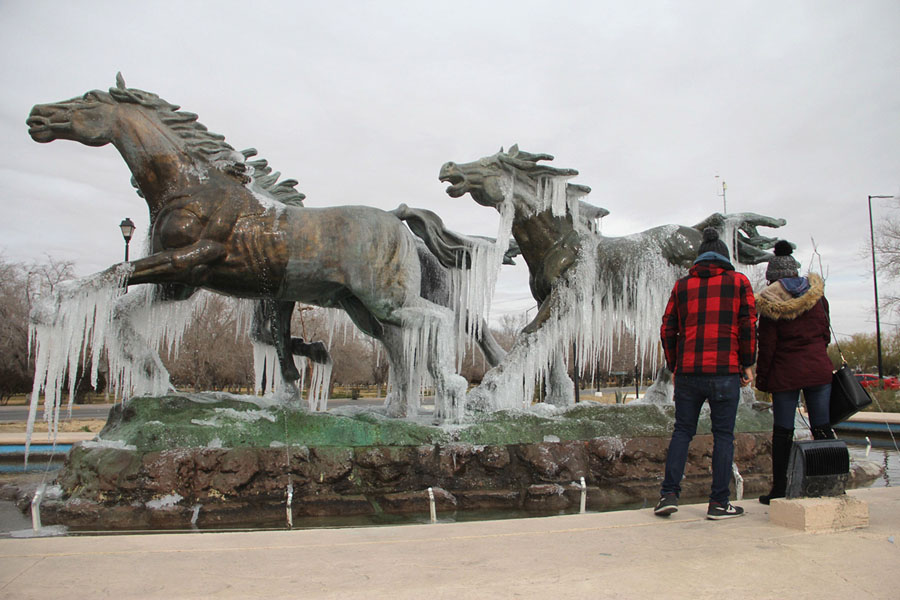
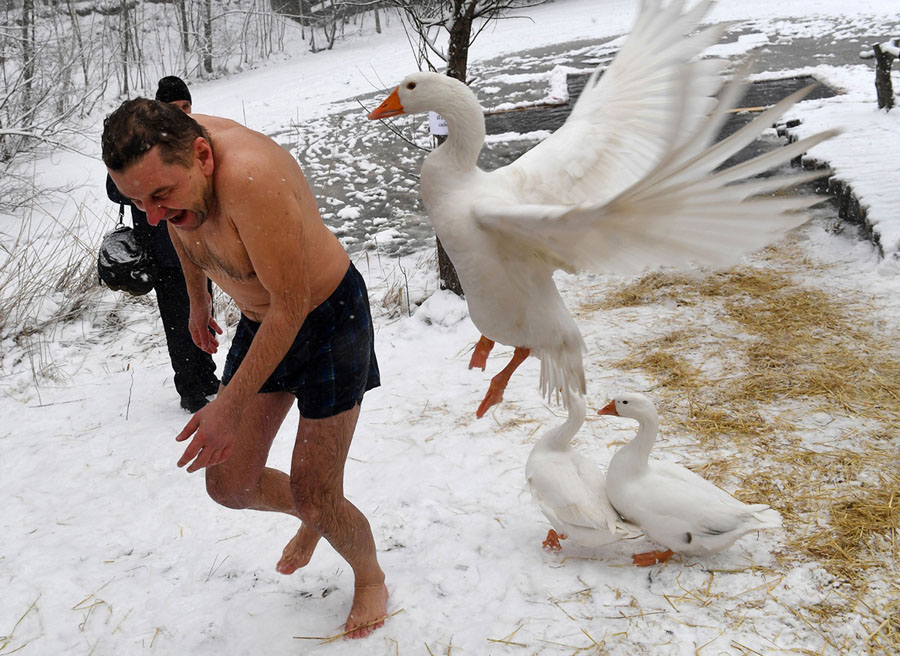
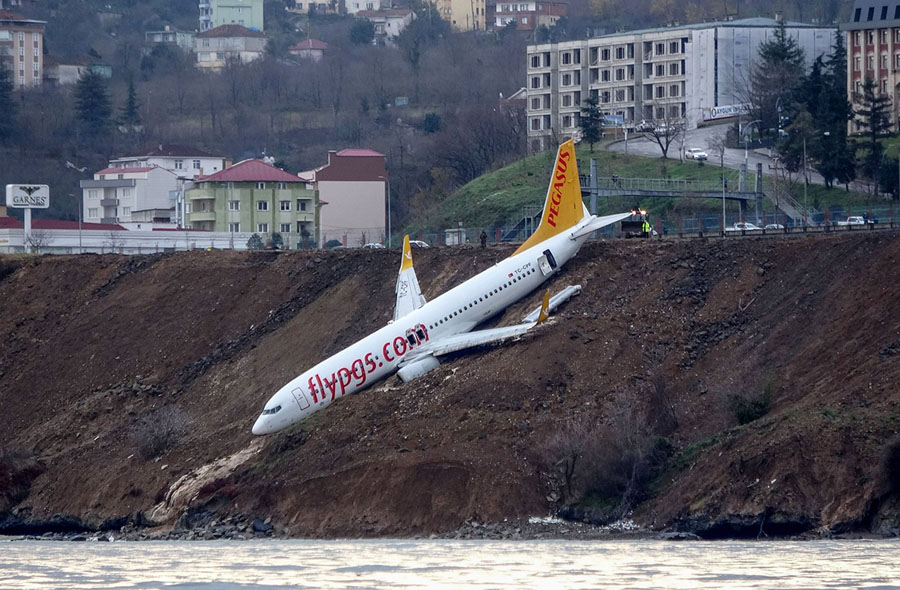
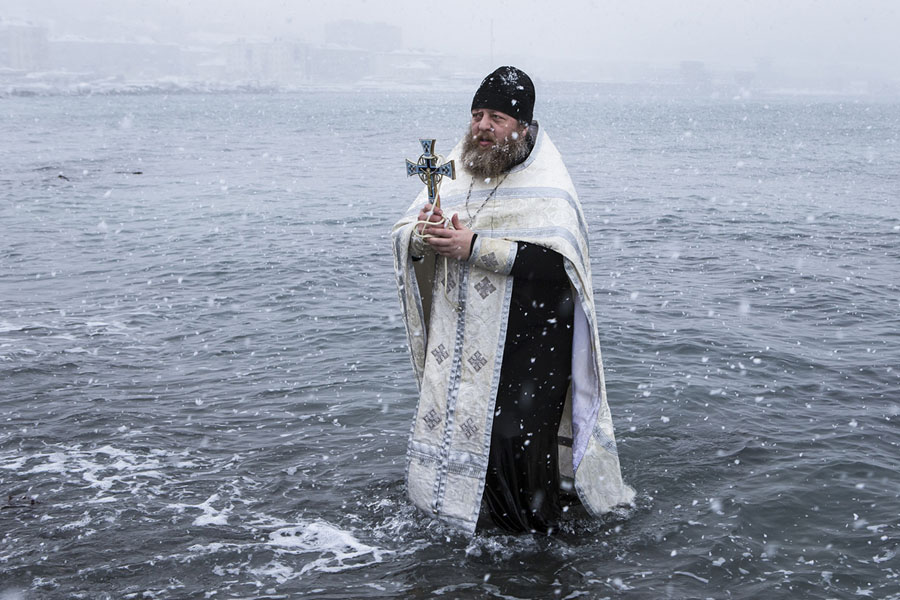
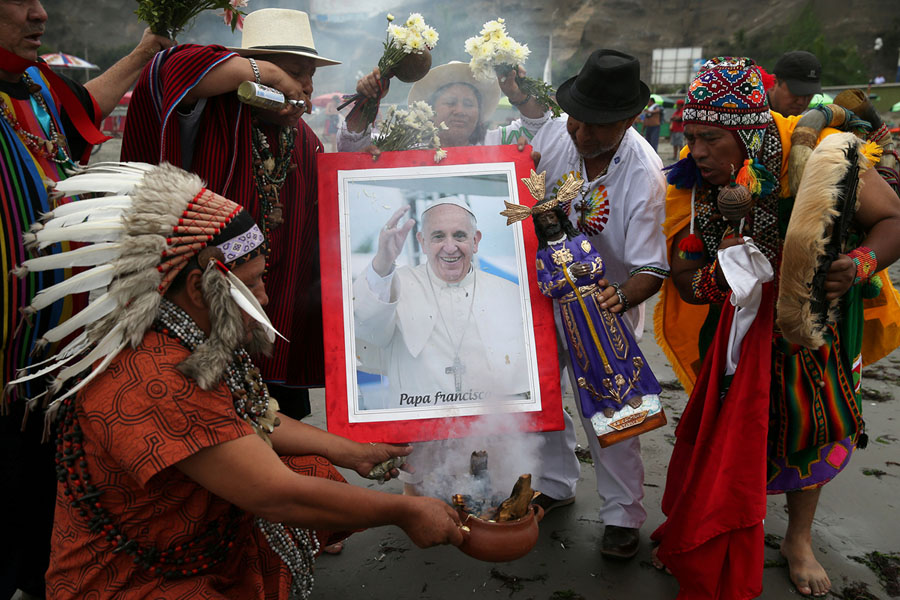
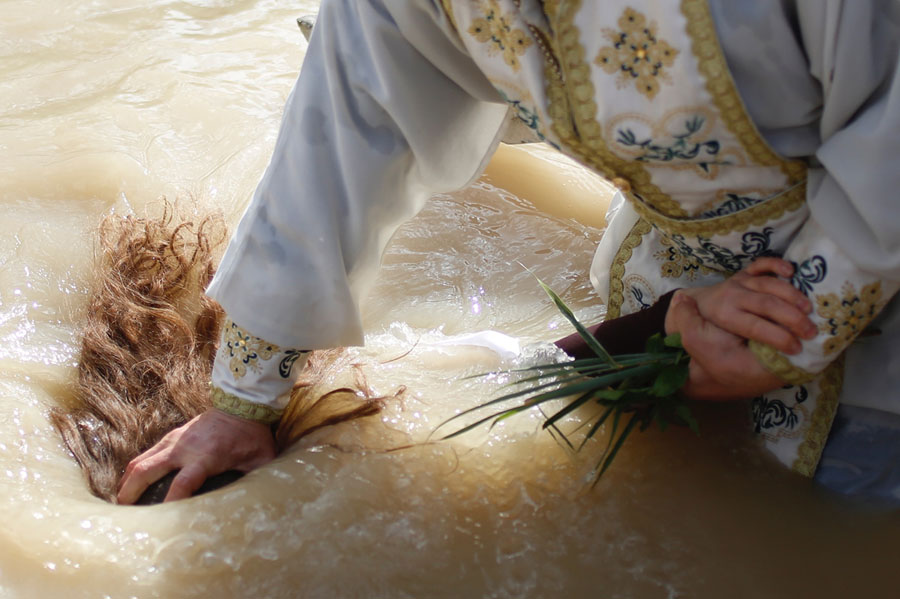
An Indian villager tries to tame a bull during a traditional bull-taming festival called “Jallikattu,” in the village of Palamedu, near Madurai, Tamil Nadu state, India, on January 15, 2018. Jallikattu involves releasing a bull into a crowd of people who then attempt to grab it and ride itA couple stands in front of a monument covered with ice during a cold snap in Ciudad Juarez, Chihuahua state, Mexico, on January 16, 2018A goose attacks an Orthodox believer as he leaves the icy waters of a pond during the celebration of the Orthodox Epiphany holiday in Kiev, Ukraine, on January 19, 2018A Pegasus Airlines Boeing 737 passenger plane is seen stuck in mud on an embankment a day after skidding off the airstrip after landing at Trabzon’s airport on the Black Sea coast on January 14, 2018.Russian monk Sergius blesses sea water before bathing on Epiphany in Kholmsk, 90 kilometers (56 miles) west of Yuzhno-Sakhalinsk, Sakhalin Island, in Russian Far East. Water that is blessed by a cleric on Epiphany is considered holy and pure until next year’s celebration, and is believed to have special powers of protection and healingActivists throw PET plastic bottles into the sea from an island near the DMZ in Incheon, South Korea, on January 17, 2018. The human rights group organized by North Korean defectors in South Korea tossed 500 plastic bottles into the sea near the Korean border with supplies including rice, 200 USB drives containing South Korean entertainment and anti-North Korean news, and a memo of a Christian message, in the hopes that North Korean residents would pick them up.A model presents a creation for fashion house Moschino during the Men’s Fall/Winter 2019 fashion shows in Milan on January 13, 2018Peruvian shamans perform a ritual prior to the arrival of Pope Francis in Peru, at Pescadores beach in Chorrillos, Lima, Peru, on January 17, 2018A person enters a sauna on the peak of Mount Lagazuoi in Cortina D’Ampezzo, Italy, on January 16, 2018A Christian Orthodox priest re-enacts the baptism of Jesus during the traditional Epiphany baptism ceremony at the Qasr-el Yahud baptism site in the Jordan River, near the West Bank town of Jericho, on January 18, 2018Devotees offer prayers before taking a holy bath in the Bagmati River at Pashupatinath Temple during the Swasthani Brata Katha festival in Kathmandu, Nepal, on January 16, 2018
Well, that’s it for this week, friends. Enjoy your Saturday. And be nice in the comments section please; we always learn more from people we disagree with. And I will be preaching tomorrow on Blessed Are the Meek, so don’t make me use any of you as bad examples!


 On Fridays, I’ll be doing a series for several weeks on one of the books I received for Christmas, Stephen Greenblatt’s

 – by John Polkinghorne

 And I’m excited to be accompanied on the next stage of my photographic journey by the thoughts of Christine Valters Paintner, author of
















 The Internet Monk Archives