Hymns that Got My Attention Sunday

Hymns that Got My Attention Sunday

Yesterday in church, it was the hymns that spoke to me. This is not uncommon. Music is like blood to me, the life of my inner being. In worship, more often than not, it is in the hymns that I hear the gospel in wonderful poetry, striking metaphors, and surprising epiphanies. As we sing to God, God is speaking to us.

Here are a few of the ways I heard God speak yesterday.

How Firm a Foundation

Our gathering hymn was How Firm a Foundation, which originated in John Rippon’s 1787 hymn book, and which contains bracing imagery from Isaiah sung to a sturdy early American folk tune. This hymn is meant to infuse encouragement into the believer, to reassure the pilgrim that, wherever the pathway may lie, nothing can separate us from God’s love and care.

Throughout all their lifetime my people shall prove
My sov’reign, eternal, unchangeable love

But what struck me this time was the Lutheran editing of the hymn to put the focus directly on Christ. Most versions that I have sung have the first verse going like this:

How firm a foundation, ye saints of the Lord
Is laid for your faith in his excellent Word!

This point was emphasized in the evangelical Bible churches I’ve attended and pastored, and whenever we were building a service around the theme of the scriptures, we turned to hymns like this one to reinforce the faithfulness of God in revealing himself to us through the words of the Bible.

However, this is how Lutherans sing that verse:

How firm a foundation, O saints of the Lord
Is laid for your faith in Christ Jesus, the Word!

When people think of the Lutheran tradition, it is “justification by faith” that comes first to mind in terms of doctrinal emphasis. But one thing I have learned on my Lutheran journey is that the real heart and center of the Lutheran focus is on Christ, and it is Christology that is primary. Many Lutheran scholars today would subsume “justification” under “union with Christ” as the main point Martin Luther made, especially in his early writings and sermons.

Jesus Christ is the Word of God, God’s full revelation of the divine to humankind. The Bible is a faithful testimony to Christ, but the true foundation of our faith is in the person of Christ himself.

Let Us Ever Walk with Jesus

The hymn we sang after the sermon was a fairly new one to me. Let Us Ever Walk with Jesus is a hymn from the Lutheran tradition, penned by 17th century Bohemian teacher and hymn-writer Sigmund von Birken. This hymn fit wonderfully with the message (see yesterday’s post), which emphasized living fully here in this world as we await the coming of Christ and the new creation.

It is one of the few hymns I’ve sung that gives clear voice to the idea of “dying with Christ.” That is, it speaks to the baptismal calling of the Christian, who has been “buried with Christ in baptism and raised to walk in newness of life.” Luther pointed out that our baptism calls us to die to sin and live in Christ’s resurrection power daily.

Let us gladly die with Jesus, since by death he conquered death
He will free us from destruction, give to us immortal breath
Let us mortify all passion that would lead us into sin
And the grave that shuts us in shall but prove the gate of heaven
Jesus, here with you I die, there to live with you on high

God of Tempest, God of Whirlwind

Our sending hymn at the conclusion of the service was this spirited cry to God to fill us and thrust us out to live and proclaim the good news of Christ. The text of God of Tempest, God of Whirlwind is from the 20th century, written by Rev. Dr. Herman G. Stuempfle, who was president of Lutheran Theological Seminary in Gettysburg, PA. We sang it to the tune CWM RHONDDA, which many recognize from Guide Me, O Thou Great Jehovah and God of Grace and God of Glory.

Listen to some of its fervent petitions for God to move among us and through us:

Drive us out from sheltered comfort
Past these walls your people send

God of blazing, God of burning
All that blocks your purpose, purge!

God of earthquake, God of thunder
Shake us loose from lethargy!
Break the chains of sin asunder
For earth’s healing set us free!

God of passion, God unsleeping
Stir in us love’s restlessness!

The vivid verbs in this hymn strike home again and again in this appeal for God to revive, renew, reform, and recommission us to go into our world each day with passionate purpose.

Sermon: Firmly Situated in This World

Sower. Van Gogh

Sermon: 2 Thessalonians 3:6-13

Now we command you, beloved, in the name of our Lord Jesus Christ, to keep away from believers who are living in idleness and not according to the tradition that they received from us. For you yourselves know how you ought to imitate us; we were not idle when we were with you, and we did not eat anyone’s bread without paying for it; but with toil and labor we worked night and day, so that we might not burden any of you. This was not because we do not have that right, but in order to give you an example to imitate. For even when we were with you, we gave you this command: Anyone unwilling to work should not eat. For we hear that some of you are living in idleness, mere busybodies, not doing any work. Now such persons we command and exhort in the Lord Jesus Christ to do their work quietly and to earn their own living. Brothers and sisters, do not be weary in doing what is right.

The Lord be with you.

There is a kind of Christianity that is very world-denying. An old gospel song represents this way of looking at the world:

This world is not my home, I’m just a-passin’ through
My treasures are laid up somewhere beyond the blue
The angels beckon me from heaven’s open door
And I can’t feel at home in this world anymore.

This kind of Christianity is “other-worldly” — seeing this life and this world as only some kind of necessary and often burdensome preparation for life in a glorious heaven somewhere — kind of like a grueling practice before the real game. And it is often linked with certain views about prophecy and the end of the world. There is a fascination with the second coming and the signs of the times and the events of the end times. Ordinary life in this world pales in comparison with the thrill of imagining all the spectacular and supernatural ways they believe God is going to intervene in this world at the end.

Throughout church history, groups have taken this way of thinking to extremes. One such group was known as the Millerites. A preacher named William Miller in New York state attracted a large following by preaching that Christ was coming back soon. In the early 1840s he preached at hundreds of tent meetings across America and predicted that Jesus would come back between the spring of 1843 and the spring of 1844. Other people began to study the Bible and came up with more precise dates, and large numbers of folks took these prophecies seriously and began to prepare for the end.

The date of October 22, 1844, was eventually understood as the day when Christ would return and the faithful would ascend to heaven. Devoted Millerites stopped working to get ready for the coming event and began selling or giving away their worldly possessions. They even donned white robes as they prepared to ascend to heaven.

Guess what? It didn’t happen, did it? The world went on, life went on, and the Millerites’ other-worldly hopes were dashed.

When we moved from Vermont to Waukegan, Illinois so that I could attend seminary, we were close to a town called Zion, Illinois. The name ought to give you a clue about its history. We visited a church called the Christian Catholic Apostolic Church, but only later learned about the city and the church’s background.

The church was directly in the center of town, and all the streets around it, which went north and south or east and west, were named after biblical characters and were organized in alphabetical order. It was like the tabernacle in the Old Testament, where all the tribes were placed around the central sanctuary of the Hebrews in a designated order. The church began in the late 1800s and became famous for teaching that the earth was flat, not round. They also followed many Old Testament laws, including forbidding their members from eating pork. If you visited the town, you could be arrested for smoking, for wearing the wrong clothing, or for whistling on Sunday.

The pastors of the Christian Catholic Apostolic Church also predicted specific dates for the end of the world. First it was 1923, then 1927, then 1930 and then 1935.

Guess what? It didn’t happen, did it? The world went on, life went on, and the folks in Zion, Illinois saw their other-worldly hopes dashed time and time again.

Some people are profoundly attracted to these apocalyptic ways of thinking and speculating about the end of the world, the return of Christ, and the final victory of God over evil. In my own Christian experience, the Scofield Bible, teaching about the so-called “rapture,” the Left Behind series of books and movies, and the prophetic teaching of a multitude of televangelists have been and remain very popular.

As Christians, we certainly do believe that God has a future plan and a hope for his people. We confess it every week in the Creed. But there is a danger with becoming preoccupied with these things. They can distract our attention from this world now and what it means to be a faithful disciple of Jesus Christ.

God loves the world. And God calls us to love the world, not deny it or turn our back on it. God wants us to live fully in this world and not just see it as a place we’re passing through. God created us to take care of this world and its creatures, to take care of one another, to find beauty and value and significance in our daily lives, in our work, and in all all of our relationships. If what we said last week about the resurrection and God’s plan to transform this creation into a new heavens and new earth is correct, then God wants us to immerse ourselves in this world and in this life, living by faith and doing good works to plant seeds of hope and blessing now that will have an impact for eternity.

This morning we read from 2 Thessalonians, a letter in which Paul talks to a church about many matters related to Christ’s return and the judgment to come. Apparently, people who lived there were intrigued by this teaching, as Paul gave them information and clarification about what they were to expect in waiting for the Lord’s return.

But apparently there were some people who latched on to this teaching and began saying, “Well, if Christ is coming back to judge the world and change everything, why should we go on living and working and doing ordinary things?” The letter says these folks became idle busybodies, disrupting the life of the community, expecting others to take care of them, and causing ill feelings all around.

In today’s passage, Paul talks about people who were living in idleness and failing to follow the example of the apostles, who taught them the importance of daily work and personal responsibility as an essential part of their faith. So he writes to them here, “Now such persons we command and exhort in the Lord Jesus Christ to do their work quietly and to earn their own living. Brothers and sisters, do not be weary in doing what is right.”

In an article he wrote about this passage, John W. Martens wrote: “Perhaps working at being a faithful Christian is less fascinating than idly calculating when the end will come, but part of our vocation as Christians is modeling the good life for others by taking joy in our daily work, engaging in relationships with others and demonstrating our love of God. We should prepare for the end by doing all things in goodness now, by offering people a true sign of the end, when the goodness of God will be all in all.”

It is in the daily practices of faith, hope, and love, trusting Christ and taking care of ourselves, our families, our neighbors, and our world that we most faithfully prepare for Jesus’ return and the coming of the new creation. The Christian life is not about denying this world, it is about firmly situating our lives in this world and doing everything we do here and now in the name of Christ, giving thanks to God the Father through him.

Now may the word of Christ dwell in us richly in all wisdom. Amen.

Saturday Brunch, November 16, 2019

Hello, friends, and welcome to the weekend.

Semper Dry? A rule change means that male U.S. Marines, who previously had to stand in the rain, can now carry umbrellas while wearing their service or dress uniforms.
(Women have long been afforded a black umbrella — but only in their left hand, to keep their right free for salutes.)

During World War II, Major Digby Tatham-Warter of Britain famously carried an umbrella into battle. Once, he used it to attack an armored vehicle and incapacitate the driver. When a lieutenant later questioned the umbrella’s usefulness in war, the major asked, “Oh my goodness Pat, what if it rains?”

The Democratic presidential field is getting larger. Former Massachusetts governor Deval Patrick threw his hat into the ring. And Michael Bloomberg, he former New York mayor,  has yet to formally declare a run for president in 2020, but he’s spending $100 million on a digital campaign against President Trump, starting today.

Now, nothing against these two guys…but there are still well over a dozen candidates. We don’t need more to replace the couple that have dropped out. This is a primary, not a sustainable fish farm. Let’s start narrowing down, please.

Just a reminder that this gem exists:

It’s the 50th anniversary of Abbey Road. Dominic Green takes stock: “Abbey Road isn’t the worst of the ten Beatles studio albums; that’ll be the posthumous Let It Be. Nor is it the most overrated (Sgt Pepper) or their most creative (Rubber SoulRevolver or the White Album). It isn’t even the dullest Beatles’ album – the orchestral lashings of Phil Spector can’t mask the lassitude and loathing of Let It Be. It was, however, the last studio album the band recorded, and the biggest selling. By the time it was released in September 1969, the long and winding death of the band had slowed the previously torrential tide of new material. A Beatles-starved public bought it in their droves, and so the album’s 50th anniversary, instead of eliciting a sober chorus of raspberries, has incited one of those delirious outbreaks of cheering that tend to follow the pop critics’ receipt of a well-tempered box-set such as the Abbey Road Anniversary Super Deluxe. In fact, Abbey Road is less a cornerstone of the Beatles’ legend than its tombstone.” 

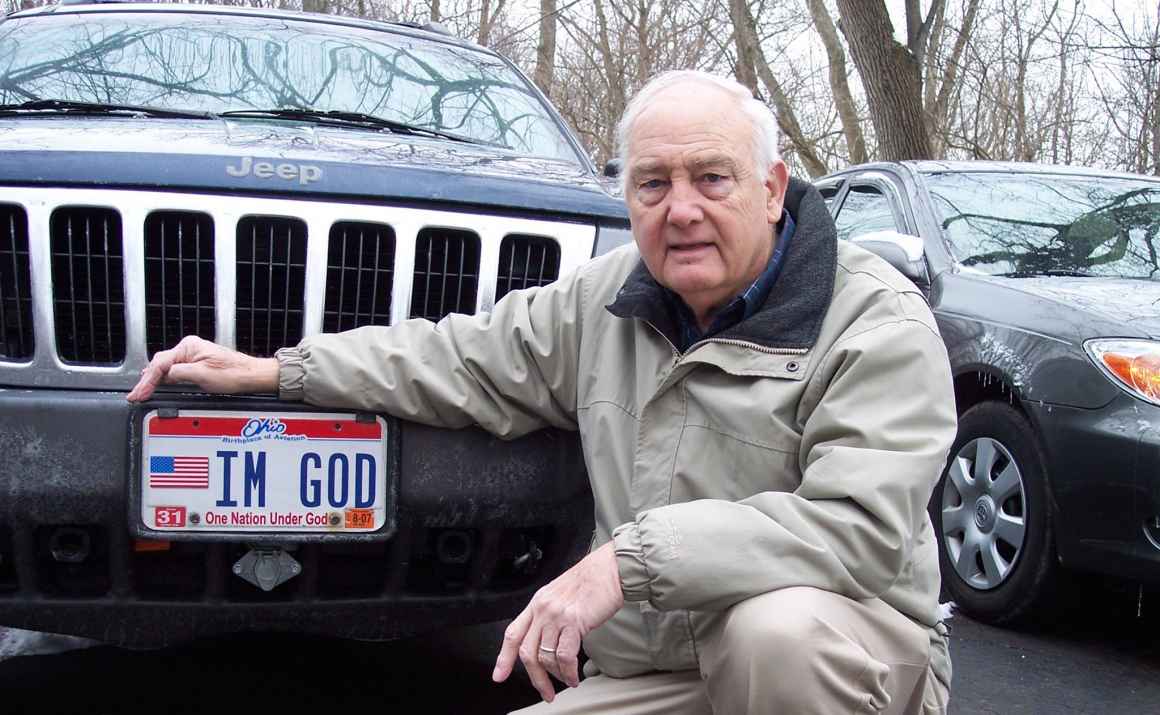
Ben Hart wanted a vanity license plate. The self-proclaimed atheist wanted to make a religious statement too, which led to the request being denied. This week the Kentucky Supreme court ruled for Hart, arguing that vanity plates are a form of protected speech. So here is Ben with his message:

Image result for Ben Hart, a self-identified atheist,"

Venice flooded this week, with the highest water levels in 50 years. Fortunately, the Italians are known for their plumbers: 

Talk is cheap. Until you hire a lawyer.

Uber got a hefty bill this week. New Jersey has demanded that the company pay $649 million for years of unpaid employment taxes, arguing that Uber drivers were really employees, not independent contractors.

Back in May, three drunk Hoosiers got into a fight. It was the crescendo of an incident brimming with colorful details: the trio drinking the night till 3:00 am,  a failed attempt to visit a strip club called the Red Garter, a brawl in the parking lot of an Indianapolis White Castle. The brawl ended with two of the three getting shot.

Everyone survived, but all three got suspended this week from their jobs…

…as judges.

Judges Andrew Adams, Sabrina Bell and Bradley Jacobs

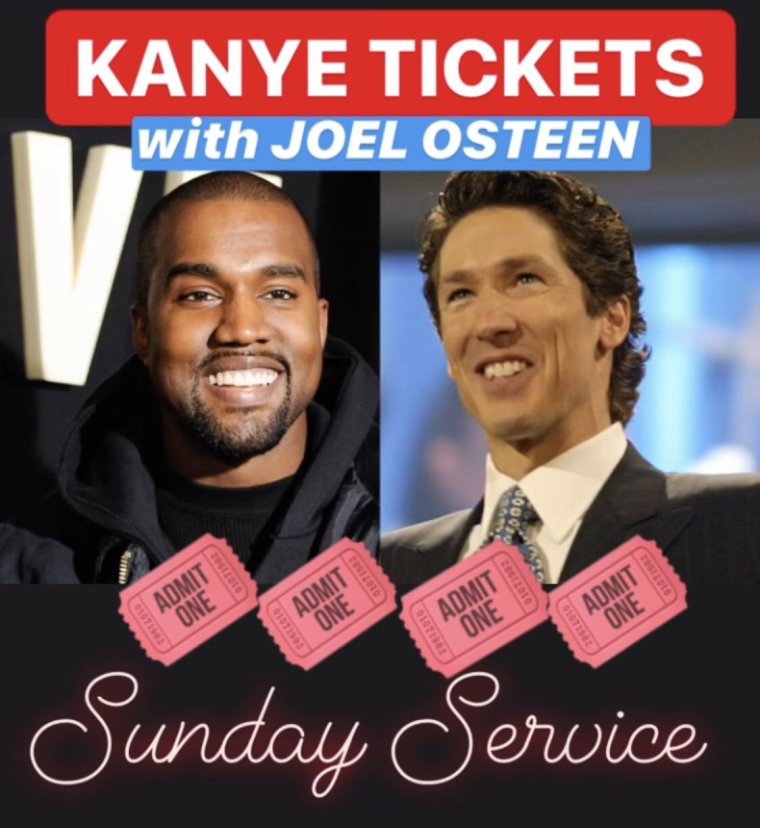
Free tickets to rapper Kanye West’s Jesus Is King “Sunday Service” concert at Joel Osteen’s Lakewood Church in Houston, Texas, are being scalped online for hundreds of dollars ahead of the touted event expected to draw “huge crowds” in what is to be the biggest installment of the event yet. I KNOW Chaplain Mike would love to go, so if you can all chip in…

The return of witchcraft: “In 1768, John Wesley expressed concern about the decline of popular belief in witchcraft and the supernatural: ‘The English in general, and indeed most of the men of learning in Europe, have given up all accounts of witches and apparitions as mere old wives’ fables. I am sorry for it. . . . They well know (whether Christians know it or not) that the giving up of witchcraft is in effect giving up the Bible. With my latest breath I will bear testimony against giving up to infidels one great proof of the invisible world; I mean that of witchcraft and apparitions, confirmed by the testimony of all ages.’ Actually, Wesley need not have worried. If Europe’s learned had abandoned witchcraft, and most nations accordingly had stopped prosecuting it, a great many ordinary people retained older ideas. In various forms, witchcraft beliefs persisted in the West until quite modern times. And as Christianity has spread around the world over the past century, it often has done so where such beliefs remain strong, above all in Africa; and where churches of necessity devote significant effort to dealing with such manifestations among the faithful. Witchcraft, surprisingly enough, is a pressing global and theological issue of the twenty-first century.”

At least he won’t have to wait forever. Calvin Hawley of Winnipeg reported damage done to the curb outside his home by a snow removal machine in 1993. Nothing happened. He called the city on and off for years to plead for repairs. At one point, Hawley was told the city’s system for logging complaints had changed and that his was no longer on record. As time passed, the rebar on the curb began to crumble and became more exposed. With the help of neighbors, he placed decorative stones where the chunk of curb used to be.

The final straw came on July 1, 2017.

“I was watching crews merrily drive past the front of my driveway to stop and repair other curbs on the other side of the bay that weren’t as damaged as mine or as old,” Hawley told CBC.

He filed yet another complaint later that day. That’s when he was given his repair date: June 26, 2037.

Image result for well that sucks"

Tired of slumming it with your puny 65 inch tv? Ready to stop squinting? Samsung is here to help. This week they announced the release of The Wall (no, not that one, Trump). It is a tv measuring a whopping 219 inches, or about 18 feet diagonally.samsung-fl2019-219-the-wall-with-models3.jpg

Wasn’t this predicted in Fahrenheit 451?

Benjamin Schreiber Of Des Moines has been serving the life term since being convicted in 1997 of beating a man to death. But what is his life already ended once? Or five times? Does that mean the life sentence is fulfilled and thus now void?

Schreiber says his heart stopped five times on March 30, 2015, at a hospital where he’d been taken from the Iowa State Penitentiary in Fort Madison. He filed for release in April 2018, on the basis that since he died his life sentence was fulfilled.

The appeals court ruled against him Wednesday, saying: “Schreiber is either alive, in which case he must remain in prison, or he is dead, in which case this appeal is moot.”

Now word yet on if Schreiber will next try the “Schrödinger’s cat defense”.

Well, that’s it for these Saturday. Have a great weekend, friends.

Another Look: the cruelest month…

Lake Radner, Tenn (2015)

the cruelest month…

t. s. eliot was wrong—it is not april, but november.

it is november that sucks the color out of the world.

it is november that brutally strips the brilliant textured sweater off the tree and leaves it naked, shivering against the gray, cold wind.

it is november, when sky becomes steel, earth becomes stone, grass a wire brush, breath fog, each day a more rapidly drawn shade.

it is november, when time changes, and daytime suddenly drops into darkness before our supper is prepared.

it is november, when baseball ends, gloves are oiled, grass is covered, and stadiums sit silent and empty, too bleak even for ghosts to want to have a catch.

it is november, when the porch is stripped of furniture, the hose and bird bath put up lest they crack, the gutters emptied of fallen sky, a stretch of street with yards forsaken like the dormitory hall at lights out.

it is november, all gray and brown.

it is november, hangover after the harvest party, period of mourning after autumn’s exquisite expiration.

it is november, the time between—between the joy of ingathering and the wonder of incarnation—when darkness gathers, unwilling yet to be dispelled.

the month, of course, has its joys but they are humble — smell of wood smoke rising, tears for the young gone off to war, college football’s rivalry games and the beginning of basketball, a homely and heartwarming feast of thanksgiving, the quiet inauguration of advent and a new year to live within god’s story.

three of the most wonderful women in my life have birthdays in november—my mother, my wife, and my oldest daughter. this november marked the final football game of my young grandson’s junior year in high school — one of the best seasons in school history — and it was so cold that night we were almost relieved to lose. life will move more and more inside closed walls. we’ll begin rehearsing our annual worries about how to keep the heating bill down and what we’re doing for the holidays. the shivering begins.

november is the cruelest month. between time, gray and brown, it sucks the color out of the world.

Yea, I have looked, and seen November there;
The changeless seal of change it seemed to be,
Fair death of things that, living once, were fair;
Bright sign of loneliness too great for me,
Strange image of the dread eternity,
In whose void patience how can these have part,
These outstretched feverish hands, this restless heart?

• William Morris, “November

Review of “Love and Quasars: An Astrophysicist Reconciles Faith and Science” by Paul Wallace, Part 3.

Review of “Love and Quasars: An Astrophysicist Reconciles Faith and Science” by Paul Wallace, Part 3.

In Chapter 4- Strangers, Friends, Lovers: Cooperation, Not Competition, Wallace continues to expand on his version of Stephen J. Gould’s NOMA: that faith and science occupy separate spheres of influence with science covering the empirical universe and faith covering the moral and ethical universe.  His metaphor is that faith and science meet and go out for coffee.

What happens next?  Well, what happens when you meet someone new? You ask questions… You look for common ground… At the coffee bar, they take a corner booth and promptly discover that they’ve both been misunderstood…  Science complains that everyone thinks it’s always super-objective and universal, the final word on everything.

“People think I show the whole world exactly, precisely, as it is, science complains, “But I see through my own lenses.  I do not provide unbiased and complete information about all things.  I ask and answer only certain kinds of question.  I do not stand outside the world.  I am a part of it and share its messiness and uncertainty.”

“I’m misunderstood also”, says faith.  “So many people think I depend only on private and personal and touchy-feely emotions!  It drives me bananas.  I, too, live in this world and am likely to see it clearly as anyone else.  I, too, have methods and norms.  I, too, am shaped by reality.  I am at my best when I engage the world as it is, just like you.”

Then Wallace supposes that faith and science hit it off completely.  They fall in love and get married, and in the words of Jesus become one flesh.  He thinks this perspective is most commonly expressed in two kinds of theology.  The first, he says, is natural theology, that looks not to the Bible or Christian tradition, but to reason and nature and science for clues about the character of God.  In other words, learn about someone by considering the things they create.  The second kind is process theology; that attempts a complete synthesis of science and Christianity.  It rejects divine omnipotence and claims God creates in cooperation with his creatures and is not in complete control of the universe.

All three perspectives he outlines – strangers, friends, and partners in marriage – emphasize cooperation over competition, and maintain that faith and science share a common status, like two fundamentally equal human beings.  In the next chapter he considers how either science comes to rule over faith or faith will come to encompass science.

In Chapter 5- A Universe with a Point: How Science Enlarges Faith, Wallace tries to deal with the words of Nobel Prize-winning physicist Steven Weinberg who said, “The more the universe seems comprehensible, the more it also seems pointless.”  Wallace says that science indeed cultivates wonder and fills his mind but “leaves his heart stranded in the midst of a vast alien dance”.  And yet he says not a single person inhabits a world without a point.  None of us has lived a single meaning-free moment.  He says:

Even experiences of meaninglessness point to this truth, for it is out of our craving for meaning that such feelings arise.  We continually think and speak and write and act on the basis of values like love.  Questions of purpose and meaning (what should be) occur to us at least as often, and nearly always more urgently, as questions of science (what is).  We are bound to morality and driven by love, the greatest of Christian virtues.

And he points out the love that goes far beyond natural affection and gives the examples of Oscar Schindler, Rosa Parks, and James Harrison, an Aussie who donated his unique antibody-laden blood once a week for sixty years, thereby saving 2.4 million lives.

Wallace sets up the “two roads diverge” dichotomy between faith and science.  Down the first road we are moral creatures coughed up by an amoral universe, saddled by evolution with the unshakeable sense of value and an obsession with meaning.  We are, he asserts, doomed to live out our short and difficult life in a cosmos that doesn’t care about us or our choices. We may endure a while, but all things will eventually wind down in the face of endless cold and infinite time.  The universe will not be tamed: it will swallow us.

He says down the second road, our morality and sense of values reveal something as actual and fundamental as energy, time, space, and light.  We belong in the universe no less than electrons and quasars.  We cannot stop living our lives as if love were real and as if it matters ultimately.  So, he says, maybe it is real and does matter ultimately.

Of course, there is the famous quote from Richard Dawkins, from Out of Eden:

The universe we observe has precisely the properties we should expect if there is, at bottom, no design, no purpose, no evil, no good, nothing but blind, pitiless indifference.

The Ask an Atheist” site expands on that somewhat with:

This is really a two-part question that deserves unpacking. The first part is: “Did the emergence of life in the universe have a purpose?” In brief, atheists believe that it did not. Atheists would prefer that life have a purpose just as theists would. However, just wishing something to be true does not make it true. Atheists believe that any meaning that we can derive from life can only be done here and now.

This brings us to the second part of the question: “Do our lives have purpose?” Each of us, atheists and theists alike, want to achieve something in our lifetime. Purpose can be anything from finding happiness to raising kids to ending hunger and suffering. This is the kind of purpose we each find in our own lives. From this perspective, life most definitely has a purpose!

Wallace quotes P.Z. Meyers from The Happy Atheist:

You don’t have a heavenly father at all.  You’re a mediocre product of a wasteful and entirely impersonal process.  We’ve done the paternity tests.  We are apes and the descendants of apes, who were the descendants of rat-like primates, who were the children of reptiles, who were the spawn of amphibians, who were the terrestrial progeny of fish, who came from worms, who were assembled from single-celled microorganisms, who were the product of chemistry.  Your daddy was a film of chemical slime on a Hadean rock, and he didn’t care about you – he was only obeying the laws of thermodynamics.

Wallace then re-writes Meyers thusly:

You have a heavenly father.  You’re an amazing product of his ongoing creation project.  We’ve discovered a lot about that project, which has been going on for billions of years.  We are human beings, the descendant of apes, who were drawn from earlier smaller primates.  Our lineage also includes reptiles and amphibians and fish and worms and even single-celled organisms.  Like a flower that grows from the dirt itself yet is not itself dirt, we have been gradually assembled out of chaotic and disorganized elements.  You were formed from the dust of the ground, given the breath of life, and carry the image of a loving and creative Father who is crazy about you.

Wallace then forces the point home, that no matter which meta-narrative you choose, no scientific experiment or observation can distinguish between them.  These statements differ only in what is not scientific about them.

iMonk Classic Series: Christians and Mental Illness (3)

Is there mental illness in the Bible? This question seeks to move us toward the question of mental illness and the Gospel.

Throughout the Bible- Job’s speeches, Jonah’s self pity, the depression of the Psalmist, the cynical death wish of Kohelleth- we see the kinds of emotions that make up much of common mental illnesses. How are these persons viewed? How are their emotions presented to us? The question becomes, not so much about what is and is not mental illness vs sin; the question becomes, what is God’s word to the mentally ill, and to those of us who may find ourselves ministering to them, or becoming one of them?

I believe the answer is two fold: (1) compassion, and (2) in proportion to the type of mental illness, responsible humanity.

The most certain case of mental illness in the Bible, in my opinion, is Saul. Saul’s behavior is consistent with manic depression or similar emotional conditions. The Biblical writer interprets this in the language of his understanding, but this does not change a major point: God was still dealing with Saul, even as a mentally ill person. Saul was a mentally ill King. God never told him to step aside, but to do what was right. In Saul, we are reminded that anyone, and any one of us, can be mentally ill.

We see God’s dealings with Saul in two ways: the compassion and forgiveness of David, and the tragic consequences of Saul’s actions. In both of these, we see these two Biblical truths. Saul was a fully human person while he was mentally ill, and his actions were actions of moral responsibility. David, however, incarnates God’s mercy toward Saul, and shows us God’s compassion for the mentally ill.

I would suggest that to see all mentally ill persons- which includes many of us at some point in life- as purely victims is dehumanizing to an extent that compromises human dignity. God addresses Saul as responsible throughout this episode. Saul never ceases to be a human person to whom God’s commands can be addressed.

Yet, at the same time, David deals with Saul as one afflicted. He respects not only God’s choice of Saul, but Saul’s suffering with the “evil spirit.”

This leaves us in an uncomfortable place. Many would want the mentally ill to be absolved of all responsibility. I believe this is the wrong way to view most mentally ill persons. Yet, we must also view them truthfully, fully taking into account what we can know about their condition, and treating them in full awareness of their diminishment or affliction.

This appears to be the Bible’s approach to persons who are in intense grief (Job), in oppositional-defiant mode (Jonah) or who are enslaved to addictions (Samson.) The Psalms show us prayers from the depressed and the paranoid, yet they are prayers in scripture. The cynical tunnel-vision of the Preacher in Ecclesiastes is part of his journal-narrative examining life from all sides. While none of these qualifies as full-blown mental illness, there is enough here to see the lesson: It is part of our humanity, and God, in his grace, is in the river with such persons.

Are there examples of mental-illness in the New Testament? As I have suggested elsewhere, a “demon possessed” person such as the man in Mark 5 may be afflicted with spiritual forces, but he also shows evidence of what we call mental illness. This man cuts himself and lives much as many manic depressives or psychotics would if left un-cared for or unmedicated. If this man is demon possessed- as the text suggests with the invasion of the pigs by the spirits- the manifestation of symptoms was similar to mental illness. Certainly those in this culture who were severely mentally ill would have been treated and viewed much life this man.

Jesus responds to this man with compassion his community and family did not have for him. He treated him as a human being, and not simply as a collection of demons. It was a man that was liberated, and it was a man who was commissioned to be a witness among his neighbors.

The Synoptic Gospels make it clear that much of Jesus’ ministry was among those who would have included the severely mentally ill. These persons would have been tied down, beaten and subjected to strange and awful cures. Jesus’ willingness to touch them, speak to them and accept them as liberated members of God’s kingdom says something very important about how we view the mentally ill.

They are our fellow human beings. They are our potential brothers and sisters. We should not view them as overcome with evil or robbed of their humanity. We should strive to love them as God does: in compassion and in truth.

We do not see mental illness spoken of particularly plainly in the Bible, because the cultures of the day did not view mental illness as we do. But mentally ill persons are surely there, in all the brokenness of human sin and in the persons who are touched with the kingdom announcement and the power of the Spirit. Their presence moves us to the next question: What is the church’s responsibility to the mentally ill?

iMonk Classic Series: Christians and Mental Illness (2)

iMonk Classic Series: Christians and Mental Illness (2)
The following is excerpted from part 2 of Michael’s original series.

Because the Bible is authoritative in Christianity, it is often difficult to come to terms with forms of knowledge that ignore the Bible, and especially difficult to deal with systems of knowledge that threaten to transcend or neutralize the Bible. In America, this tension did not fully dawn until the fundamentalist-modernist controversies of the early twentieth century. While Darwin continues to get most of the attention, it is more likely Freud who has created the most perplexing tensions for Christian believers.

Psychology does not appear to be an immediate frontal assault on the Christian view of truth. Many Christians, especially in more moderate communions, have been open to psychology as a way of compassionately understanding human beings. More recently, however, psychology has met with sterner opposition from many evangelicals, who have become aware that the discipline was atheistic, even religiously hostile, from the outset, and that its ways of explaining, understanding and helping human beings have potentially dire consequences for the Christian view of truth.

Today, many serious Christians often reject any and all reference to psychology. (This varies enormously and is an admitted generalization.) A minister may practice Christian counseling, but let him claim to be a Christian psychologist and fully half or more of the Christian community will refuse his assistance. Christian counseling has developed its own alternative approach to dealing with mental, emotional and behavioral problems, with dependence on scripture at the center and a rejection of psychology as mandatory.

This shift has brought the entire concept of mental illness into question for many Christians. Should we be using the categories, vocabulary, diagnoses and treatments of psychology to describe and treat human beings? Many conservative Christians say “no,” and will refuse to recognize common conclusions and approaches of the psychological disciplines. When psychiatric treatment is recommended, these Christians are even more resistant, and often refuse recognized and accepted treatments for mental, emotional and behavioral disorders. As enamored as our culture is with the authority and insights of psychology, many Christians are unconvinced and even belligerent.

This creates conflicts and tensions in the lives of many Christians, however, I believe Christians cannot–and should not–entirely reject or escape the “knowledge base” that exists within their culture, including psychology and the concept of mental illness. These concepts and “namings” of human conditions can, if appropriated correctly, be useful and compassionately helpful.

Psychology, as science, is a discipline largely based on conclusions developed from repeated, careful observations. From observing, listening to and treating millions of individuals over time, a descriptive approach is acquired. These various descriptions are what we refer to as mental and emotional illness, and Christians committed to the idea that truth is the greatest friend to a hurting family or person should always embrace truthful observations, even if they come to us from other sources of understanding the world than our own.

The observations of human beings by psychologists are where we get the language of mental and emotional illness. We should be cautious and careful in appropriating this language, but as much as it is descriptively accurate, Christians should have no fear of it. Calling depression “depression” is not surrendering to the worst assumptions of psychology. Depression is a set of observations. They allow a set of responses. They help us build a plan for treatment. And so on with many many kinds of mental illness.

The persons exist, and their problems exist. It is not wise to reject what repeated observation and treatment have yielded in the quest to help people.

At this point, many Christians will point out that the psychological concept of depression does not contain the Biblical content necessary for a true solution. “Depression,” they will say, is not a disease, but simply a manifestation of sin or loss. This may be quite true in many cases. The Christian vocabulary may be the most meaningful way to approach and respond to an individual case, but when we look at the culture as a whole, this is not going to work. If we insist on refusing the diagnostic language of psychology and using the language of faith, we will have to limit our involvement with people to the Christian community and control the problem so that whatever response we make is understandable.

Mental illness, as a descriptive tool and category, does functionally exist for persons in any culture. Becoming conversant with how a culture describes mental illness is far more useful than rejecting the concept, and it allows the resources of truthful observation to come into the picture.

I will admit that it is not always pleasing or helpful to me as a Christian to be told that Johnny-who-can’t-do-anything-in-school has a syndrome or disorder. This approach seems to shift some of what is needed for Johnny to change into an arena outside of his control. Medication-based treatments have a tendency to minimize responsibility for seeing our emotions, behavior and mental state as part of our own human stewardship. But in the vast majority of cases where mental illness or behavior disorders are diagnosed, these issues do exist, and the diagnosis and the treatment suggested by psychology will most likely be rational and reasonable enough that help can be offered and expected.

Still, even with these observations, I believe the category of mental illness is useful, even essential for Christians in western culture. With a generous allowance for our manifold humanity, we still can look at “collections” of observed behavior revealing to us something that can be called–and treated–as mental illness.

Because the Bible’s description of mental/emotional illness comes in the package of its own culture, Christians have to decide if they are going to reject the contemporary language of psychology and resort to the language of ancient culture, or if they are going to “read” contemporary culture with the Gospel at the center. Can the concept of mental/emotional illness be transformed through the Gospel to be of useful service to Christian compassion?

This same question is present for physical illness as well. The Bible is a pre-scientific book, and most contemporary understanding of human biology and physiology is absent. Science has given us tremendous tools to use in treating disease, and if we reject these in favor of the understanding of disease in the Bible, there is going to be a lot of suffering and death that could have been prevented.

The entire question of accepting contemporary ways of thinking about studying, labeling, analyzing and treating human beings for their mental/physical and emotional illnesses is a question that calls upon Christians to contemplate their view of the Bible and its proper use. If their view of the Bible’s truthfulness includes the assumption that it is a book providing a specific plan for treating illnesses of body and mind, then that commitment will, I believe, take the Christian down a road that is ultimately less compassionate than the acceptance of some form of accommodating the knowledge and insights of science, medicine and psychology.

The Bible is about Christ, and is not a manual for treating mental and emotional illness. The Biblical presentation of the Christian story stands in judgment over psychology and every other form of knowledge because CHRIST IS LORD AND JUDGE, not because the book of Proverbs is the best manual for dealing with emotional illness.

iMonk Classic Series: Christians and Mental Illness (1)

Note from CM: Ten years ago, Michael re-ran a series about Christians and mental illness that he originally wrote in 2005. For the next few days this week, I will re-post edited versions of those pieces. Today, we read Michael’s introduction and some of the questions he will raise.

• • •

Several times a week, I have to read folders containing psychological evaluations of prospective students. They are often quite daunting and detailed. The stories range from ordinary to nightmarish and disturbing. I must read and review the psychiatric evaluations and counseling histories of all students who are seeking admission to our school. After reading, I make a recommendation as to their appropriateness for us. In some cases, I do an additional interview, and make an evaluation based on the interview and the information.

I’ve ministered with young people and adults long enough to have seen a lot of mental illness–from my father’s depression to the suicides of co-workers and young people to the many episodes of emotional and mental illness I have encountered in church and community. I’ve visited hospitals for the mentally ill, counseled families and individuals dealing with the mental illness of a family member and helped individuals decide to seek help for everything from depression to delusions of being God.

For many years, the majority of my work week was counseling individuals at our school. In these hours of counseling, I saw all kinds of human emotional brokenness, much of it related to what we commonly call mental or emotional illness. I continue to deal with people who have sought psychiatric and psychological help, and many of our students are on psychiatric medications.

As a Christian, a minister and a servant, I am compelled to look at the subject of mental illness and make some important decisions. While the subject is tossed around without much seriousness, it is a matter of immense human pain and suffering. It is a dimension of life that Christians cannot pretend is not present and all around them on any Sunday or Monday.

Is there such a thing as mental illness? Many Christians are suspicious of the psychological worldview that diagnoses human behavior in terms of “illness” and “disorders.” Can Christians have anything to do with a way of looking at human beings that is rooted in an atheistic worldview? Is the use of medication ethical and permissible for Christians? Can we accept descriptions and diagnostic terminology rooted in psychology rather than scripture?

Is mental illness a manifestation of spiritual forces (demons) or the result of personal sin? Many Christians have embraced models of dealing with human behavior that respond to what we call mental illness with scripture-based behavior modification, scripture memory, repentance and spiritual warfare, even exorcism. Is it ethical to seek to “cure” mental illness?

Is there mental illness in the Bible? Did Jesus encounter the mentally ill? Where in the Bible can we see mental illness? Were Saul, Jeremiah and Ezekiel mentally ill? How would Jesus or Paul respond to a mentally/emotionally ill person?

What is the church’s responsibility to the mentally ill? How should they be viewed and included in the Christian community? Should the mentally ill be allowed to be part of the ministries of the church? What about their experience of God? Is it valid, or a manifestation of their mental illness?

What does the Gospel say to the mentally ill? What does it say to all human beings about the mentally ill? What does their presence among us tell us about ourselves? How is mental illness related to “true humanity?”

These are the questions we will address in these posts.

Sermon: Life after Life after Death

Tuscany Sunset (2019)

Sermon: Luke 20:27-38
Life after Life after Death

But resurrection life, Jesus insists, is qualitatively different. The ordinary events and relationships by which we track our journey though this mortal life — marriage, childbirth, graduations, retirements and so on — do not characterize our eternal lives because resurrection life is not merely an extension of this life but something wholly different.

• David Lose

• • •

The Lord be with you.

Last week, for All Saints Sunday, we talked about how our loved ones, even though they have died, are alive in Christ, and still present in mystical communion. The Creed calls this the communion of saints.

Today we come to a Gospel passage that reminds us of another article of the Creed. Each week we say, “I believe in the resurrection of the dead, and the life everlasting.”

It has been my experience that people tend to get these things mixed up. There is a difference between “life after death” and the resurrection. As a hospice chaplain, I deal with questions about life after death every day because I deal with people who are dying and who are about to find out what happens when we die. But there is something beyond that called the resurrection, and that is our subject this morning.

Most people I meet have a general belief that we “go to heaven when we die.” They conceive of heaven as a real place “up there” somewhere where God is and where those who died are alive again and not suffering anymore, but pretty much carrying on life as we know it down here. People picture mom and dad dancing again, grandpa playing cards with his buddies, and Uncle Harry playing golf again under a cloudless sky. Some folks will add some biblical images such as streets of gold and mansions that we’ll live in. And that’s about as far as many people think about what it’s like.

But one thing most people think is that this “heaven” is the ultimate destination. One day we’re going to join mom and dad, grandpa, and Uncle Harry, and that’s where we will carry on living forever.

With that perspective, Christianity then becomes a religion that’s all about showing people how to go to heaven when they die.

However, the actual teaching of scripture is much richer than that. It is my understanding that, when I die, my body will go to the grave but that the essential part of me — some call that my “spirit” or my “soul” — will still be alive and will rest in God’s care. Paul said to be absent from the body means to be at home with the Lord. He also said that when he died he would depart this life and be with Christ, which is a far better state than we know now. The book of Revelation pictures the saints before God’s throne, worshiping, watching the events of life unfolding, praying that God’s will will be done in this world. Jesus told the thief on the cross that he would be together with him that very day in paradise.

That is life after death. Our bodies rest in the grave. Our spirits rest in the care of God.

But that is just the first step! There is life after life after death. One day, Jesus said, those whose bodies rest in the graves will hear his voice and there will be a great resurrection. When Jesus appears and calls our names, our bodies will be raised up and made new. In 1Corinthians 15, Paul describes the new bodies we will have as glorious, imperishable, and powerful, in contrast to the humble, mortal, and frail bodies we now have.

And not only this. Our resurrection will be part of the transformation of all creation. Everything will be made new.

Revelation describes a scene in which heaven (God’s realm) comes down and becomes one with earth (our realm). As the hymn This Is My Father’s World says, “earth and heaven [will] be one.” God’s temple and throne will be restored in the world, and God himself will dwell in our midst in a whole new world, a whole new life.

This is the ultimate Christian hope. It’s not just about going to heaven when we die. It is about God in Christ making us and the whole world new: transforming us — body and spirit — transforming the earth, transforming the nations, transforming the entire universe through the final defeat of evil, sin, and death.

So, what we look forward to has two stages.

  • When we die, we experience life after death, resting in the paradise of God in his presence and care.
  • When Jesus returns, we will experience life after life after death — our bodies will be raised from the dead and we will be made whole again in a new creation where God will dwell with us, reigning in and through us.

The Sadducees who came to Jesus in today’s Gospel lesson did not believe in the resurrection. Their conception of God’s kingdom was completely about this life now. They conceived of a Jewish king who would defeat his enemies and restore their political independence in the Promised Land. The life of the age to come to which they looked forward was all about security, material prosperity, long life, and a godly heritage of children and grandchildren to carry on after them.

Those of course are wonderful blessings, but Jesus challenges them to look beyond all of that, to imagine a new creation in which people like Abraham, Isaac, and Jacob, and people like us not only live through our descendants now, but also continue as people who are actually still alive in the presence of God, and who share fully in the life of the age to come.

We don’t have time to go into this right now, but it is this hope of a new creation that gives us motivation for living and serving now to make this world a better place. Jesus teaches that our good works are like seeds we plant that will come to fruition and create a great harvest of righteousness and peace in the age to come.

The Christian faith is the faith of resurrection. Life conquering death.

  • Resurrection now, as God makes us alive by grace through faith in Jesus Christ — As Paul tells the Romans: Buried with Christ in baptism, raised to walk in newness of life.
  • Resurrection in the future, when Jesus returns and all those who now rest in God’s care will be made alive and all will be made new. As Paul says in Philippians: “Our citizenship is in heaven, and it is from there that we are expecting a Savior, the Lord Jesus Christ. He will transform the body of our humiliation that it may be conformed to the body of his glory.”

Lord, may your kingdom come, may your will be done on earth as in heaven. Amen.

And now may the word of Christ dwell in us richly, and may we do everything in the name of the Lord Jesus, giving thanks to God the Father through him.

The IM Saturday Monks Brunch: November 9, 2019

The IM Saturday Monks Brunch: November 9, 2019

November Tree & Barn (2016)

My Sorrow, when she’s here with me,
Thinks these dark days of autumn rain
Are beautiful as days can be;
She loves the bare, the withered tree;
She walks the sodden pasture lane.

Her pleasure will not let me stay.
She talks and I am fain to list:
She’s glad the birds are gone away,
She’s glad her simple worsted grey
Is silver now with clinging mist.

The desolate, deserted trees,
The faded earth, the heavy sky,
The beauties she so truly sees,
She thinks I have no eye for these,
And vexes me for reason why.

Not yesterday I learned to know
The love of bare November days
Before the coming of the snow,
But it were vain to tell her so,
And they are better for her praise

• Robert Frost

• • •

Questions of the Week

When are moderate evangelicals going to come out of hiding and condemn the vituperation of the neo-fundamentalists? (Hey Roger, we did this last week!)

What can one person do?

Is “Jesus Is King” really just a Carman album, a pep rally for Our Team?

Why do 300,000 Texans want to secede?

Is the continued neglect of Native Hawaiian culture in favor of scientific advancement worth it?

What does this phenomenon say about us?

Do Democrats have a religion problem?

• • •

November Odds & Ends

Deer are seen between tombstones at the old Jewish part of the Zentralfriedhof cemetery on an autumn day ahead of All Saints Day in Vienna, Austria, October 30, 2019. (REUTERS/Lisi Niesner)

30 years ago: West Berliners help East Berliners climb over the Berlin Wall, opened hours earlier on Nov. 10, 1989. (Jockel Finck, AP)

From The Onion

For Veterans Day (U.S. November 11) (Photo: Crown Hill Cemetery, 2018)

Frankfort, Germany, Nov. 5, 2019 (Michael Probst/AP)

From The Onion

WASHINGTON—Describing the French Canadian municipality as a “world-class city,” Nationals players admitted Thursday that their World Series win would be way sweeter if the franchise stilled played in Montréal. “We’ve never really considered D.C. our home, and we all grew up bleeding Expos blue,” said World Series MVP Stephen Strasburg, speaking in French while lovingly referencing Montréal’s architecture, cosmopolitan culture, and its “incredible cuisine.” “The first thing we did when we got back to the locker room was sing Québec’s anthem. Man, could you imagine driving our parade floats down Catherine Street? It’s great to finally get a ring, but it’ll be a little bittersweet to celebrate with a bunch of D.C. bureaucrats who are just looking for something to do.” At press time, Strasburg admitted to taking some solace in winning a World Series without Bryce Harper.

A black cat runs on the field during the second quarter of the New York Giants and Dallas Cowboys game in East Rutherford, N.J., on Nov. 4. The black cat is one of several resident strays that live in the bleachers at MetLife Stadium and usually come out after the game. (Emilee Chinn/Getty Images)

From The New Yorker


WASHINGTON (The Borowitz Report)—After learning that two of Rudy Giuliani’s associates had been charged with federal campaign-finance crimes, millions of Americans expressed their stunned disbelief that Giuliani had associates.

“By ‘associates,’ do they mean people who actually associate with Giuliani?” Carol Foyler, who lives in St. Louis, said. “This whole story doesn’t add up.”

Firefighters work to contain the Maria fire spreading in the hills near Ventura, northwest of Los Angeles on Nov. 1. (Etienne Laurent/EPA)

Finally, this one’s for Mike the Geologist, from Uncyclopedia

• • •

Music this week

My son and I are going to see my favorite band Wilco in concert this week. Can’t wait! Here’s a video from their most recent album, Ode To Joy, with some great Chicago location shots.

And, as an added bonus, a live performance of our unofficial theme song here at Internet Monk, “cherry ghost” and all…

• • •

 Evangelical Hall of Shame this week

James MacDonald declared “biblically disqualified” for ministry

Comedian John Crist cancels tour over sexual misconduct allegations

Ongoing skirmishes between Paige Patterson and Southwestern Baptist Seminary

In the Public Religion Research Institute’s 2019 American Values Survey, white evangelical Protestants are fully disrobed (from the always sane and clear-sighted Michael Gerson)

Anne Graham Lotz continues her kooky prophetic speculations

Paula White Cain joins the Trump administration and says DT wanted to build “a house for God”

• • •

Finally, what would Mr. Rogers think?

I am often asked what Fred would have made of our time—what he would have made of Donald Trump, what he would have made of Twitter, what he would have made of what is generally called our “polarization” but is in fact the discovery that we don’t like our neighbors very much once we encounter them proclaiming their political opinions on social media. I often hear people say that they wish Fred were still around to offer his guidance and also that they are thankful he is gone, because at least he has been spared from seeing what we have become. In all of this, there is something plaintive and a little desperate, an unspoken lament that he has left us when we need him most, as though instead of dying of stomach cancer he was assumed by rapture, abandoning us to our own devices and the judgment implicit in his absence.

• Tom Junod, “My Friend Mr. Rogers,” The Atlantic