The IM Saturday Monks Brunch: December 12, 2020

• • •
The IM Saturday Monks Brunch: December 12, 2020
Welcome. We’re smack in the middle of the holiday season (sorry for you Advent lovers, I’m also a realist), so we’ll have plenty of cheer and tinsel today as we enjoy our Saturday Brunch together. Thanks for joining us. Pass me a cinnamon roll, please.
•
Here are some Christmas gift and decorating ideas for you:

•

•

•

•

•

•

•

•

•

•

•

•
The BEST thing you’ll read this week…

Erick-Woods Erickson, conservative evangelical American blogger and radio host. has impeccable conservative political credentials. He stood in front of the state capitol in South Carolina with Sarah Palin to introduce Nikki Haley for the Palin endorsement, for heaven’s sake.
However, after Erickson and his wife had serious, life-threatening health scares, his perspectives and priorities changed.
I used to be a super political animal and now I am less so and find I am surrounded by people who have become more political. The 24/7 news cycle, social media, the atrophication of in-person social networks, the political demands resulting from a small base of persuadable voters turning America into an “us v them” society, the realization that much of the media really does hate conservatives and Christians — it has all turned into a perfect storm of polarization, politicization, and theological supplementation. As I was disentangling from a lot of it, a lot of people were getting tangled up in it.
I stepped back and realized so little of it does matter and so little of it does change and a lot of people stepped forward for change they could believe in or change from that. But the reality is neither side is really changing much in Washington anymore.
Erickson wrote a recent article in light of President Trump’s incessant claims of election fraud and his followers’ loud insistence that the election was stolen. Its title, How the F– Am I the Sane One, says it all. I encourage you to follow the link and read the whole article.
I have a lot of people yelling at me for refusing to accept the election was stolen. Frankly, I don’t even think the Trump team really believes it. His lawyers sure as hell don’t or they wouldn’t have screwed up so may cases with late filings, missing paperwork, missing fees, and erroneous affidavits. I know of a call wherein they told some folks I am very familiar with that they really were just going to scream and holler and refuse to concede. It is all payback for 2016. They’ve lost about 50 lawsuits and in their latest, in state court in Georgia, they forgot to pay the court filing fees and fill out the right paperwork. That got their lawsuit thrown out.
That’s not even considering the batshit crazy lawsuit from Sidney Powell and her insane claims. I’m sorry some people take that stuff seriously. I’m sorry some people really believe Ware County, Georgia had machines seized. I’m sorry there are up and coming grifters on the right who don’t really believe it but get clicks, followers, and money by convincing you that they do. I’m sorry some people will take at face value the claims of some without thinking through or seeking rebuttal.
I’m really concerned with the crazy on my side, or at least what should be my side. I’m not even sure I have a side anymore. I just tell people I’m a conservative who thinks the GOP has failed on the debt and a bunch of issues and the Democrats are going full bore socialist secularists who’ll eventually get their own Mao and deny it while trying to silence people like me. I’m a Christian who thinks a lot of Christians have turned politics into religion. I’m a husband who wants to take care of my wife. I’m a dad who just wants to raise my kids to love Jesus and improve their community.
It’d be far easier for me, as a conservative talk radio show host to just get on the crazy train and tell you all exactly what you want to hear even though it is not true even though you are epistemically convinced it is true. It’d be far easier and less stressful and more financially lucrative for me to sound like everyone else on the right, right now.
But I think it would be wrong. And I may be wrong here, but I think most of my audience could now be described as reality-based conservatives who are people of faith who just want to really know what is going on and just understand the world from their faith perspective. They aren’t really down with full contact team sport politics. They’ve already got their favorite teams on a field somewhere and just want someone with their worldview to just tell them honestly what is going on.

•
Et tu, William!

The media had a field day when William Shakespeare showed up to be one of the first people to receive the Pfizer coronavirus vaccine in Britain this week.
He is one of the first to contribute to the “Taming of the Flu.”
“Is this a needle I see before me?” saith VacBeth.
Well, he wasn’t the first but the second, one wrote, so his fame is much ado about nothing.
All’s well that ends well, said another, a plague on neither of their houses.
And so the question remains for us, to vax or not to vax?
And, while we’re on the subject, here are some…
Appropriate Shakespeare pandemic insults to pass along…

•

•

•

•
Come on Congress, millions are waiting for you to do your job…

•
This is just the year for drive-thru Nativities…
Live Nativities, in which visitors drive — and sometimes, especially in warmer climes, walk — through a number of scenes retelling the biblical story of Jesus’ birth, have been popular around the U.S. for years. Actors from churches’ congregations and, often, live animals are accompanied by narration of the story on a provided CD, accessed on smartphones via QR code or broadcast on a low-frequency transmitter.
All have found their moment in a year when mask wearing, social distancing and avoiding indoor gatherings have become the norm.
“People still need the message of Christmas, the true meaning, the hope and the love. And so how can we provide that for them in a safe way?” said the Rev. Jonathan Andersen, pastor of Harvest Point United Methodist Church in Locust Grove, Georgia, which is adapting its annual live Nativity, Return to Bethlehem, to share that story as safely as possible.
The church is shrinking the number of scenes and the length of the walking tour, in which guides lead small groups past a petting zoo and the city of Bethlehem, a semipermanent structure on the church’s campus. The number of masked guests in each group will be limited and the total event will be held on two days, Dec. 12 and 13, not three. Prayer will move outside afterward, around campfires “in a distanced way,” instead of ending inside the church.
This year, Andersen said, “The gift of it is everything’s different and people are open to change.”

•

•
On Roger Ebert’s last words…
Did you know these were Roger Ebert’s dying words?
It’s all an elaborate hoax
It’s all an elaborate hoax
…
There is a vastness that can’t be contained
Or described as a thought in the flesh of our brain
It’s everything, everywhere, future and past
Dissolving forever in an eternal flash.

More recommended reading here: Roger Ebert’s Dying Words, by R. Lucas Stamps at Mere Orthodoxy. A profound and beautiful meditation on the substantiality of the world to come.
…thankfully, the fraud of death has been exposed and on the other side: a vastness you can’t even imagine.
•
Seasonal shots of the week…

Known as the Seattle Santa, he is usually booked for private events but is set up this year in a socially-distanced snow globe. (David Ryder/Getty Images)
•

•

•

•

•

•

•
It’s the most wonderful ad of the year…
My long slow journey away from Evangelicalism
 A little over 10 years ago I started writing for Internet Monk. If you had asked me at that point if I was an Evangelical I would have answered with an enthusiastic “Yes!”
Well, actually it would have been a qualified yes, because one of the tenets of the Evangelical movement was “Inerrancy”. I really had to do some mental gymnastics while simultaneously holding my nose to sign a Statement of Faith of an Evangelical church that included a form of the word “Inerrant”.
If truth be known though, my move away from Evangelicalism started long before that.
For as long as I can remember, through my Father’s influence, I have held two views that have limited the sphere of Evangelicalism in which I felt comfortable: I believed in old earth, and I didn’t hold to a “rapture” focused dispensationalism. There was still plenty of room within evangelicalism for those who held positions like mine, but they were certainly limiting the churches in which I would feel comfortable.
I should note, that before anyone dismisses me for “not believing the bible”, I felt that my beliefs on the age of the earth and on end times were entirely consistent with what the bible taught. In fact, I would argue that those who held to a “Rapture” were being the unbiblical ones.
In 1986 I was in a Bible study where the leader tried to dismiss verses that didn’t agree with his Calvinistic viewpoint. Upon further questioning I was provided with a little book entitled “Eternal Security”. My take after reading the book was that the biblical basis for that point of Calvinism was very flimsy. I left my church and started looking for a church that had more of an Arminian perspective.
You can see how the subset of Evangelicalism that was a fit for me was starting to shrink.
In 1990 I went to further my studies and started a Masters of Divinity at an Evangelical seminary. My move from a complementarian to an egalitarian view of leadership had probably started before then, but my exposure to a string of competent women leaders, along with the study of scripture on the topic, put me fully into the egalitarian camp by the time of my graduation in 1993.
My subset of evangelical churches continued to shrink, though not so much as you might think, as complementarianism and Calvinism seemed to be strongly aligned in the Evangelical world.
1994 saw a move to Hamilton, my current community. I should note that from 1994 to 2016 I attended four churches (two of which closed), all of whom were firmly aligned with the Evangelical movement.
So what changed. The first thing was that I became increasingly uncomfortable with the word “Inerrancy”. I know Evangelicals tend to define it in such a way to make the meaning so broad that you could drive a truck through it, but I really developed a distaste for a word that did not seem to encapsulate that which I knew of scripture.
I realized that even if I attended an Evangelical church, I could probably never be a member again, at least as long as membership required adherence to a statement of faith that included inerrancy.
The second thing was the move to legalize gay marriage in Canada, which became law in 2005. Evangelical churches moved to protect themselves and added statements about marriage to their statements of faith. My prior church’s denomination adopted language against gay marriage in 2012. I did find it objectionable that in order to become a member I had to affirm the statement of faith, but that the statement of faith could then be changed without members having any say in the matter. I have written extensively on my thoughts on the matter on this site.
The final straw came in March of 2014, when Evangelicals withdrew child sponsorships from World Vision when World Vision in the U.S.A. changed their hiring practices (then subsequently did a reversal because of the Evangelical outcry). It was at that point that I realized that I no longer wanted to be identified as an Evangelical. As a side note, that event was the final straw for Rachel Held Evans as well as I found out after the fact.
In 2018 I decided I needed to be a little more upfront with my support and I wrote my series on “Why I am an Ally”. At the time I surveyed my Evangelical Pastoral friends about Gay marriage. They universally called it a sin. It was then I decided the split was irrevocable.
There is still a lot I appreciate about Evangelical Theology, especially the desire to let others know about Jesus. Like Michael Spencer, despite all of my criticisms of Evangelicalism, in regards to the importance of placing your trust in Jesus, and encouraging others to to do the same, I would still fit right in.
Finally, There are few other aspects of Evangelical Theology where I don’t necessarily disagree the definitions, but I disagree with the narrowness, and so have moved away in those aspects as well.
Baptism – Like Evangelicals I would practice adult (age of knowledge) baptism by immersion. Unlike Evangelicals I am accepting of those who have been baptized in other ways and forms.
The Christian Life – Klasie described the “Cult of Happiness”: the Evangelical’s need for a “Testimony” to show that his or her life is so much better since becoming a Christian. In the Evangelical world there is little room for lament, for honesty about mental health, for admitting that sometimes life just sucks.
Hell – The Evangelical understanding of Hell is a place of eternal torment. Maybe. I think just as strong a biblical argument can be made for Hell being a purifying force, or an extinguishing force.
There is a lot to unpack here, and I am sure I am missing a few things, but this lays out the path I have taken. I might get criticized for not justifying a lot of my decisions here, but I am not sure that that can be done in the context of a blog. I wrote a thirty page paper once on my views on Baptism – it would make for a VERY long series.
I want to thank all the contributors to Internet Monk, both the writers and the readers. You have been very much a part of this journey, and I am not sure I would have survived spiritually without Michael Spencer, Chaplain Mike and the rest of you. Thank you for walking this path for the last 10+ years with me. But here I am, this many years later, no longer an Evangelical, but still very much in love with Jesus.
As usual your thoughts and comments are welcome.
The persistence of creationism shows losing could make Trumpism more extreme

Here is an opinion article in the Washington Post that harks back to the Scopes Trial of 1925. The piece argues that even though William Jennings Bryan lost the trial in the court of public opinion and was humiliated in the popular press and in the eyes of the elites, his supporters were undeterred and dug in even more fervently. They essentially formed what is now the creationist movement that still to this today has a large influence on evangelical Christianity and society as a whole. An influence that is distinctly anti-science. The article says:
While Bryan saw himself as making the case against evolution using the latest evidence from leading scientists, institutions such as Bryan College have little interest in evidence offered by scientists when it conflicts with biblical teachings. And they remain potent forces in American society: As Gallup polls show, even today, about four in 10 adults think that humans were created “pretty much in their present form” within the past 10,000 years, a number that has remained fairly steady since at least the 1980s.
The article goes on to note:
In one way, however, Trump is reviving Bryan’s memory. The president’s shameful science denialism, like Bryan’s, has only made him more popular. Trump infamously touted ludicrous ideas about science and medicine, including recommendations to inject disinfectant as a cure for the novel coronavirus. Yet among Republican voters, Trump’s unbelievable and outrageous statements did not disqualify him. Entirely to the contrary — he secured the second-most votes in history as millions of Americans who feel scorned by elites flocked to the anti-expertise president…
Even worse, the aftermath of the election has paralleled the late 1920s. Unrestrained from the traditions of mainstream politics and culture, the ideas of Trump’s hardcore followers have become even more bizarre, even more dangerous.
I find this deeply troubling. The conspiracy thinking has hindered this nation’s response to the coronavirus pandemic- costing actual human lives. The Trump administration reportedly has failed to secure enough vaccine for the spring meaning the company, Pfizer, may not be able to deliver additional doses beyond what’s already contracted until next summer due to commitments to other countries, despite Pfizer’s offer to sell it to us. Again, this has the potential to cost more actual human lives. Then there is the IDIOTIC campaign to overturn the election results, despite multitudinous court losses, including the recent Supreme Court refusal to hear their case in Pennsylvania . New Associate Justice Amy Coney Barrett appeared to have participated in the case; no dissents or recusals were noted. From the article:
Trump’s most stalwart supporters are White evangelical Protestants, the group that built this network of creationist colleges. Certainly not all, but many conservative evangelical institutions have taught students for generations to be suspicious of mainstream science, to look askance at “fake news.” In many ways, the universities that took pride in their radical creationism were the same ones that shared Trump’s “Make America Great Again” dream.
This does not augur well for the future of evangelical Christianity. Rather than recover from this unwise alliance with Trumpism, many seem to be doubling down. Well, if the future of evangelical Christianity is to be irrelevant to American society, then so be it. I want to make it clear where I stand. Trumpism and creationism are bankrupt, impotent, useless ideologies that not only have no connection with Jesus Christ and His legacy, but are, in fact, ANTICHRIST. These ideologies drive people away from the truth and into delusion. Damn them both.
let us not forget the life of ilse meyer

let us not forget the life of ilse meyer
unknown to most, mother to us all
we gathered, just a few of us
her family small, her friends deceased
to mark the passing of her life
and i, the pastor, was all in tears
though ilse meyer was a stranger to me
some deep current swept through the room
some mighty mythos rising
from her earthy tale engulfed me
a child in poverty
abandoning her home
running from nazis
foraging for food
crossing borders
crossing the sea!
wide-eyed stranger
finding a place
making a home
tending a farm
loving her family
living well and quietly
for 93 years
let us not forget ilse meyer
she was the 20th century
she embodied its story
she emerged from its chaos
she is america
and yet here we are
only a handful saying goodbye
her saga slipping into shadows
the memory fading
the lessons…buried?
and i cannot tell if i weep
for ilse meyer
or for my children’s children
Now available!
From long-time reader and commenter Rick Rosenkranz:

Available at DriveThru Fiction.
Click the covers in the IM Authors & Artists section on the sidebar.
The Story Behind “O Holy Night”
If you ask ten adults to name some of the favorite things about the Christmas season, most all of them will list the music of Christmas in their top five. Those who don’t are deficient in understanding and soul, and should be exiled from civilized society.
Now, to be clear, when I talk about the music of Christmas I am not thinking of such unmitigated tragedies as Santa Baby, Last Christmas or Christmas Shoes. You could fill the Grand Canyon with horrendous Christmas cd’s, and would likely run out of room. Any artist or band that sells more than a dozen copies of their first album is soon persuaded by a soulless manager with visions of dollar signs dancing in his head to put out a Christmas CD. And if you’ve bought or listened to “Merry Christmas from the Brady Bunch”, “Roseanne Barr Sings the Christmas Classics” or Justin Beiber’s “Under the Mistletoe” then I want you to lay down, curl up into the fetal position covered with a blanket, and reflect on how your life turned out this way.
No, I am thinking, and hopefully when you are also, of the great Carols that have been handed down to us for hundreds of years, with hauntingly beautiful tunes and wondrous lyrics. The wonder of advent, God appearing in human flesh, has inspired the pen and piano of such luminaries as Christina Rosetti, Fredrick Handel, and Charles Wesley.
But some beloved carols have less august authorship, like O Holy Night. But I can’t help but think that in some ways the story of this carol embodies some wonderful truths about Christmas.
Our story begins in the French town of Roquemaure at the end of 1843. The church organ had recently been renovated. To celebrate the event, the parish priest wanted to have a new poem written for the Christmas Eve service where the organ would be introduced. But who in the village could write such a poem?

Placide Cappeau was the son of a winemaker and barrel-maker, and was destined to follow his father in the family business but after a childhood accident that cost him his left hand, he turned to the university, receiving a degree in literature and law. Eventually following in his father’s footsteps, to an extent, he became a merchant of wines and spirits. However, his focus in life was literature. He was known in the village as a fine amateur poet. He was also known for something else: he did not really like religion or the Catholic Church (the only church he knew). Like most everyone in town, he would have identified as a Christian, but was more attached to socialism than the Church.
Nonetheless, the priest asked Cappeau to write the poem, and the latter, surprised but sensing the honor of the task, agreed. On a long and dusty carriage ride to Paris, using the gospel of Luke as his guide, Cappeau imagined witnessing the birth of Jesus in Bethlehem. Thoughts of being present on the blessed night inspired him. By the time he arrived in Paris, “Cantique de Noel” had been completed.
Cappeau decided that his “Cantique de Noel” was not just a poem, but a song in need of a master musician’s hand. Not musically inclined himself, the poet turned to one of his friends, Adolphe Charles Adams, for help.

The son of a well-known classical musician, Adolphe had studied in the Paris conservatoire. His talent and fame brought requests to write works for orchestras and ballets all over the world. Yet the lyrics that his friend Cappeau gave him must have challenged the composer in a fashion unlike anything he received from London, Berlin, or St. Petersburg. For you see, Adolphe Adams was a Jew.
For Adolphe the words of “Cantique de Noel” represented a day he didn’t celebrate and a man he did not view as the son of God. Nevertheless, moved by friendship and the beautiful lyrics of the poem, Adams quickly went to work, attempting to marry an original score to Cappeau’s beautiful words. Adams’ finished work pleased both poet and priest. The song was performed just three weeks later at a Midnight Mass on Christmas Eve.
Literal English Translation of Cantinque de Noel
Midnight, Christians, is the solemn hour,
When God as man descended unto us
To erase the stain of original sin
And to end the wrath of His Father.
The entire world thrills with hope
On this night that gives it a Saviour.People, kneel down, await your deliverance.
Christmas, Christmas, here is the Redeemer,
Christmas, Christmas, here is the Redeemer!May the ardent light of our Faith
Guide us all to the cradle of the infant,
As in ancient times a brilliant star
Guided the Oriental kings there.
The King of Kings was born in a humble manger;
O mighty ones of today, proud of your greatness,It is to your pride that God preaches.
Bow your heads before the Redeemer! Bow your heads before the Redeemer!The Redeemer has broken every bond
The Earth is free, and Heaven is open.
He sees a brother where there was only a slave,
Love unites those whom iron had chained.
Who will tell Him of our gratitude,
For all of us He is born, He suffers and dies.People, stand up! Sing of your deliverance,
Christmas, Christmas, sing of the Redeemer,
Christmas, Christmas, sing of the Redeemer!
Initially, “Cantique de Noel” was wholeheartedly accepted by the church in France and the song quickly found its way into various Catholic Christmas services. But when Placide Cappeau walked away from the church and became a part of the socialist movement, and church leaders discovered that Adolphe Adams was a Jew, the song–which had quickly grown to be one of the most beloved Christmas songs in France–was suddenly and uniformly denounced by the church, who decried it as too secular. Yet even as the church tried to bury the Christmas song, the French people continued to sing it, and a decade later a reclusive American writer brought it to a whole new audience halfway around the world.

Not only did this American writer–John Sullivan Dwight–feel that this wonderful Christmas songs needed to be introduced to America, he saw something else in the song that moved him beyond the story of the birth of Christ. An ardent abolitionist, Dwight strongly identified with the lines of the third verse: “He sees a brother where there was only a slave. This matched Dwight’s own view of slavery in the South. Published in his magazine, Dwight’s English translation (really more of a paraphrase) of O Holy Night quickly found favor in America, especially in the North during the Civil War.
John Sullivan Dwight’s version
O holy night!
The stars are brightly shining
It is the night of the dear Savior’s birth!
Long lay the world in sin and error pining
Till he appear’d and the soul felt its worth.
A thrill of hope the weary soul rejoices
For yonder breaks a new and glorious morn!Fall on your knees, Oh hear the angel voices
Oh night divine, Oh night when Christ was born
Oh night divine,Oh night divineLed by the light of Faith serenely beaming
With glowing hearts by His cradle we stand
So led by light of a star sweetly gleaming
Here come the wise men from Orient land
The King of Kings lay thus in lowly manger
In all our trials born to be our friend.He knows our need, to our weaknesses no stranger,
Behold your King! Before Him lowly bend!
Behold your King, Before Him lowly bend!Truly He taught us to love one another
His law is love and His gospel is peace
Chains shall He break for the slave is our brother
And in His name all oppression shall cease
Sweet hymns of joy in grateful chorus raise we,
Let all within us praise His holy name.Christ is the Lord! O praise His Name forever,
His power and glory evermore proclaim.
His power and glory evermore proclaim.
Legend has it that the French Catholic Church finally received the song back into its worship services after an encounter between French and German troops during the Franco-Prussian War. During a lull in fighting, a French soldier began singing “Cantique de Noel.” The Germans were so moved that they responded by singing one of Luther’s hymns. The “songfest” encouraged the soldiers to honor a truce for 24 hours on Christmas.
The end of this story involves the beginning of modern technology–the invention of the radio. On Christmas Eve, 1906, Reginald Fessenden (a former colleague of Thomas Edison) was experimenting with a microphone and the telegraph. Now in 1906 the only type of radios that existed were wireless transmitters that picked up code. Fessenden was tinkering in his office and proceeded to do something that had never been done before. He broadcast a human voice across the airwaves. Speaking into a microphone he’d rigged, Fessenden read Luke Chapter 2 from his Bible.

As he uttered the words, “And it came to pass in those days, that there went out a decree from Caesar Augustus that all the world should be taxed…” amazed radio operators on ships and over wireless code transmitters heard the Gospel being read through their speakers. Those who heard those first words over the radio recall that they thought they were witnessing a miracle.
Meanwhile, Fessenden had no idea who, if anyone, was hearing his broadcast. After completing his reading from the Gospel of Luke, he picked up his violin, sat close to his microphone, and played the familiar music to O Holy Night – making it the first song to ever be played over the airwaves.
For many people today, this is their favorite Christmas carol. The song written by a socialist wine merchant, set to music by a Jewish composer, banned by church leaders, kept alive by the French people, adopted by American abolitionists, sung by troops in the trenches, and the first song broadcast to the whole world by radio: O Holy Night.
Let’s close with this great rendition (though it totally leaves out the third verse):
Scott Lencke: Advent – Flipping the Script

Advent: Flipping the Script
By Scott Lencke
Welcome to the new year. Not the calendar new year, but the church’s new year that begins with the season of Advent. This is our rhythm in which we both remember the coming of God’s Messiah so long ago, but also we longingly hope for the coming of Jesus once again to make all things new. As Robert Webber reminds us in his book Ancient-Future Time:
The church has been entrusted with the meaning of all time. The world does not know the meaning of its own history, but the church does. Through the discipline of the Christian year, the church proclaims the meaning of time and of the history of the world.
The church tells time differently and with genuine purpose. We do not need to despise our cultural calendar (nor an academic or fiscal calendar). Yet, the people of God proclaim a story through a different rhythm.
With the ushering in of Advent, I want to first turn to Mary’s song—what we call “The Magnificat.”
Following the visit of the angel Gabriel, Mary hurriedly made her way to Elizabeth’s home. In that encounter, one of blessing declared by Elizabeth, this is the song that poured forth from Mary’s lips:
My soul glorifies the Lord
and my spirit rejoices in God my Savior,
for he has been mindful
of the humble state of his servant.
From now on all generations will call me blessed,
for the Mighty One has done great things for me—
holy is his name.
His mercy extends to those who fear him,
from generation to generation.
He has performed mighty deeds with his arm;
he has scattered those who are proud in their inmost thoughts.
He has brought down rulers from their thrones
but has lifted up the humble.
He has filled the hungry with good things
but has sent the rich away empty.
He has helped his servant Israel,
remembering to be merciful
to Abraham and his descendants forever,
just as he promised our ancestors. (Luke 1:46-55)
What is worth noting is that, with the arrival of God’s Messiah, we are told a significant exchange would take place. There would be a great reversal, which is actually a theme that carries throughout Luke’s Gospel account.
A new day was dawning, one in which the proud would be scattered, rulers would be brought down, and the rich would be sent away empty. With that, the humbled would now be lifted up, the hungry would be filled with good things, mercy would be extended to those who fear him.
You see, this is none other than the way of the one true God. And it was going to make some people very uncomfortable.
Of course, it is! It lines up exactly with the story told leading up to Jesus’s arrival. If there is one thing that upsets God, and I mean really upsets him, it is the oppression and heinous treatment of others. This is the story of the Exodus. This is the ringing voice of the prophets. This is the song of Mary.
She was an embodiment of this message herself, both in her personal life but also as the bearer of the divine Son (what we call Theotokos). As the humble, she would be lifted up, encountering the boundless mercy of God as one who displayed an awesome reverence of Yahweh.
And just a few decades later, Jesus would enact this prophetic song of Mary through his own words and actions. Matter of fact, his ministry would launch with a similarly themed song from Isaiah 61:
The Spirit of the Lord is on me,
because he has anointed me
to proclaim good news to the poor.
He has sent me to proclaim freedom for the prisoners
and recovery of sight for the blind,
to set the oppressed free,
to proclaim the year of the Lord’s favor. (Luke 4:18-19)
As we enter this season of waiting and anticipatory hope, let us remember that a real hope arrived in Jesus, one that would “flip the script,” if you will. As I state in my newest work Reflections of Immanuel:
American Christianity has become predominantly product-based (supplying those who already have much) rather than servant-based (emptying ourselves on behalf of others who have little).
Perhaps we can move through this Advent season remembering that God has called for a great reversal, a flipping of the script. And let us consider as well how we may be the words and hands of Christ himself—to the prisoner, to the blind, to the oppressed. This is the way of the coming kingdom. This is the way of the coming Messiah.
Advent II 2020 – Feast of St. Nicholas
The best overall site that I have found for further information on St. Nicholas is The St. Nicholas Center.
Saturday Brunch, December 5 2020
Hello, friends, and welcome to the weekend. How about some brunch?
I told my wife I wanted a book for Christmas. Just a book. Nothing else. And, no, not some first rare first-edition Tolstoy or something; just an art book that is coming out this month. So she was happy to agree.
But I might need a bigger bookcase:

That, my friends, is a three-volume collection of photos from the Sistine Chapel. What makes it special?
- It is printed at 1 to 1 scale. You get the same size as it was originally painted.
- A team of photographers visited the chapel over 67 consecutive nights while it was closed off to the public. They used a 33-foot-tall scaffold and rig.
- They took 270,000 separate ultra-high def digital photos.
- Those photos were then seamlessly stitched together using special imaging software to create gigapixel images.
- the book contains 822-pages across three volumes that each measures 24×17 inches (61x43cm) and [each] weighs 25 pounds (~11.3kg).
- The book is printed on Fedrigoni Symbol Tatami paper with spines in white calf leather debossed in silver, gold, and platinum foil stamping. I don’t know what half of that means, but it sounds impressive.
- Only 1,999 copies of this book are being published worldwide, with only 600 sets in English, and there will never be a reprinting.
Here are some pics. 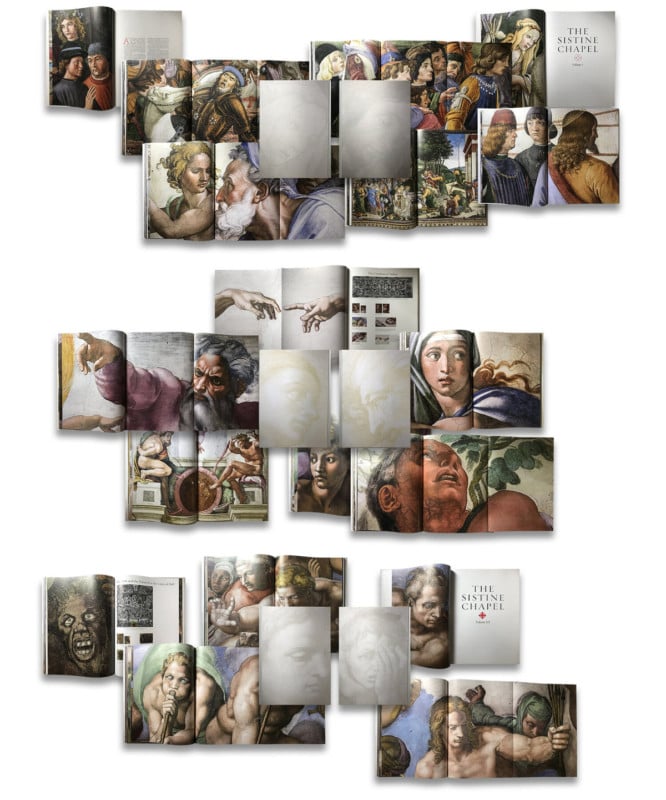
.png)
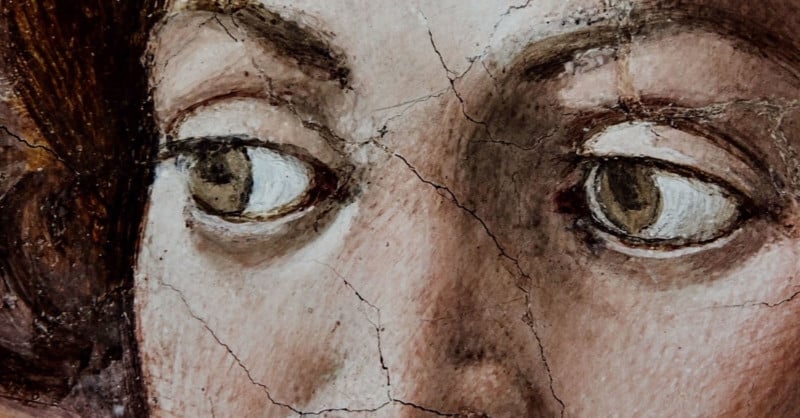
.png)
Now, how much will this little thing set back my dear wife? Only $22,000. She doesn’t know that yet. But, hey, that includes postage and shipping, so there’s that.
Norway has made “Biphobic, Transphobic Speech” illegal.” More specifically, “The penal code states that those who are guilty of hate speech face a fine of up to a year in jail for private comments, and a maximum of three years in jail for public remarks. Furthermore, those charged with violent crimes that are motivated by a victim’s orientation or gender identity will receive harsher sentences.”
So, a private comment deemed hateful to an LGBT person or persons could get you a one-year jail sentence. Make this comment in public, and you’re looking at three years in jail, the same penalty for third-degree murder (meaning, by neglect) in Norway.
Supporters of the bill note that “for prosecution comments must be direct attacks against LGBTQ+ people or include language that intentionally dehumanizes them to the public.”
But would quoting relevant verses from the Bible cross that line? Would stating that there are only two sexes cross that line? Would denying the term “marriage” to a same-sex union cross that line?
And just who gets to decide which “speech” will land you in jail?
And which kinds of speech will land you there 10 years from now?
Did you know North Korea sent boatloads of ballots into a harbor in Maine before the U.S. election? Totally true. No less an authority than Roger Stone, the dude convicted to lying to investigators in the Mueller probe, has let the cat out of the bag.
“I just learned of absolute incontrovertible evidence of North Korean boats delivering ballots through a harbor in Maine, the state of Maine. If this checks out, if law enforcement looked into that and it turned out to be true, it would be proof of foreign involvement in the election.”
So many questions, here:
- If the evidence is absolutely incontrovertible, then…where is it?
- Wouldn’t Kim want his buddy Trump to win anyway?
- So North Korean boats can now dump stuff off in Maine and not only are they not stopped, but the president doesn’t even know about it?
- Wouldn’t North Korean boats maybe go to a harbor on the same ocean as North Korea? Or did the crew have a craving for lobster?
Soooo many questions.
J.R.R. Tolkien’s Oxford house is up for sale: “The longtime home of the author J.R.R. Tolkien is about to re-enter the market, and a crowdfunding campaign has been started with hopes that Lord of the Rings and Hobbit fans will support an initiative to purchase, restore and turn the property into a Tolkien museum.” It’s a cool house, but I’m not sure how Tolkien himself would feel about it.

The more things change, the more they stay the same: “The best thing about reading lively narrative histories is the realization that we do not, in fact, live in uniquely strange times. The last few years have been unsettling, to say the least; but as Matthew Lockwood reminds us in his new book To Begin the World Over Again, so were the 1770s, ’80s, and ’90s. In his lengthy, leisurely study, he takes his readers from the eye of the storm in North America and London to the myriad lands that were affected by the American War of Independence, demonstrating that “a local protest over taxes in a remote corner of North America would end on the streets of Dublin, the mountains of Peru, the beaches of Australia, and the jungles of India.” Lockwood draws a moral from this spectacle and lays it out in his introduction: ‘Examining the revolution from a truly global perspective, both geographically and thematically, forcefully reveals the often tragic interconnectedness of the world, compelling us to contemplate ourselves in an entangled world rather than as an isolated, exceptional chosen people. Removing the blinkers of a narrowly national political point of view opens new horizons of understanding, allowing us to realize the most urgent lesson taught by America’s founding moment: American actions have, and have always had, unforeseen, unimagined global consequences.’”

This picture, taken last month, is of a 27-year old woman. Okay, not really. But she was conceived 28 years ago. Molly Gibson, a Tennessee baby born in this fall to Ben and Tina Gibson, set the record for the longest-frozen embryo to result in a live birth, more than 27 years. The previous record was set in 2017, when Molly’s older sister, Emma, was born after an embryo from the same donor couple was implanted in Ms. Gibson.
“Both pregnancies went smoothly,” Tina said. “Both are perfectly healthy.” The age of the embryos is something the couple now laughs about. “We always joke that Emma is an old soul. She does something and I’ll say, ‘That’s the ’90s baby coming out in you.’”
If you watch only one filipino cola ad made by insane middle-schooler boys on meth, make sure it’s this one:
One of the largest examples of ancient rock art has been discovered in the Amazon.

“Hailed as “the Sistine Chapel of the ancients”, archaeologists have found tens of thousands of paintings of animals and humans created up to 12,500 years ago across cliff faces that stretch across nearly eight miles in Colombia. Their date is based partly on their depictions of now-extinct ice age animals, such as the mastodon, a prehistoric relative of the elephant that hasn’t roamed South America for at least 12,000 years. There are also images of the palaeolama, an extinct camelid, as well as giant sloths and ice age horses.” There are more pictures here. And don’t tell Ken Ham.
Did you know that every year a group hosts the annual comedy wildlife photography awards? Let’s end with some of their finalists for 2020.


 The Internet Monk Archives