Days of Planting

Some of what I’ve encountered in recent days, personally, and as a hospice chaplain…

I found out that two friends, husband and wife, the man a former pastor with whom I shared a ministry, were diagnosed with Covid-19. At last report, they are not doing well, and may soon be admitted to the ER. They also have other family members in the hospital with the virus. I pray they will get the support they need and that God will reassure them with his presence and care.

Other very dear friends let me know that the baby they’re having has been diagnosed prenatally with a genetic disorder. At this point, no one knows quite how this will all turn out, but it’s pretty clear that the whole course of their life just changed dramatically. I don’t know what to think or feel or pray at this point. I can’t even imagine the anxiety and angst they are feeling.

I talked to the spouse of a gay man who had just come on to our service. A friend who has had a lifelong relationship with this man called to let me know he’d be in hospice. He’d been a banker, a leader in his community, and a person of faith his whole life. He had benefited my friend directly by helping him get started in business. As I listened, I chuckled and said, “Your friend reminds me of George Bailey, my hero from It’s a Wonderful Life.” He laughed in reply and said, “Yes, the world has been a better place because he’s lived.”

I made a bereavement call to a woman who lost her husband about a month ago. Now she’s alone, dealing with her own health problems, trying to carry on raising a teenage nephew and young niece on her own. Her daughter has been one of the most devoted family members I’ve ever seen. She drives about 100 miles each way almost every day to check in on her mom and to help her in practical ways.

I went on a death visit for a Korean woman who had married an African-American soldier and came back with him to the States. She had a large, diverse family, and they came from far and wide to be with her. Those who couldn’t were participating by video chat. There in the city, at a bedside surrounded by new black and Asian friends who welcomed me, a stranger, into their sacred space, I heard their stories, absorbed their tears, and prayed them and their loved one into God’s care.

Over the past couple of weeks, I’ve had a bit of extra time to work in our yard. One of the main joys I’ve had was being able to plant some trees. It reminded me of one of my favorite stories.

The Man Who Planted Trees, by Jean Giono, is the tale of a hermit shepherd who, day after day, planted seedlings in an effort to reforest an area in the foothills of the Alps.

His name was Elzéard Bouffier. He had once owned a farm on the plains. It was there he had lived his life. But he had lost first his only son, then his wife. After that he came here to be alone, enjoying an unhurried existence with his sheep and his dog. But it struck him that this part of the country was dying for lack of trees, and having nothing much else to do he decided to put things right. (p. 13)

The author in this fable tells how he followed the shepherd for many years and was astounded at the transformation the old man had been able to achieve through the simple act of planting trees.

When I reflect on the fact that one man, with only his own simple physical and moral resources, was able to bring forth out of the desert this land of Canaan, I can’t help feeling the human condition in general is admirable, in spite of everything. And when I count up all the constancy, magnanimity, perseverance and generosity it took to achieve those results, I’m filled with enormous respect for the old, uneducated peasant who was able, unaided, to carry through to a successful conclusion an achievement worthy of God. (pp. 30-31)

In the midst of all the talk lately about changing the world, it’s good for me to slow down for a few moments and pay attention to what’s possible right before me: digging a hole, disentangling the roots on a small sapling, replacing the soil, packing it down, and saturating it with water.

Listening to a friend cry over the phone. Trusting in the Spirit who prays when I have no words. Being present with and praying for strangers in pain. Giving thanks for people who live wonderful lives.

Planting. Our vocation.

Privilege, silence, shalom, and a generational moment

Our Declaration of Independence declares that all people are created equal. It proceeds to clarify what “equality” means: we are all endowed with certain natural rights by our Creator. But, though we may all have those rights, not all people start life or live it on an equal footing with others. And thus we speak today about “privilege.”

I am a privileged person. I am a white Caucasian male, born into an intact family. I have loving parents who raised me in safe, stable communities. I had access to a middle-class lifestyle, a good education from kindergarten through graduate school, and a multitude of opportunities that were not difficult to find or obtain. I never felt threatened or afraid (except by the occasional bully). I never wondered where my meals might come from. I knew I would get nice birthday and Christmas presents. I’ve always been healthy. Much was given to me before I even took my first breath, and the rest was pretty much there for the taking without extraordinary effort. Life’s been good.

My parents and grandparents worked hard to procure this life for me, but they grew up in relatively privileged, advantageous settings as well. And so it has been true for many people like me for generations.

We all know my experience is far from universal (though I conveniently forget about it often). I’m privileged to be who I am and where I am.

Privilege is not something to feel guilty about. It’s a fact. Some have more advantages than others. However, to cite Jesus, it is something to always keep in mind:

  • first in terms of my own personal responsibility (“to whom much is given, much is required”),
  • and also in terms of being mindful of those who’ve not had such privileges (“love your neighbor as yourself”).

It is my sacred duty to try and understand my neighbors, where they come from, and to serve them in ways that will honor their dignity, lift them up, and help them flourish. And, on the structural side, I’m called to advocate and work for a society in which the starting line and the path will be more level for everyone. All my neighbors should have opportunity and access to better lives. That is the work of justice, and it’s the only way we can all find lives of shalom together.

Now, that is about all I can say at this point regarding the current social upheaval we are experiencing after the death of George Floyd in Minneapolis.

There is ZERO chance I can say anything on behalf of people of color regarding their lives and experiences. I can simply say I am for them. I am for justice. I am for shalom. As a Christian I believe Jesus died and rose again to break down the walls between those who are at enmity with one another. I am willing to do my part in helping us take steps toward dancing together on the rubble. However, that project first involves taking a stance of listening about 99% of the time these days. The world does not need yet another privileged white man spouting opinions about matters far beyond his experience and expertise and adding to the noise.

It’s possible that what we are seeing today is a generational moment, just like the decade of the 1960s. The strongest voices I am hearing these days are from young people. Their experience has been much different than mine. I have children who married people of color, and who now have children who will be growing up in this world. My kids and others their age are more sensitive to matters of racial disparity and injustice because they see similar faces in their own families. I’m convinced that these organic changes are integral to societal advancement.

So I am happy to let the young speak and to support them in the wisest and best ways I can discover.

My kids grew up with this album and this song playing in our home. Today they are hearing and helping the whispers of revolution grow louder.

When you don’t have much to say…

When writing, I have to fight the urge to not say something when I have nothing to say…

There is nothing fully formulated in my brain that is worthy of a full post, but here are a few snippets that I have been thinking about during the past week.

1. My Dad was given a 20% chance of surviving his 9th surgery last Sunday night. He made it! He is not ready to come home just yet, but he is getting closer. We have certainly appreciated everyone’s prayers.

2. Empathy is not my strong suit. I wish it was. But, “until you have walked a mile in a man’s shoes…”. So for the most part, I have been leaving comments on the current events in the U.S.A. recently to others. I COULD write something, but I feel that it would come across as empty rhetoric.

3. I had also been thinking about writing about White Privilege. But then again, when you come from a family where an aunt and an uncle died of starvation (in Canada no less), and my own grandfather shoveled coal on a Navy ship to escape poverty, I think that anything that I might have to say would not sound genuine. I don’t deny that it exists, but except for a couple of incidences that I can point to, it is not really my lived experience.

4. Covid-19. I think there is both good news and bad news here. I think that social distancing can be effective, and we that can start to get on top of it, just so long as we don’t have any mass demonstrations.

5. Just a couple of kilometres from where my parents live a farm owned by the nephew of their dog-sitter, had 164 cases last week. Those who were hospitalized were taken to the small country hospital where my dad is recuperating. So, some cause for concern there.

6. I have book review coming. Musick for the King by Barrie Doyle. Probably next week. It has been an excellent read so far. Here is the cover summary:

He could go on no longer. George Frederik Handel was staring debtor’s prison in the eye; he was depressed and suffering from various illnesses. Now, faced with crushing verbal, intellectual, financial and even physical opposition, he was ready to quit. That he was the visible pawn in the vicious and hate-filled political and cultural dispute between King George II and his son Frederick, Prince of Wales, added to his woes. Britain’s most famous composer considered leaving Britain forever.

Two encounters altered everything. And changed music forever. A strange, revolutionary text for an oratorio and an invitation to Dublin, Ireland rejuvenated him. Handel threw himself feverishly into the new work, Messiah, completing it in only twenty-four days.

Vicious opponents still sought to destroy him and drive him out. Some in the church rose to prevent Messiah from seeing the light of day; they objected to his hiring a singer disgraced in a sordid court case and objected to sacred music performed in a secular location with secular performers.

Through it all, Handel slowly realized that the music and the story it portrayed was bigger than him, bigger than any performance, bigger even than the King. His struggles to present Messiah to the public mirrored his own internal battles to understand and eventually revolutionize his own beliefs. He was determined to succeed!

A superb sweep through the creation of the magnificent Messiah and the fascinating characters—real and fictional—that influenced the story.

7. And to top it off, I have been under the weather the last few days. Please pray for me, as I have a lot of work for work, plus I have fallen behind on my own house work, plus I have to head out sometime early this week get my Dad from the hospital and help my Mum look after him.

8. I have however almost finished up giving my back yard a cottagey feel. It is not like we are going anywhere this year!

As usual, your thoughts and comments are welcome.

Excerpt from “The Sins of a Nation” (Fr. Stephen Freeman)

Abraham and the Three Angels. Chagall

An excerpt from “The Sins of a Nation”
By Father Stephen Freeman, Glory to God for All Things

Nations (and individuals) who ignore their wounds and griefs do not leave them behind – they bring them forward and repeat their battles endlessly. Subsequent generations who never knew the first cause, become the unwitting bearers of the latent violence and destruction that they have inherited.

Though Orthodoxy does not generally use the term “original sin,” it doesn’t thereby deny the reality of the inherited burden of sin. The growing study of epigenetics would suggest that we may even inherit such burdens genetically.

The medicine we have received from Holy Tradition for this on-going sickness is repentance. Of course, it is very difficult for nations to repent, though there would easily be services for such in the Orthodox tradition. However, the shame associated with national or collective sin is often denied or retold in other ways. Without repentance, nations are doomed to relive, repeat or act out the bitterness of their trauma.

There is, of course, another way. It was first expressed in the prophetic words of the High Priest Caiaphas as he contemplated the Jesus problem:

“You know nothing at all, nor do you consider that it is expedient for us that one man should die for the people, and not that the whole nation should perish.” (Joh 11:49-50)

The death of Christ on the Cross becomes the public liturgy for the sin burden of Israel. Of course, He was the public liturgy for the sin burden of the whole world. But there was a principle articulated in His sacrifice – that one man could die for the whole. This is not a substitutionary legal event. Rather, it is the mystery of coinherence and koinonia. “He became what we are that we might become what He is,” the Fathers said. It has also been the knowledge of the Church that we are invited into that selfsame sacrifice. Buried into His death in Baptism, we are united to His very crucifixion. United with Him in the grave, we journey with Him into Hades, and there, brave souls make intercession for the sins of the whole world, and with Him set souls free. The Elder Sophrony describes such brave souls as Christ’s “friends.”

For at least as long as the days of Abraham, we have had intercessors who saved the cities and nations of the wicked. Their prayers were effective because they prayed in union with the one mediator and true advocate, Christ our God.

Abraham was God’s friend. As God visited with him, He said:

“Shall I hide from Abraham what I am doing, since Abraham shall surely become a great and mighty nation, and all the nations of the earth shall be blessed in him?” (Gen 18:17-18)

This is God’s inauguration of Abraham as an intercessor for the nations. The greatest friends of God have always taken up this same intercessory role. Through Christ and the prayers of our holy fathers, God preserves the world and saves the nations from the full brunt and weight of their history.

There are thus two kinds of people: those who are the weight of history, and those who join themselves to Christ in their repentance and bear the weight of history. This latter role is the true life of the Church and the heart of her who prays, “On behalf of all, and for all.”

Saturday Brunch, June 6, 2020

Good morning, my friends, and welcome to the weekend. Ready for some brunch?

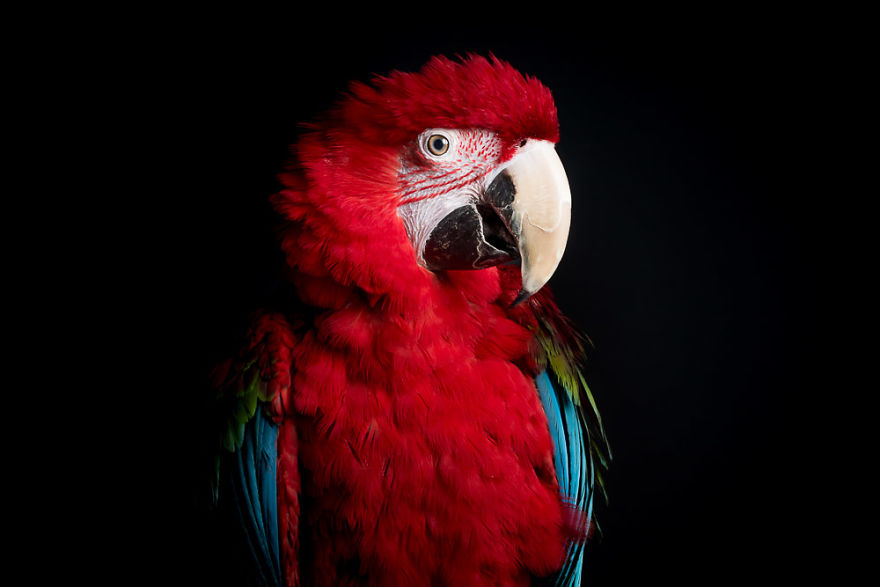
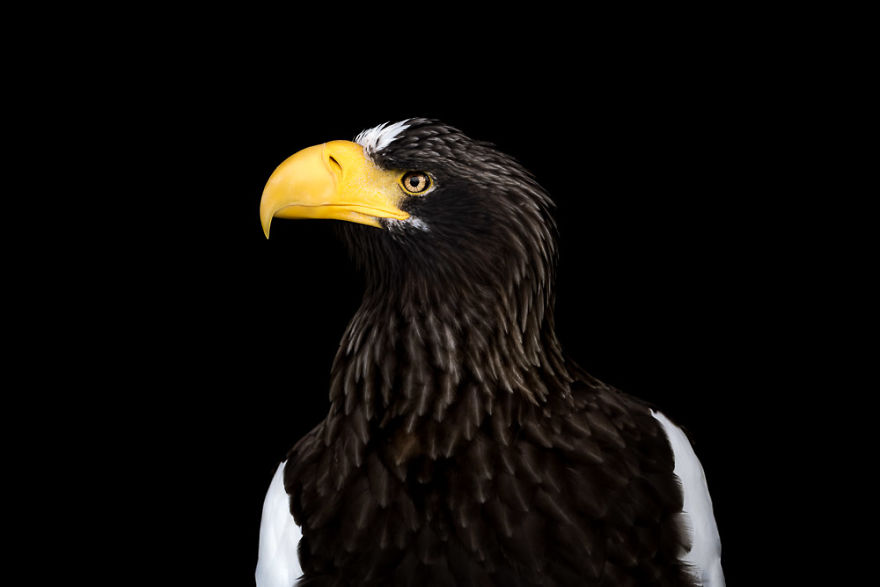
The beauty of animals has always haunted and delighted us. The first artwork were cave sketches of animals. But George Wheelhouse takes a novel approach: “I started photographing animals against dark backgrounds due to my obsessive instinct to remove as much distraction as possible from my images. At times I’ve also played with the idea of how little I can show off an animal, with the rest falling to shadow. The aim of this project is to spark a connection between subject and viewer, and present animals in ways they haven’t been seen before.”

I will be interspersing his photos throughout the brunch. Let’s start with this:

Green-Winged Parrot

Let’s just get this out of the way: “Imagine” is worst song ever written. Well, maybe not the absolute worst. We do, after all, live in a world in which Muskrat Love made the Billboard Top 10 at one point. But certainly the most over-rated. And certainly, beyond-a-doubt, the worst song shallow politicians will evoke after weeks like this one. Matthew Walther gives us some of the problems with “Imagine.”

Where do you even begin? The droopy four-bar intro? The soporific nasal whine of Lennon’s voice? The mind-numbing facetiousness of ending the verses with ‘youuuuuuuu’ and then starting the chorus with the same word? The other lyrics that insult the intelligence with such ferocity that I’m pretty sure singing it violates the Geneva Convention? The part where the rock star who wrote this song in about an hour (it shows, by the way) in one of several luxury homes he owned encourages you maybe to consider having ‘no possessions,’ presumably including underwear and a toothbrush, and then passive-aggressively insists that you’re so attached to your stuff that you can’t even contemplate the idea?”

The real problem with “Imagine” is the theme, if that word can be used fairly to describe a series of nonsensical propositions delivered according to no detectable logical pattern.

Start with the word salad of Marxism, anarchism, and existentialism. Nowhere is there even the faintest hint of how any of the hypotheticals we are being asked to consider might be realized. Instead Lennon does the political equivalent of telling us that the real magic was inside us all along. A far more serious problem is that even if additional verses did somehow outline a series of discrete practical steps that tomorrow could bring about the actual world he envisions, no one would want to live in it. This is because it is fundamentally nihilistic, a vision of a reality in which “lol nothing matters” is elevated to a first-order principle. This is a problem. A world in which nothing is worth dying for is one in which exactly zero of the things from which we derive meaning and pleasure could exist. The effect is worse than purgatorial: It is an actual vision of hell.

Swaledale Sheep
Did some ancient Israelites use weed during worship? A well-preserved substance found in a 2,700-year-old temple in Tel Arad has been identified as cannabis, including its psychoactive compound THC. Researchers concluded that cannabis may have been burned in order to induce a high among worshippers. This is the first evidence of psychotropic drugs being used in early Jewish worship, Israeli media report.

The temple was first discovered in the Negev desert, about 95km (59 miles) south of Tel Aviv, in the 1960s. In the latest study, published in Tel Aviv University’s archaeological journal, archaeologists say two limestone altars had been buried within the shrine. Thanks in part to the dry climate, and to the burial, the remains of burnt offerings were preserved on top of these altars.

Frankincense was found on one altar, which was unsurprising because of its prominence in holy texts, the study’s authors told Israeli newspaper Haaretz. However, tetrahydrocannabinol (THC), cannabidiol (CBD) and cannabinol (CBN) – all compounds found in cannabis – were found on the second altar.

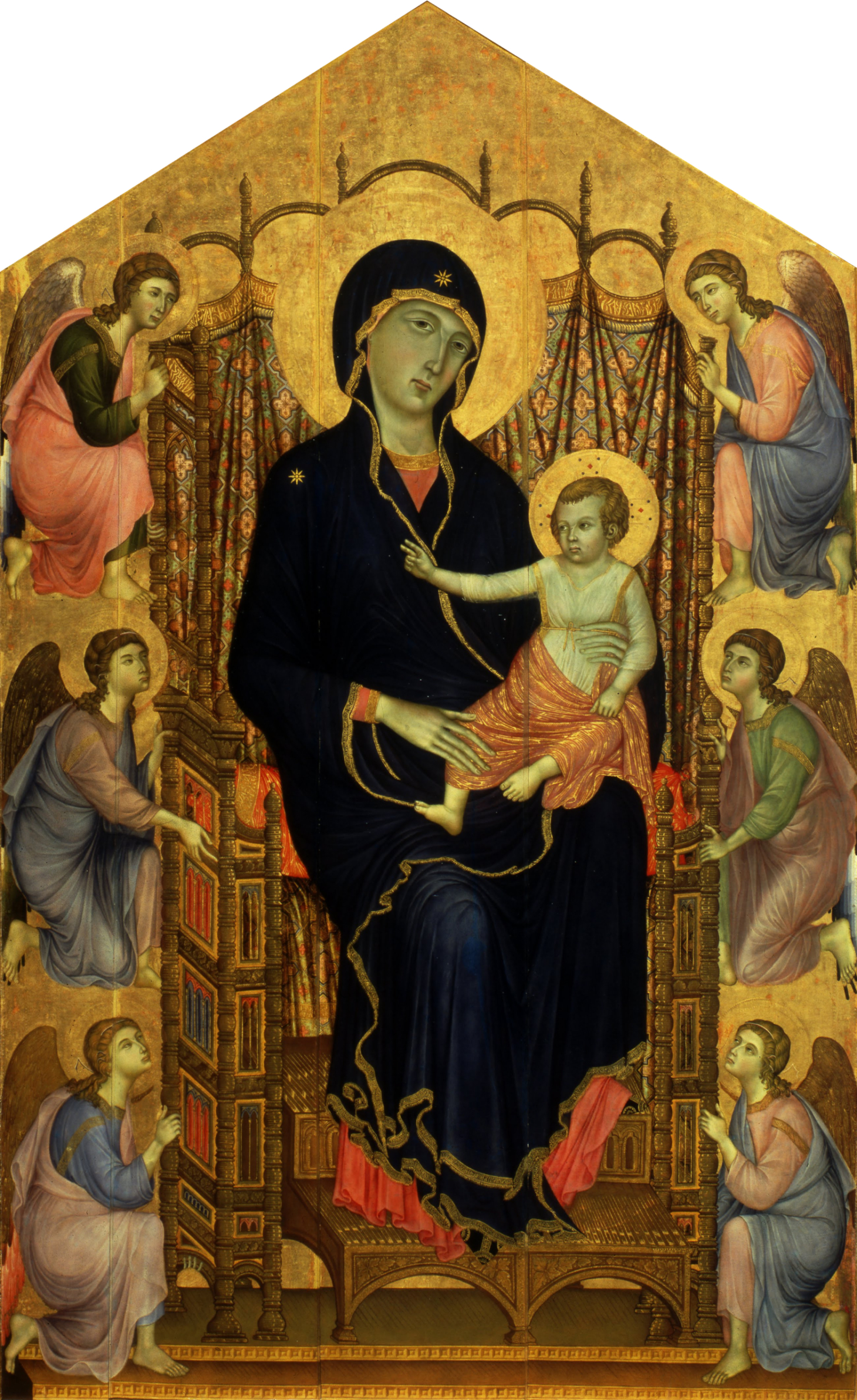
The Uffizi Gallery in Florence is by far the greatest museum I have visited. Its collection of Renaissance art is unmatched. This week the director of the Uffizi said that  religious art in museums should be returned to churches: “Eike Schmidt, who has led the museum since 2015, told the Art Newspaper that ‘devotional art was not born as a work of art but for a religious purpose, usually in a religious setting.’ Schmidt cited a specific example from the Uffizi’s own collection, the Rucellai Madonna painted by the Sienese artist Duccio di Buoninsegna in the Middle Ages. The gold-ground panel of the Virgin and Child enthroned, the largest painting on wood from the 13th century known to date, was removed from the church of Santa Maria Novella in 1948. Viewing such a work in the context for which it was created, says Schmidt, is not just appropriate from an historical perspective, but could also connect the viewer with its spiritual significance.”

“Devotional art was not born as a work of art but for a religious purpose, usually in a religious setting”, he told The Art Newspaper. He went on to say that, returned to the building for which it was created, it would be seen in the right historical and artistic space and the viewer would potentially be led to recognize its spiritual origins. “If we did not believe that context was important”, he said, the Italian state would not have the legal concept of the art or architectural fixture [vincolo pertinenziale], or practice contextual archaeology instead of an Indiana Jones-type scrabble for mere masterpieces”.

Hmmmm. What do you think?

Chameleon Close-Up

For the first time, the police in Hong Kong prohibited an annual vigil to honor the victims of the 1989 Tiananmen Square protests.

Why the great anger among the black community towards the criminal justice system? The New York Times sums it up well:

For most white Americans, interactions with the police happen rarely, and they’re often respectful or even friendly. Many white people don’t know a single person who’s currently behind bars.
In many black communities — and especially for black men — the situation is entirely different. Some of the statistics can be hard to fathom:
  • Incarceration rates for black men are about twice as high as those of Hispanic men, five times higher than those of white men and at least 25 times higher than those of black women, Hispanic women or white women.
  • When the government last counted how many black men had ever spent time in state or federal prison — in 2001 — the share was 17 percent. Today, it’s likely closer to 20 percent (and this number doesn’t include people who’ve spent time in jail without being sentenced to prison). The comparable number for white men is about 3 percent.
The rise of mass incarceration over the last half-century has turned imprisonment into a dominant feature of modern life for black Americans. Large numbers of black men are missing from their communities — unable to marry, care for children or see their aging parents. Many others suffer from permanent economic or psychological damage, struggling to find work after they leave prison.
A recent study by the economists Patrick Bayer and Kerwin Kofi Charles found that 27 percent of black men in the prime working years of their lives — between the ages of 25 and 54 — didn’t report earning a single dollar of income in 2014. “That’s a massive number,” Charles, the dean of the Yale School of Management, told me. Incarceration, including the aftereffects, was a major reason.

The anger coursing through America’s streets over the past week has many causes, starting with a gruesome video showing the killing of George Floyd in Minneapolis. But that anger has also been building up for a long time. It is, in part, anger about incarceration having become normal.

Stella's Sea Eagle On Black
I LOVE the videos from the Bible Project. Here is one describing the meaning of Jesus as the Water of Life:
N.B.A. takes Disney World. The N.B.A. is in talks to resume its pandemic-shortened season by hosting the league at Walt Disney World in Florida. Players would live in Disney hotels, and all games would be held at the nearby ESPN Wide World of Sports complex. Why Disney World? Well, it doesn’t hurt that the ESPN facility is already wired to broadcast games on its network — and that Disney, its parent company, pays the N.B.A. more than $1 billion a year for the right to air them.

White-Tailed Sea Eagle

Where did the CDC go wrong? The New York Times waded through thousand of emails and conducted a hundred interviews, and they summarize the problems here:

Aging data systems left the agency with blind spots.

The C.D.C. clashed with White House aides who viewed them as the ‘deep state’.

The culture at the C.D.C. — risk-averse, perfectionist and ill suited to improvising in a quickly evolving crisis

The Director Redfield felt he was ‘on an island’ between his agency and the White House.

Confusing guidance left doctors, public officials and others to look elsewhere.

The customer is ALWAYS right. That was the mantra of this loader after the buyer of his top soil insisted that five yards of top soil would fit in his trailer. Enjoy!

I really, really, really don’t like to mention a certain politician in the brunch. But I was outraged at the way Trump used the Bible and Church as props to his verbal assault on the rioters. Even televangelist Pat Roberts criticized Trump’s photo op at St. John’s Church this week. Jimmy Fallon said, “You know we live in crazy times when we’re all agreeing with the guy who once said gay people cause hurricanes.”

A high school sports policy in Connecticut that allows transgender students to participate in athletics based on their gender identity violates federal law and could cost the state federal education funding, the Education Department’s Office for Civil Rights has found. The students bringing the lawsuit contended that the policy gave transgender students an unfair advantage in athletic competition and in the race for public recognition that is critical to college recruiting and scholarship opportunities. The office said that, after an investigation, it had found that the policy violated Title IX, the 1972 federal law that prohibits sex discrimination in programs that receive federal funding. By allowing transgender students to compete on female track teams, the policy “denied female student-athletes athletic benefits and opportunities, including advancing to the finals in events, higher level competitions, awards, medals, recognition, and the possibility of greater visibility to colleges and other benefits,” the office said.

Low Key Lion Portrait

Okay, we are going to end this brunch with an amazing video of Captain and Tennille singing their classic, Muskrat Love. Why? Because I don’t like you. And because no matter how bad things get in 2020, we need to remember that we no longer live in a time when this would be broadcast on network TV. (By the way, make sure you listen to at least the 2:20 mark, otherwise you will likely never hear the diarrhea setting on a keyboard again).


Another Look: Our Relational God

Trinity Icon, Rublev

Another Look: Our Relational God

This Sunday upcoming is Trinity Sunday, the day that bridges the two main divisions of the Church Year. We have been walking through the life of Jesus from Advent to Pentecost since last November. Now, we begin the days of “Ordinary Time,” when we live out the faith daily as Christ’s church, embraced by the Good News of salvation and filled with his Spirit.

About Today’s Art
“Many scholars consider Rublev’s Trinity the most perfect of all Russian icons and perhaps the most perfect of all the icons ever painted. The work was created for the abbot of the Trinity Monastery, Nikon of Radonezh, a disciple of the famous Sergius, one of the leaders of the monastic revival in the 14th-century Russia. Asking Rublev to paint the icon of the Holy Trinity, Nikon wanted to commemorate Sergius as a man whose life and deeds embodied the most progressive processes in the late 14th-century Russia.

…From the earliest times, the idea of the Trinity was controversial and difficult to understand, especially for the uneducated masses. Even though Christianity replaced the pagan polytheism, it gave the believers a monotheistic religion with a difficult concept of one God in three hypostases — God the Father, God the Son, and God the Holy Spirit. Not only the uneducated population but many theologians had difficulties with the concept of the triune God; from time to time, a heretical movement, like Arianism, questioned the doctrine, causing long debates, violent persecutions, and even greater general confusion. Trying to portray the Trinity, but always aware of the Biblical prohibition against depicting God, icon painters turned to the story of the hospitality of Abraham who was visited by three wanderers. In their compositions, icon painters included many details — the figures of Abraham and Sarah, a servant killing a calf in preparation for the feast, the rock, the tree of Mamre, and the house (tent) — trying to render as faithfully as possible the events described in the text. (Genesis, 18:1-8)

• Alexander Boguslawski

The Holy Trinity
The Church’s belief in the triune God — we believe in one God who is three persons in one essence — is foundational for Christian faith. This teaching is fully spelled out in the Athanasian Creed. Of course, this doctrine is a mystery, transcending human mathematical logic. However, it is perhaps the most practically important fundamental teaching of the faith, for it clarifies who the true and living God is, and what he is like. In particular, it reveals that he is a personal, relational God.

This God who acts is not only a God of energies, but a personal God. When humans participate in the divine energies, they are not overwhelmed by some vague and nameless power, but they are brought face to face with a person. Nor is this all: God is not simply a single person confined within His own being, but a Trinity of three persons, Father, Son, and Holy Spirit, each of whom ‘dwells’ in the other two by virtue of a perpetual movement of love. God is not only a unity but a union.

• Timothy Ware (Bishop Kallistos of Dioklesia), The Orthodox Church, p. 209

This mutual indwelling of the Persons of the Trinity has been known as “Perichoresis.” We use a word that comes from this — choreography — to describe the art of dance. The image brought out in the term perichoresis is that of dynamic movement and loving interaction, as in joyful dancing. As Peter Leithart describes it:

The unity of the Tri-unity should not be understood as “sitting together,” as if the Persons were merely in close proximity. Nor should perichoresis be understood as a static containment, as if the Son were in the Father in the way that water is in a bucket.

Rather, perichoresis describes the Persons as eternally giving themselves over into one another. It is not that the Father has (at some “moment” in eternity past) poured Himself out into the Son, but that He is continually pouring Himself into the Son, and the Son into the Spirit, and the Spirit into the Father, and so on. To talk about God’s “perichoretic” unity is to talk about a dynamic unity, and to talk about a God who is always at work, always in motion, pure act. It is to say that the life of God is peri-choreographed.

• “The Dance of God, the Dance of Life,” Leithart.com

Furthermore, through this knowledge of God, we come to know who we are as human beings. For we are created in the image of the triune God. As Genesis 1:26-28 (NRSV) affirms:

Then God said, “Let us make humankind in our image, according to our likeness; and let them have dominion over the fish of the sea, and over the birds of the air, and over the cattle, and over all the wild animals of the earth, and over every creeping thing that creeps upon the earth.”

So God created humankind in his image,
in the image of God he created them;
male and female he created them.

God blessed them, and God said to them, “Be fruitful and multiply, and fill the earth and subdue it; and have dominion over the fish of the sea and over the birds of the air and over every living thing that moves upon the earth.”

Our social programme, said the Russian thinker Feodorov, is the dogma of the Trinity. Orthodoxy believes most passionately that the doctrine of the Holy Trinity is not a piece of ‘high theology’ reserved for the professional scholar, but something that has a living, practical importance for every Christian. The human person, so the Bible teaches, is made in the image of God, and to Christians God means the Trinity: thus it is only the light of the dogma of the Trinity that we can understand who we are and what God intends us to be. Our private lives, our personal relations, and all our plans of forming a Christian society depend upon a right theology of the Trinity.”

• Ware, p. 208

As human beings, we relate to one another in the “dance of life” on this planet. The relationships between the three Persons of the Trinity — dynamic, interactive, loving, serving — form the model for our human dance steps. Unfortunately, through sinfulness we corrupt the dance into a choreography of conflict.

However, now through the Gospel, Christians have been brought into a special relationship with the triune God. Through Christ’s incarnation, ministry, death, resurrection, and ascension, and by the regenerating action of the Spirit, we prodigals have been brought home and embraced by our Father. Gathered into the household of faith, we now enjoy the feast of the fatted calf, and participate in the dance party that is taking place in the Father’s house. In this way we exemplify the reality and nature of God and bring his Good News to a world that has forgotten how to dance.

The four texts for this Sunday are: Genesis 1:1-2:4a, Psalm 8, 2Corinthians 13:11-13, and Matthew 28:16-20. From these four passages, the following truths emerge.

  • The true and living God is a personal, relational God who created us to be like him (Gen. 1)
  • The most important aspect of life is holy and healthy relationships (Gen 1, 2Cor 13)
  • As humans, we are created to live in relationships that are fruitful, exemplifying the goodness of creation and pointing to the new creation. (Gen 1, Ps 8, 2Cor 13, Matt 28)
  • God’s family, the church, is to be the ultimate exemplar of such relationships, living out the grace, love, and fellowship of the Holy Trinity in the world. (Matt 28, 2Cor 13)

I encourage you to take a few moments today and throughout this weekend to meditate on these Scriptures and contemplate the significance of the triune nature of God. Go further into these questions:

  • What does it tell us about who God is and what God is like?
  • What implications does it have for we humans, created in his image? W
  • hat does it say to the church, God’s ambassadors here in this world?

How Satire Challenges Misconceptions about Science

How Satire Challenges Misconceptions about Science

In the June issue of National Geographic there is an article by  Paul Brewer and Jessica McKnight entitled, “To challenge misguided beliefs about science, try satire”.  In it they show from various studies how the use of satire can change people’s minds about controversial scientific issues.  They say:

Since 2013, Paul has conducted three studies of how satire can influence people’s beliefs about issues such as climate change, genetically modified foods, and vaccinations. We worked together on two of these studies, and with other colleagues Jessica recently tested whether late-night television can debunk misperceptions of vaccines. Our and others’ research has shown that if you want to interest people in science and shape their views on hot-button science issues, satirical humor can work better than a straitlaced approach.

As our favorite science officer might say, “Fascinating”.  The article notes that most Americans pay little attention to scientific issues and the media they usually consume is a veritable desert of actual scientific information.  Yet Brewer and McKnight note that satirical humor can reach viewers who would never watch NOVA or read—well, National Geographic.  Shows like John Oliver’s “Last Week Tonight”, Stephen Colbert’s “Late Show”, Noah Trevor’s “The Daily Show”, and Samantha Bee’s “Full Frontal” are quite popular and well-watched (especially by younger people).  The article notes in 2016, when Brewer, his colleague Barbara Ley, and the University of Delaware Center for Political Communication polled a nationally representative sample of Americans, nearly one in 10 said they learned about science from late-night television shows and this figure was even higher among young people.

It’s not hard to see why this relationship between science and satire should exist.  By making science entertaining to audience members with little knowledge of the topic, satirical television is acting as a gateway to science engagement.  But does it effectively change minds?  Brewer and McKnight cite a number of studies that purport to demonstrate just that.  In 2013 they tested how watching a clip from The Daily Show or The Colbert Report influenced audience members’ beliefs about climate change. Viewers who saw Jon Stewart say that global warming is real came away more certain that climate change is happening.

In a 2015 follow-up study, they found that late-night humor can influence how viewers perceive climate science itself. They tested the effects of a Last Week Tonight segment in which host John Oliver and guest Bill Nye hold a “statistically representative climate change debate” to illustrate the scientific consensus on the issue. Their “debate” shows Nye and 96 other scientists drowning out three global warming doubters. Watching this segment swayed study participants to see scientists as believing in human-caused climate change—which, in turn, bolstered participants’ own certainty that global warming is happening. The effect was strongest among those least interested in science.

They note other research has revealed the same sorts of effects.  A study by Ashley Anderson and Amy Becker found that after watching a satirical video produced by The Onion, formerly apathetic viewers felt more certain that climate change is taking place and is a serious problem.  Late-night TV hosts have also derided groups that, for example, cite a single discredited study to blame autism on vaccines, or push for teaching creationism in public schools despite the mountain of evidence for evolution.  They theorize that humor may be more effective at debunking scientific nonsense because it doesn’t elicit the backlash that traditional science communication efforts seem to produce.  The article says:

And late-night humor can spark science engagement as well. A national survey by researchers Lauren Feldman, Anthony Leiserowitz, and Edward Maibach found that watching satirical comedy programs went hand in hand with paying more attention to science stories. Furthermore, the researchers concluded that satirical shows had the biggest impact among the least educated viewers, thereby helping to narrow a gap in attention to science.

I can bring my own personal testimony to this article.  My involvement as a participant in evangelicalism brought the belief in “pre-tribulation rapture” and the attendant belief in “Seven-year tribulation” and other such interpretations of Revelation made popular by Hal Lindsey, John Hagee, Tim Lahaye, and others.  I had read counter theology from preterists and others, but reading the series of satirical takedowns of the Tim Lahaye and Jerry Jenkins’ “Left Behind” books by Fred Clark on his Slacktivist blog completely convinced me of the utter impossibility that the scenario Left Behind described could in any way be true or a true interpretation of the scriptures.  Through his satire, Clark completely demolished the pre-trib theology more thoroughly than any straight-forward theological tome possibly could.  And it was funny, too!

The article concludes:

At its best, late-night satire encourages viewers not only to follow science but also to think critically about it. An episode of Last Week Tonight made that point with a poke at how news outlets cover scientific studies. Host John Oliver warned against “thinking that science is à la carte and if you don’t like one study, don’t worry, another will be along soon.” He ridiculed media coverage of science that oversimplifies and sensationalizes findings, misuses statistics, and cherry-picks results. And he parodied such presentations with his own brand of “TODD talks”—for Trends, Observations, and Dangerous Drivel.  The members of his audience may be laughing, but they seem to be learning as well.

Using God — A Prophetic Critique

Note from Chaplain Mike

I have decided to post without taking comments today. I am interested in making a statement, not having a conversation (or argument) about it in this week’s volatile atmosphere. (Besides, I think many of you chimed in about this yesterday.)

Also, although politics is the context of this post, politics is not the subject.

The subject is the Christian faith and how a political leader is transparently co-opting it for baser purposes.

Political policies or positions aside, this is about egregious acts that hit right at the heart of my life as a called and ordained minister of the gospel of Jesus Christ. These acts deserve prophetic critique, and — this is important — not primarily as condemnation of the party involved, but for the sake of the church in the United States. If the church doesn’t see it clearly now, I doubt she ever will.

• • •

He used violent means to ask to be escorted across the park into the courtyard of the church. He held up his Bible after speaking [an] inflammatory militarized approach to the wounds of our nation. He did not pray. He did not offer a word of balm or condolence to those who are grieving. He did not seek to unify the country, but rather he used our symbols and our sacred space as a way to reinforce a message that is antithetical to everything that the person of Jesus, whom we follow, and the gospel texts that we strive to emulate … represent.”

• Bishop Mariann Edgar Budde, Episcopal Diocese of Washington

The church has to stand up in its prophetic role to stand outside of power and say, man, President Trump, we pray for you but what you did was wrong.

Pastor Patrick Ngwolo (George Floyd’s pastor)

On Monday, I witnessed the most cynical and self-aggrandizing use of God and religion I think I’ve ever seen. The President of the United States, declaring himself the new law and order president while piously saying he has always stood with peaceful protestors, subsequently relied upon police and National Guard troops to violently clear a perimeter full of such protestors so that he could walk across the street to pose in front of a church, Bible held high.

Apparently, the crowd-clearing action was ordered by Attorney General William Barr. But that part of the act deserves primarily political critique. The government does not have the right to disperse protestors who have gathered legally and peacefully to exercise their constitutional right of free assembly. DC Mayor Muriel Bowser rightly called it a “shameful” action.

What I’m more angry about is when a politician transparently uses God and the Christian faith as leverage to prop up his own power.

Since 1816 St. John’s Episcopal Church has been known as the “Church of Presidents,” but Mr. Trump cares nothing for that traditional relationship. He did not even let the church know he was coming, nor did he confer with them about using the building as a backdrop for his stunt. The church building and the Bible were used merely as props for the president to make a visual claim that he alone is the Defender of the Faith and Protector of the Nation.

It’s impossible for me to believe that there’s a single serious Christian who can’t see what’s going on here. Trump, backed into a corner, pulls out the religion card.

He did it again on Tuesday. That’s when he and first lady Melania Trump made a visit to the Saint John Paul II National Shrine and laid a wreath there. Washington Archbishop Wilton D. Gregory was appalled. “I find it baffling and reprehensible that any Catholic facility would allow itself to be so egregiously misused and manipulated in a fashion that violates our religious principles,” he complained.

When he returned to the White House, Trump signed an executive order on international religious freedom.

Of course, all this appeared quickly on the “TrumpTeam” Twitter feed, promoting Mr. Trump as the strong and faithful leader the nation needs during this crisis.

But this is really about using God. Don’t you see?

This is nothing new, of course. In fact it’s the American way. But start with the Bible’s first verse, go to the first commandment, thumb over to Jesus’ definition of the greatest commandment, and it becomes clear that the Bible Donald Trump held up says that God is not to be used for our purposes. We exist because of God and for God. We are to honor nothing before God. Our first duty is to love God with all our hearts.

God is the sun and we are planets, revolving around him, not vice versa. Donald Trump has never, apparently, had that Copernican revolution in his heart and mind. Rather, God is just another weapon in his arsenal to gain and protect his power.

“Let me be clear. This is revolting. The Bible is not a prop,” the Rev. James Martin, a Jesuit priest and author, wrote Monday on Twitter. “A church is not a photo op. Religion is not a political tool. And God is not a plaything.”

Furthermore, it’s insulting to people who take faith seriously. This is a slap in the face of Christians. The president gives them trifles with one hand to keep them on his side, and then abuses and shames what they believe with the other hand at every turn. So many, especially those who identify as “evangelicals,” have become as predictable as little trained animals. Mr. Trump knows how and when to ring the bell and keep them coming back for more.

A number of them opine that he is some kind of unusual heaven-sent servant, some Cyrus or Nebuchadnezzar that God is using to accomplish his will in surprising fashion. The truth is, Donald Trump has put himself in the driver’s seat and he’s doing his best to use God, and he’s using them too to keep himself there.

He’s the man behind the curtain, folks. He whips up support with all kinds of bluster and little tricks, but he’s just a sad, weak, self-absorbed little man who thinks he can hold up a Bible and fool you again.

If you can’t see that now, I have little hope for you.

Not as bad as 1968…yet

Apocalypse then – Chicago burning in 1968

Not as bad as 1968…yet

In the past days, 1968 has emerged as a meme, a way to understand what we’re living through right now.

• Zachary Karabell

[In 1968] the report of the Kerner Commission, appointed by President Lyndon B. Johnson to examine the causes of race riots in American cities in previous years, declares the nation is…”moving toward two societies, one black, one white–separate and unequal.”

• Matthew Twombly

• • •

At Politico, Zachary Karabell reminds us that there have been worse years in American history.

The worst one I’ve lived through was 1968.

For certain, 2020 has been pretty much a total downer so far — pandemic, economic fall off the cliff, election year animus and claptrap, political and cultural leadership of questionable (at best) character and quality, racial strife, riots and trouble in the streets of major U.S. cities. And it’s only June.

However, by June in 1968, the year Smithsonian Magazine called “The Year that Shattered America,” our country was mired in an increasingly unpopular war, some of her clearest moral voices quieted by assassination, her cities on fire, her politics in chaos, and her people divided by race, generational disputes, and a multitude of cultural issues.

In January, the North Vietnamese launched the Tet Offensive, which the U.S. and S. Vietnam fended off, but at the cost of American support for a difficult, extended war. This became a turning point for both public and troop morale with regard to Vietnam.

Also in January, N. Korea attacked and captured the USS Pueblo. Her crew was not released until December.

On February 1, two black Memphis sanitation workers, Echol Cole and Robert Walker, were crushed to death while taking refuge from a rainstorm in a garbage truck. For years, sanitation workers had fought for safer working conditions and better wages. The deaths of Cole and Walker sparked a strike and protest that brought Dr. Martin Luther King to town in April.

On February 8, the Orangeburg Massacre took place in South Carolina when police opened fire on students protesting segregation at a bowling alley, killing 3 and wounding 27. All police officers charged were acquitted.

In March, President Lyndon Johnson shocked Americans by announcing he would not run for reelection, declaring, “There is division in the American house now.”

I believe that we must always be mindful of this one thing, whatever the trials and the tests ahead. The ultimate strength of our country and our cause will lie not in powerful weapons or infinite resources or boundless wealth, but will lie in the unity of our people.

This I believe very deeply.

Throughout my entire public career I have followed the personal philosophy that I am a free man, an American, a public servant, and a member of my party, in that order always and only.

For 37 years in the service of our Nation, first as a Congressman, as a Senator, and as Vice President, and now as your President, I have put the unity of the people first. I have put it ahead of any divisive partisanship.

And in these times as in times before, it is true that a house divided against itself by the spirit of faction, of party, of region, of religion, of race, is a house that cannot stand.

There is division in the American house now. There is divisiveness among us all tonight. And holding the trust that is mine, as President of all the people, I cannot disregard the peril to the progress of the American people and the hope and the prospect of peace for all peoples.

So, I would ask all Americans, whatever their personal interests or concern, to guard against divisiveness and all its ugly consequences.

Fifty-two months and 10 days ago, in a moment of tragedy and trauma, the duties of this office fell upon me. I asked then for your help and God’s, that we might continue America on its course, binding up our wounds, healing our history, moving forward in new unity, to clear the American agenda and to keep the American commitment for all of our people.

United we have kept that commitment. United we have enlarged that commitment.

Through all time to come, I think America will be a stronger nation, a more just society, and a land of greater opportunity and fulfillment because of what we have all done together in these years of unparalleled achievement.

Our reward will come in the life of freedom, peace, and hope that our children will enjoy through ages ahead.

What we won when all of our people united just must not now be lost in suspicion, distrust, selfishness, and politics among any of our people.

Believing this as I do, I have concluded that I should not permit the Presidency to become involved in the partisan divisions that are developing in this political year.

With America’s sons in the fields far away, with America’s future under challenge right here at home, with our hopes and the world’s hopes for peace in the balance every day, I do not believe that I should devote an hour or a day of my time to any personal partisan causes or to any duties other than the awesome duties of this office–the Presidency of your country.

Accordingly, I shall not seek, and I will not accept, the nomination of my party for another term as your President.

[Would that we had a president who could see things this clearly and speak so eloquently today.]

Also in March, American Lt. William Calley and his company entered My Lai village in S. Vietnam and massacred 300 apparently unarmed civilians including women, children, and the elderly. The public did not learn of this until the fall of 1969.

On April 4, the Rev. Martin Luther King was assassinated by James Earl Ray in Memphis, where King had traveled to support the sanitation workers’ strike. In the week following, riots in more than 100 cities nationwide left 39 people dead, more than 2,600 injured, and 21,000 arrested.

On May 17, the Catonsville Nine — nine Catholic activists —  went to the draft board in Catonsville, Maryland, took 378 draft files, brought them to the parking lot in wire baskets, dumped them out, poured over them home-made napalm, and set them on fire. This sparked more than 300 such attacks on draft boards in the next few years.

On June 4, Robert F. Kennedy, surging as a candidate for the Democratic presidential nomination, won the California Democratic Primary. Immediately after the victory celebration, Kennedy was assassinated by Sirhan Sirhan as he left the lectern of the Ambassador Hotel in Los Angeles.

And the year was only half gone.

Oh, the things still to come during that fateful year! The Glenville Shootout and riots in Cleveland. The tumultuous Democratic Convention in Chicago. The raised fists of Tommie Smith and John Carlos at the Olympic Games in Mexico City. The election of Richard Nixon as POTUS.

We have not even touched on other crises around the world: the Prague Spring and the Warsaw Pact invasion of Czechoslovakia, the Paris riots, plane crashes and sunken submarines, earthquakes, the Biafran humanitarian disaster, executions in Rhodesia, political crises in Poland, violent riots in London, insurgencies in Malaysia, mass demonstrations in Brazil, the Tlatelolco massacre in Mexico, Israeli air attacks in Lebanon.

And, oh yes, we had a flu pandemic in 1968 — the “Hong Kong” flu killed an estimated 1 million people worldwide and 100,000 in the U.S. until the outbreak faded in 1969.

Apocalypse now? Washington, DC 2020

Today is June 2, 2020. Fifty years from now, will people still be comparing this year to 1968? Will the events of this year turn out to be as apocalyptic as that fateful span of twelve months?

Perhaps we have returned to singing 1968’s most portentous song.

Prayers Requested


Sometimes what you plan to write during the week gets waylaid. This week I was planning a post on empathy, and my lack thereof. Rather ironically I am posting asking for empathy from others.

My Dad Jim is a pretty tough cookie. I was well into middle age before I thought I was as physically as strong as him.

Thirteen years ago he got Colon cancer. Then he got it again. And then again. Eight surgeries for the cancers and other abdominal issues, along with damage from a parasite in his African youth, and his insides are a mess. So much so that his surgeon said he couldn’t be operated on again as he likely wouldn’t survive another operation. Quite frankly I think his physical strength (and God’s grace) was what has gotten him to this point.

A number of months ago he started feeling abdominal pain again. An initial diagnosis of gallstones was handled by diet. Then the gallstones came back, along with an infected gall bladder, pancreatitis, and an infected liver. All of a sudden, surgery became the least risky choice. And so he was scheduled for his ninth on Friday.

The surgery was delayed because of secondary infections, then it got delayed again because his levels (not sure what everything was) were low and the medicine he needed had to be brought in from another hospital. As I am writing this after 10 p.m. on Sunday night he is in the middle of surgery. With COVID-19 we can’t be at the hospital. We only found out know that surgery had started three and a half hours ago. I am staying close by with my Mum at their home as a support for her.

By the time you read this, we may know the results. Regardless, I ask you to pray. Pray for my Dad and everything related to the surgery. Pray for Mum Ruth, regardless of the surgery’s outcome. Pray for a lack of post surgical complications should the surgery go well. Mum and Dad have been married for 58 years now. She “covets” your prayers. And he says that he appreciates how many people are praying for him.

If God knows when we pray, cannot he also know that we would have prayed had we known in advance of something happening? (This is a rhetorical question, not intended to be answered.)

So please pray… I will update the post when I know more.

Update: Sunday 11:15 p.m. We heard from the surgeon. He said that he was surprised by the amount of adhesions and scar tissue (what every surgeon says), and it took two hours to get to the infected tissue, but that generally the surgery was successful, and he is being transferred to the ICU. Please continue to pray for his recovery.

Further update: Monday 10:00 a.m. ICU nurse says he is doing much better than expected. He might even be able to leave ICU today! Thank you for your prayers, and please continue to pray for his recovery.

Mike