New Year’s Brunch, December 28 2019

Hello, friends, and welcome to the weekend. Ready for a New Year’s Brunch?

I actually don’t have any items about New Years in the New Year’s Brunch. I just like saying New Year’s Brunch. It makes me feel sophisticated and cosmopolitan. Don’t judge.

But it is still holiday time, so this week’s entries are all on the light side. Hope you don’t mind.

Octopus jail-break. Determined to find his way to freedom, an octopus named Inky apparently broke out of his tank, slithered across an aquarium floor and slid through narrow drain pipe into to the ocean.

The amazing stunt took place in the middle of the night at New Zealand’s national aquarium, after an employee apparently left the lid to the octopus’ tank slightly ajar.

Staff believe Inky took the opportunity to climb up over the top of his glass enclosure, slide down the side of the tank and slither across 8 feet of flooring to a drainpipe that empties into the ocean.

If you’re like me then no doubt you have spent countless thousands of sleepless nights wondering, “How long would it take a resurface a frozen Lake Superior with a Zamboni if we started tomorrow?”

Now, thanks to a study conducted by U.P. Supply Co., we have an answer.

1 frozen Lake Superior = 52,020,513 ice rinks.

At about 7 minutes per rink it would take 364,143,591 minutes to resurface all of Lake Superior. That is 252,877 days.

In all, that means it would take approximately 693 years to resurface Lake Superior in its entirety. The ice resurfacer will have driven approximately 39,015,384 miles.

So, the bad news is that you’ll be long dead by the time it’s done. But at least you can sleep tonight.

I know what you’re thinking: what about the other Great Lakes. Here you go:

Lake Superior: 693 years

Lake Huron: 502 years

Lake Michigan: 489 years

Lake Erie: 217 years

Lake Ontario: 160 years

Total: 2,061 years

Matty James ordered an inflatable Santa on ebay this month. He was expecting an eight foot high Santa, but when he plugged in the fan it got a bit larger:

"When I woke up in the morning, I looked out and his head would eclipse the window,” the man said. "Downstairs in the front room, when you opened the curtains, there was a big Santa bum in your face.”

Matty decided to leave it up, though the first morning or two were kind of weird. “When I woke up in the morning, I looked out and his head would eclipse the window. Downstairs in the front room, when you opened the curtains, there was a big Santa bum in your face.”

If you have to live in Canada in the winter, you might as well make the best of it. That seems to be the idea behind the annual International Hair Freezing Contest hosted by the Takhini Hot Pools resort. Since 2011 hundreds of people from around the world arrive to create wild ‘dos out of nothing but hair and ice. “The purpose of the contest is to create the most creative frozen hairdos possible,” reads the resort’s website. “You soak in the hot springs and allow the steam to accumulate on your head while the cold air freezes your hair.” Here are some pics.


A Roman Catholic church in Louisiana used an unusual method to spread blessings all over town on Sunday: a crop duster

Members of St. Anne Church in Cow Island loaded 100 gallons of the blessed liquid onto the plane to be sprayed on the surrounding town and nearby farms, according to a Facebook post by the Diocese of Lafayette. Parishioners also brought water from their homes to the airstrip to be blessed by Rev. Matthew Barzare.

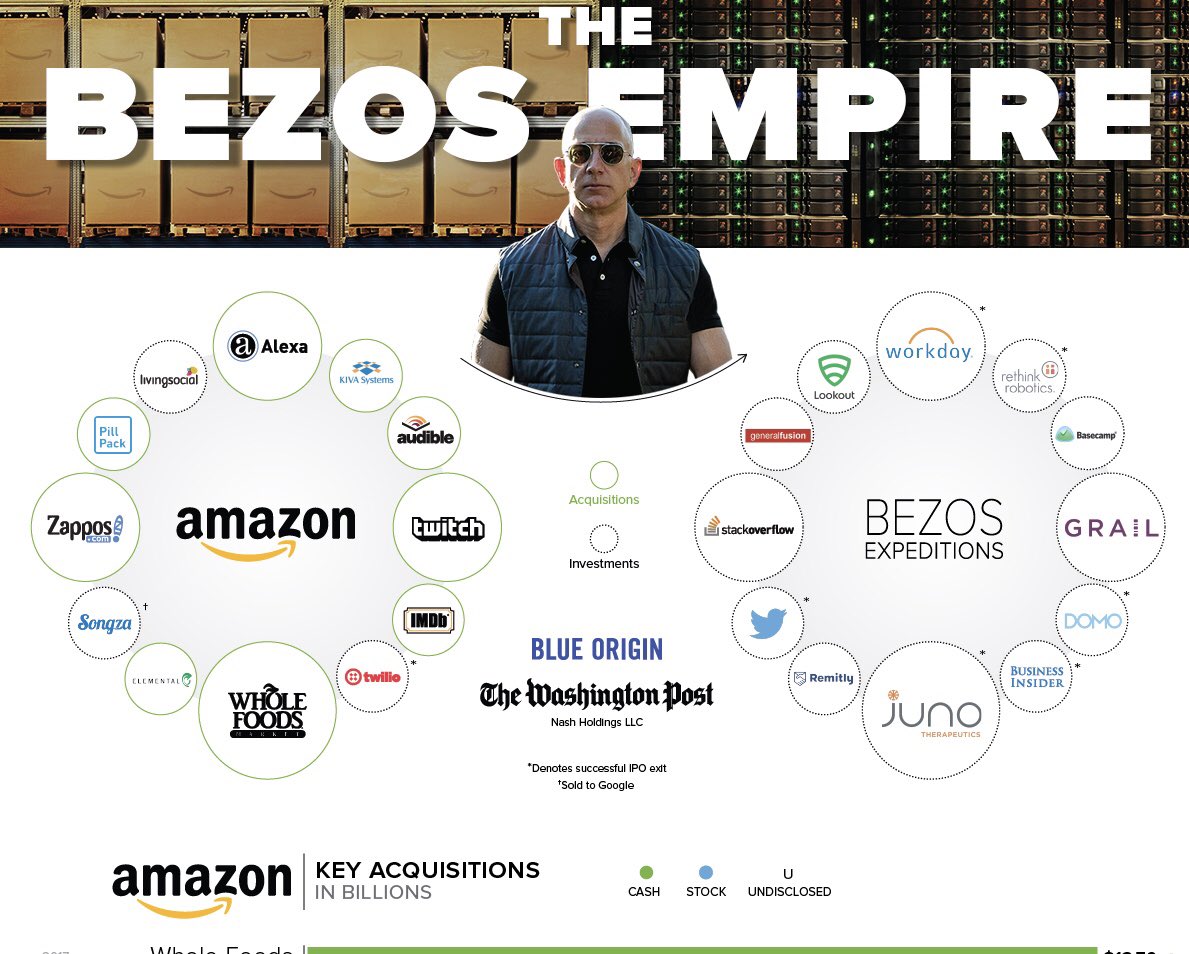
Amazon takes over. In 2018, Amazon became the second company in the world (after Microsoft) to be worth a trillion dollars. In 2019, Amazon surpassed Microsoft and became the world’s most valuable company.

By the way, if you run across a time machine you might want to scrounge up some bucks and buy Amazon stock in 1997:

Amazon is also the leader (or near leader) in the two areas most likely to see profits and growth in the next ten years: cloud storage, and AI.

Even their CEO has transformed: from Fred Rogers to Bond villain:

Related image

Yep, pretty sure Amazon is going to take over the world. Maybe it already has:
But wait…There’s Disney. Incredible fact: in 2019, of the top ten grossing films, eight were put out by Disney. Now, I’m not too good at math, but isn’t that like 80 percent? From one company?

Oh, and Disney also launched Disney Plus, their new streaming service. They also now control ABC, Hulu, ESPN, and a crap-ton of other content creators.

Here is a timeline or some of the larger acquisitions:

– 1995: Disney buys ABC

– 2006: Disney buys Pixar

– 2009: Disney enters 30 film deal with Dreamworks

– 2009: Disney buys Marvel

– 2012: Disney buys Lucasfilms

– 2015: Disney buys National Geographic

– 2017: Disney buys 21st Century Fox

– 2018: Disney buys Hulu

-2019: Disney Launches Disney plus


I think we can extrapolate a little to when these two companies begin to clash:

2020: Amazon buys Universal Studios, Dreamworks,  and Sony, starting a content war with Disney.

2021 Disney retaliates by buying the 90 percent of the cardboard stock in the country, and the van divisions of all major automakers.

2025 Disney creates new religion, an innovate blend of Jedi mysticism and Superhero iconography.

2027 Amazon buys The New York Times, Facebook, and Belgium.

2028 Disney buys the remainder of US copyrights and Microsoft. Windows 13 renamed Enchanted Mirror.

2030 US faces bankruptcy. Jeff Bezos cashes in half his Amazon stock to pay off the 4 quadrillion national deficit. Assumes presidency and renames the country the United States of Amazon. Begins plan to outlaw Disney.

2031 Disney declares itself a sovereign state. Meanwhile, President Bezos annexes Canada.

2032 Disney uses all its opinion-making power (movies, tv, games, music) to convince consumers that nationalism and borders are antiquated and evil.

2033 Worldwide protests against national governments erupt. Bezos responds by bribing UN members with free Kindles and Amazon prime subscriptions. The UN outlaws Disney.

2034 Disney, tired of relying on propaganda, creates a droid army.

2035 Transnational and transcontinental wars break out. Bezos uses the crisis to buy Europe, thus solving the still unresolved Brexit issue. He also picks up Japan, and most of South America. Disney allies itself with China.

2037 Disney is soundly defeated, and uses its remaining resources to start a colony on Mars. Bezo takes over the rest of the planet.

2040 Great Leader Bezo dies. His reanimated corpse, however, powered by Amazon’s decades of AI research, continues to guide world politics.

2051 Disney’s martian colony perfects faster-than-light travel and perpetual motion.

2056 Earth is ravaged by wildfires and rising sea levels. The main effect: Amazon packages can no longer be delivered. Amazon’s value tanks. World chaos and anarchy ensues.

2057 Disney offers to transfer all surviving humans to Mars for the low, low cost of 6.99 a month and unquestioned submission. Only a few scrappy rebels refuse.

2061 Disney launches military strikes against the rebels, whom mostly are able to flee on a stolen Disney ship to another solar system.

2091 Disney proclaims itself the Order of the Milky Way. Makes plans to “pacify” all sentient life-forms not under its control.

2112 After repeated battles with those scrappy rebels, The Order of the Milky Way gives it’s CEO unlimited political and military power.

2113 He builds a death star.

Related image

Well, that’s it for this week, my friends. Let’s end with a very young U2 playing New Year’s Day:


Christmas and the Empty Chair

Dear imonk friends. On Tuesday night’s Christmas Eve Service I shared some thoughts on what Christmas means to me after a year of great loss and pain. I am posting them here in hopes it may help someone.


2019 has been the worst year of my life. I won’t go into details, but just a brief summary; A year ago our son Joe was diagnosed with an intense mental illness; in April he took his own life. This fall Amy’s father passed away rather suddenly. And our only remaining parent (my stepmother) has suffered severe medical problems and is in a precarious place right now.

The Empty ChairJoe’s death hit the hardest, of course. The shock, the grief, the loss, the longing. All more intense than we had ever experienced before; more intense than we ever thought we would experience.

Nine months later, am I over it? Nope. I still have times, often coming out of nowhere, where a wave of grief and sadness and shock will hit me. The waves are not as strong, nor do they hit as often, as in the past. But they are still there.

My goal in relating this is not to elicit your sympathy. Rather, I simply want to share what Christmas means to me this year, after a season of great loss and pain. What does the Christmas say about the empty chair?

First, it means that my pain and suffering are not unknown to God. Instead, they are shared by God. He is not the absent God of the deists, or the remote God of Aristotle. Nor is He only the moral/creator God of the First Testament. He is a God who has chosen to walk among us… to get into the boat of our humanity.

At the tomb of his friend, Jesus wept. Not perfunctory tears, but tears of great grief. Even though he knew before he got there that Lazarus was dead, he wept. Even though He knew He would in a few moments raise Lazarus from the dead, He wept. Even though He knew that Mary and Martha’s tears of grief would soon turn to tears of joy and shouts of thanks…He wept. Even though He knew all would eventually be made right. Jesus wept.

The incarnation means to me, in a deeper way than I had experienced before, that God’s heart beats with love and sympathy for the losses of my life.

That God Himself knows what it is to see the empty chair at the table.

But even more than this…Christmas is also very precious to me this year because it tells me that the worst thing is not the last thing. I stole that phrase from Pastor Mike Mercer, who used it as the basis for Joe’s funeral devotional. The phrase has stuck with me, because it doesn’t seek to minimize the pain; it is the worst thing, losing a child, especially in such circumstances. At least it is to me. But it is not the last thing.

For Jesus came…not only to share our sorrows, but to redeem them. And to give the hope of the resurrection. The hope that pain and suffering and loss are NOT random…NOT pointless…NOT the hand of impersonal fate. And NOT the end of the story.

Related imageLast year I was given a beautiful 3-volume set of the Lord of the Rings (from the Folio Society). If you have read this set you know that it is a continuous story, in which the evil and unrest and destruction of the first volume find resolution and redemption in the third. Imagine, if you will someone unfamiliar with the story, who happens to find the first volume at a garage sale or someplace but doesn’t know that volume 2 and 3 exist. Would they not likely conclude that the story, though powerful and profound, is pessimistic and somewhat sad; so much is still wrong, so many sacrifices wasted on nothing, so much evil still holding sway.

And that is where we may find ourselves: at this point, we still live in volume 1. But Jesus has come, and told us that the future volumes are already written, that evil and death and suffering are NOT the final word, that sacrifice is not in vain, that pain has a purpose.

That partings are not eternal.

For the author has stepped into the story, to make all things right, in their time.

This is what I believe. This is why Christmas is especially precious to me this year. The hands of the King are hands of healing and redemption. Suffering and separation are not forever; pain is not the final word. Death itself will die, and resurrection will rule.

The worst thing is not the last thing.

This is what Christmas means to me this year.

Review of “Love and Quasars: An Astrophysicist Reconciles Faith and Science” by Paul Wallace, Part 8.

Review of “Love and Quasars: An Astrophysicist Reconciles Faith and Science” by Paul Wallace, Part 8.

Chapter 10 is entitled, At Home with Miracle Max: How Science Expands Our Understanding of Miracles.  Wallace begins the chapter by reviewing the Miracle Max scene from the movie, The Princess Bride where the characters Inigo and Fezzick bring the seemingly dead “Man in Black” to Miracle Max in a last ditch effort to get their quest back on track.

The money quote from the scene is when Miracle Max (Billy Crystal) says, “Well it just so happens that your friend here is only mostly dead.  There is a big difference between mostly dead and all dead.  Mostly dead is slightly alive. Now all dead – with all dead, there is usually only one thing you can do.”

“What’s that”, asks Inigo.

“Go through his clothes and look for loose change.”

Wallace says this scene has something to teach us about miracles that challenges the common understanding of the word.  He then recites the story of Grayson Kirby who in 2014 was thrown from a vehicle and thought to be dead on arrival at a hospital.  He was put on the array of machines and was in a coma for ten days.  Doctors gave him a 5% chance to survive and even if he survived he would never be the same.

He made a full recovery, which the doctors could not explain.  But his friends and family credit to it to their Christian faith and prayers of people around the world who responded to their pleas on Facebook.  He appeared on the Steve Harvey show and told Harvey there wasn’t a doubt in his mind that prayer got him a miracle.

Wallace says that in most people’s minds there are two worlds.  First is a natural world where doctors and other scientist see and understand.  In that world Kirby had no hope.  But prayers lifted to God enter the second world of the supernatural where God hears the prayers and reaches down into the natural world and heals someone like Kirby.  But Wallace says the biblical authors did not have this strict dichotomy:

“The biblical authors felt no such need, because for them, the division between natural and supernatural did not exist.  Miracles were special events, but they were easily integrated into a world in which God acted everywhere, sometimes in small ways, sometimes in big ways, but all the time and with human beings in mind.  There were miracles and there were non-miracles, but no bright line was drawn between them.  Miracles were woven seamlessly into the Bible’s cosmic tapestry.

Our worldview is unbiblical.  This a fact, not a judgement.  We see things differently than the authors of Scripture did.  The world has changed in many ways since the Bible was written.  In particular, science has radically altered our view of God’s creation and our place within it.”

Wallace then points out that a number of prominent scientists claim that science disproves miracles.  In their viewpoint scientific knowledge trumps every other form of knowledge, and there should be no room anymore in anybody’s thought process for parting seas, virgin births, water turning into wine, or resurrection from the dead.  Science has proved all these things impossible, they didn’t occur because they couldn’t occur, and any other explanation for them, no matter how far-fetched, is more reasonable than miracle.

He then lays a large part of the blame for this on Isaac Newton.  Newton formulated the basic laws of mechanics and gravity in his 1687 brilliant work Principia.  Newton’s overall view was that objects move because external forces make them move.  Newton ruled out freedom because every effect had a cause.  Causes lead to effects, which themselves are causes for subsequent effects, and so on forever.  Now Newton himself did not eliminate God or miracles, but his mechanical viewpoint eventually spread out to encompass all things and events, including biological, cultural, artistic, and religious activities. He effectively removed God from the universe except as divine tinkerer, who only occasionally intervened.  As Wallace says:

“There are no surprises in such a universe, and no miracles. If we could somehow know the precise location and speed of every particle in Newton’s cosmos at the present time – and in that cosmos, there’s no reason in principle why we couldn’t – then we could know the past and predict all events out into the infinite future.  This impersonal and closed universe, fixed and predetermined, hold little in common with the God-saturated, miracle-rich world of Scripture… Newton as much as anyone, separated the natural from the supernatural and laid the foundation for our definition of miracles.”

This mechanical view of the universe has largely ruled Western thought since Newton’s time.  It why scientists like the late Stephen Hawking viewed reality as fully explained by natural causes: “Because there are laws such as gravity, the universe can and will create itself from nothing. It is not necessary to invoke God to light the blue touch paper and set the Universe going.”  Or Richard Dawkins to say: “The universe we observe has precisely the properties we should expect if there is, at bottom, no design, no purpose, no evil, no good, nothing but blind, pitiless indifference.”

But here’s the thing, Wallace says, science has moved on since Newton (and Hawking and Dawkins as well).  Quantum mechanics contradicts Newton.  At the quantum level, well defined and absolute limits restrict what we can know; the future can’t be predicted, and the past can’t be known, even with perfect knowledge of the present, which we absolutely can’t have.  Newtonian cause and effect does not exist; matter smooths out into waves, indefinite and ghost-like; systems occupy multiple states at the same time; particles spontaneously pop into and out of existence; and information seems to travel instantaneously from one place to another, apparently breaking even Einstein’s cosmic speed limit.  This counterintuitive but real world lies at the roots of everything.

Quantum mechanics points out the insufficiency of the mechanistic view of the cosmos.  In addition, we have no idea what theory may lurk beneath quantum mechanics.  But we do know now that the world has not been sealed off as a kind of closed mechanism; it unfolds moment by moment, open and always new.  The science of quantum mechanics has taught us that the division we have created between natural and supernatural does not correspond to anything in reality.  There is only one world, and God is always working in it.  Sometimes this looks like science and sometimes it looks like miracle, but it is always there, ever drawing us toward new understandings, new relationships, and new life.


“God’s people have begun to know the manger of their Lord.”

The Adoration of the Shepherds, Mantegna

The great Raymond E. Brown has often been a guide to me when it comes to the Christmas narratives in the New Testament. Here is an example of his insight — applied to the Christmas Eve Gospel (Luke 2).

May God grant us all a blessed Christmas Eve.

What is of importance is the description which follows: “She swaddled him in strips of cloth and laid him down in a manger, since there was no place for them in the lodgings.” Luke will keep coming back to this description, for the angels will tell the shepherds: “This will be your sign: You will find a baby swaddled in strips of cloth and lying in a manger” (2:12). The shepherds will know that they have come to their goal when they have found “Mary and Joseph, with the baby lying in the manger” (2:16). Speculations as to why there was no room in the lodgings erroneously distract from Luke’s purpose, as do homilies about the supposed heartlessness of the unmentioned innkeeper or the hardship for the impoverished parents—equally unmentioned. Luke is interested in the symbolism of the manger, and the lack of room in the lodgings may be no more than a vague surmise in order to explain the mention of a manger. This manger is not a sign of poverty but is probably meant to evoke God’s complaint against Israel in Isaiah 1:3: “The ox knows its owner and the donkey knows the manger of its lord; but Israel has not known me, and my people have not understood me.” Luke is proclaiming that the Isaian dictum has been repealed. Now, when the good news of the birth of their Lord is proclaimed to the shepherds, they go to find the baby in the manger and begin to praise God. In other words, God’s people have begun to know the manger of their Lord.

Christ in the Gospels of the Liturgical Year (pp. 116-117)

Monday with Michael Spencer: My Favorite Piece of Christmas Liturgy

My favorite piece of liturgy in the world is a sentence in the opening section of the Traditional Service of Nine Lessons and Carols broadcast round the world on the BBC.

Why is it so moving? Because it is beautiful and true. Each year, as more and more of those I know join the saints in light, this single portion of the prayer becomes more and more evocative of the power of Gospel hope. Somehow, hope returns, over and over, to be the most powerful gift of the Gospel for me in this life.

The entire opening is work of art in language, but the moving line for me is in boldface:

The Dean: Beloved in Christ, be it this Christmas Eve our care and delight to prepare ourselves to hear again the message of the angels: in heart and mind to go even unto Bethlehem and see this thing which is come to pass, and with the Magi adore the Child lying in his Mother’s arms.

Let us read and mark in Holy Scripture the tale of the loving purposes of God from the first days of our disobedience unto the glorious Redemption brought us by this Holy Child; and let us make this chapel, dedicated to his pure and lowly Mother, glad with our carols of praise:

But first let us pray for the needs of his whole world; for peace and goodwill over all the earth; for unity and brotherhood within the Church he came to build, within the dominions of our sovereign lady Queen Elizabeth, within this University and City of Cambridge, and in the two royal and religious Foundations of King Henry VI here and at Eton:

And let us at this time remember in his name the poor and the helpless, the cold, the hungry and the oppressed; the sick in body and in mind and them that mourn; the lonely and the unloved; the aged and the little children; and all who know not the loving kindness of God.

Lastly let us remember before God all those who rejoice with us, but upon another shore and in a greater light, that multitude which no man can number, whose hope was in the Word made flesh, and with whom we for evermore are one.

These prayers and praises let us humbly offer up to the throne of heaven, in the words which Christ himself hath taught us:

All: Our Father, which art in heaven, Hallowed be thy Name, Thy kingdom come, Thy will be done, in earth as it is in heaven. Give us this day our daily bread; And forgive us our trespasses, As we forgive them that trespass against us; And lead us not into temptation, But deliver us from evil. Amen.

The Dean: The Almighty God bless us with his grace: Christ give us the joys of everlasting life: and unto the fellowship of the citizens above may the King of Angels bring us all.

Sermon: Advent IV — How Silently, How Silently

The Holy Family, Giorgione

Sermon: Advent 4A

How Silently, How Silently (Matthew 1:18-25)

The Lord be with you.

Whereas the Gospel of Luke tells the story of Jesus’ birth from Mary’s perspective, Matthew tells it through the eyes of Joseph. Both of these accounts share common elements in describing what took place.

  • Both testify that Jesus was to be conceived in Mary’s womb by the power of the Holy Spirit and not through normal human sexual intimacy.
  • Both record that the main characters received divine revelation about the momentous event from angels.
  • Both tell how these human participants felt hesitation and fear when they heard the news.
  • Both stories go on to show how both main characters eventually trusted God’s word and faithfully obeyed.

Above all, both stories emphasize the identity of the baby to be born. This child was to be the Messiah of Israel, the one who would save his people from their sins, the promised King who would sit on David’s throne, the presence of God himself in the midst of his people.

Neither Matthew nor Luke attempt to explain or defend these remarkable claims. In both cases the narrative proceeds in simplicity, reporting astounding events in folksy stories.

One chief characteristic of Matthew’s Christmas stories is their connection with the story of Israel as told in the Old Testament.

  • Immediately preceding today’s Gospel is a genealogy, tracing Jesus’ lineage back to Abraham through the line of David the King.
  • Matthew begins his story with an interesting word. Verse 18, translated literally, says, “Now the genesis of Jesus the Messiah was like this.” The story of Jesus is the new origin story, a new Genesis story, the beginning of the new creation, just like the book of Genesis tells the story of beginnings in this creation.
  • In the original creation story, the Spirit of God hovers over the unformed creation. Then God simply speaks and things are created and put in order. Similarly, in Matthew’s story of Jesus’ birth, it is the power of the Holy Spirit that brings about the conception of the infant Jesus. And, as in Genesis 1, it is God’s Word that now forms and names a new creation.
  • Mary’s husband is named Joseph. He has dreams and the actions he takes in response to those dreams make possible the birth of Jesus, the one who will save his people from their sins. In Genesis, it is Jacob’s son Joseph who had dreams, and his subsequent actions led to the ultimate redemption of the Hebrew people in Egypt.
  • Right after this story, in Matthew 2, we have the story of the wise men from the east, who came to pay tribute to the newborn King. If you read it carefully, you will discover that this story reflects narratives in the book of Numbers about Balaam the prophet, who foretold a star that would arise to lighten the world.
  • Then you have the story of King Herod and the horrific deaths of the children in Bethlehem, forcing Jesus and his family to escape and flee to Egypt. This reflects the story of Moses. When he was born, Pharaoh likewise ordered the deaths of all the Hebrew children, but Moses was spared in Egypt.
  • Matthew 2 ends with the Holy Family returning from Egypt and Matthew cites the prophet Hosea, who said “Out of Egypt I have called my Son.” The story of the Exodus foreshadows the story of the Messiah.
  • Finally, in Matthew’s birth story, Joseph names the baby “Jesus.” His name is akin to the name “Joshua,” the one who followed Moses and led Israel into the Promised Land. Also, in this passage God says he will be called “Emmanuel,” which means “God with us.” This reminds us of the God who accompanied Israel all the way to the Promised Land, never leaving or forsaking them.

These Old Testament stories tell the story of Israel, how God created the universe and redeemed the Hebrew people through Joseph and Moses and Joshua to be his priests so that they might bring his salvation and blessing to the whole world.

Matthew’s story of Jesus tells about the beginning of the new creation. God’s Spirit brings Jesus into the world to save God’s people through a New Moses who will lead his people out of exile and through a New Joshua who will bring them into a new life of redemption and blessing.

The second thing I note about Matthew’s account of Jesus’ birth is that these stories are written in the same fashion as those in the Old Testament. They are filled with simple, ordinary people who hear God’s Word, learn to trust, and then faithfully do their part to bring Jesus to the world.

Here we see a simple man of trade and a village maiden in the formal betrothal period of their marriage. They have not lived together yet nor slept together. Out of the blue there is an unexpected pregnancy. This brings disruption to their lives, as well as fear, suspicion, and doubt. They wonder how to save face and protect each other’s reputations. These are down to earth, human dilemmas. They figure a way to discreetly handle the difficulties, and in the course of time, the woman bears a child.

This is the drama of human life, plain and simple. Of course, the story also tells us about divine wonders such as a virginal conception and dream visits from angels. But even these come in the form of quiet miracles. They take place in quaint and private settings and pondered over with personal deliberation. This is a man and a woman and their families trying to figure out what in the world is going on and getting some quiet, private divine guidance along the way.

Is this not the wonder of Christmas — that God chose to come to us in such ordinary circumstances, in the lives of common people like you and me, in a small village away from the crowd, away from the press and publicity and all kinds of hullabaloo? Doesn’t it impress you that these are people like us that God chose to begin his work of making a new creation?

This is the story. Matthew tells us — Joseph and Mary, love and marriage, some tough decisions, and a baby boy. Luke tells us about a village called Bethlehem, a few shepherds and a manger.

“How silently, how silently the wondrous gift is giv’n,” the Christmas hymn says. “So God imparts to human hearts the blessings of his heav’n.”

The greatest story ever told is also the simplest, the most human, the one we can all relate to, because it happened in and through the likes of people like us.

May God do it again this year. May God come to us right here, in the midst of our ordinary lives, our regular human affairs, our dilemmas, our struggles, this Christmas.

And through his Word and Spirit, may God impart to our hearts wonders that can scarcely be told. The wonder that he has come to save us from our sins. The wonder that he has come to live with us, now and forever.

May the Word of Christ dwell in us richly, in all wisdom. Amen.

Christmas Brunch, December 21, 2019

Hello, friends. Ready for a Christmas Brunch?

Let’s take a break from politics and divisiveness and focus on Christmas. We will start with some silly stuff, give a few lists, pose a couple discussion questions, and then conclude with Madonnas from around the world.

No photo description available.


THE TWELVE THANK-YOU NOTES OF CHRISTMAS

Dec 25
My dearest darling Edward,
What a wonderful surprise has just greeted me! That sweet partridge, in that lovely little pear-tree; what an enchanting, romantic, poetic present! Bless you, and thank you.
Your deeply loving Emily

Dec 26
Beloved Edward,
The two turtle-doves arrived this morning, and are cooing away in the pear-tree as I write.  I’m so touched and grateful! With undying love, as always, Emily

Dec 27
My darling Edward,
You do think of the most original presents! Whoever thought of sending anybody three French hens? Do they really come all the way from France? It’s a pity we have no chicken coops, but I expect we’ll find some. Anyway, thank you so much; they’re lovely.
Your devoted Emily

Dec 28
Dearest Edward,
What a surprise! Four calling birds arrived this morning.  They are very sweet, even if they do call rather loudly–they make telephoning almost impossible–but I expect they’ll calm down when they get used to their new home.  Anyway, I’m very grateful, of course, I am.
Love from Emily

Dec 29
Dearest Edward,
The mailman has just delivered five most beautiful gold rings, one for each finger, and all fitting perfectly! A really lovely present! Lovelier, in a way, than birds, which do take rather a lot of looking after. The four that arrived yesterday are still making a terrible row, and I’m afraid none of us got much sleep last night. Mother says she wants to use the rings to “wring” their necks. Mother has such a sense of humor. This time she’s only joking, I think, but I do know what she means.  Still, I love the rings.
Bless you, Emily

Dec 30
Dear Edward,
Whatever I expected to find when I opened the front door this morning, it certainly wasn’t six socking great geese laying eggs all over the porch. Frankly, I rather hoped that you had stopped sending me birds. We have no room for them, and they’ve already ruined the croquet lawn. I know you meant well, but let’s call a halt, shall we?
Love,  Emily

Dec 31
Edward,
I thought I said NO MORE BIRDS. This morning I woke up to find no more than seven swans, all trying to get into our tiny goldfish pond. I’d rather not think what’s happened to the goldfish. The whole house seems to be full of birds, to say nothing of what they leave behind them, so please, please, stop!
Your Emily

Jan 1
Frankly, I prefer the birds. What am I to do with eight milkmaids? And their cows! Is this some kind of joke? If so, I’m afraid I don’t find it very amusing.
Emily

Jan 2
Look here, Edward,
This has gone far enough. You say you’re sending me nine ladies dancing. All I can say is, judging from the way they dance, they’re certainly not ladies. The village just isn’t accustomed to seeing a regiment of shameless viragos, with nothing on but their lipstick, cavorting round the green, and it’s Mother and I who get the blame. If you value our friendship, which I do (less and less), kindly stop this ridiculous behavior at once!
Emily

Jan 3
As I write this letter, ten disgusting old men are prancing up and down all over what used to be the garden, before the geese and the swans and the cows got at it.  And several of them, I have just noticed, are taking inexcusable liberties with the milkmaids. Meanwhile, the neighbors are trying to have us evicted. I shall never speak to you again.
Emily

Jan 4
This is the last straw! You know I detest bagpipes! The place has now become something between a menagerie and a madhouse, and a man from the council has just declared it unfit for habitation. At least Mother has been spared this last outrage; they took her away yesterday afternoon in an ambulance. I hope you’re satisfied.

Jan 5
Sir,
Our client, Miss Emily Wilbraham, instructs me to inform you that with the arrival on her premises at 7:30 this morning of the entire percussion section of the Boston Symphony Orchestra, and several of their friends, she has no course left open to her but to seek an injunction to prevent you importuning her further. I am making arrangements for the return of much-assorted livestock.
I am, Sir, yours faithfully,
G.  Creep
Attorney at law

Christmas, of course, is a time of tradition. What were your most and least favorite growing up? For me, the worst, by far, was the sacred tradition of serving oyster stew on Christmas Eve. I’m still traumatized. Let’s get this straight: Oysters look like the flu. And oyster stew is just congealed chunks of flu floating in a vat of warm milk.  Which leads us to…

Five Worst Christmas Traditions:

  1. Elf on the Shelf. If it isn’t creepy enough that Santa knows when we’re sleeping and when we’re awake, now he sends an elf to live in our house for a whole month and spy on us?
  2. White, silver or pink Christmas Trees. A tree should look like it grew in a forest on planet Earth, not in a Dr. Seuss book.
  3. Christmas Family Newsletter. Look, we’re glad you had a good year but we don’t have the time or interest in reading a two page, single-spaced essay about how you kid is on the honor roll again, you got new aluminium siding or that the hemorrhoid surgery went well. And we don’t need to see pictures of any of those things.
  4. Inflatable yard ornaments. A Santa or reindeer on your front lawn is weird enough, but if it’s blown up like a Macy’s Thanksgiving parade float, you’ve officially gone too far. Where’s my BB gun?
  5. Mall Santas. If there’s a fat bearded guy at the mall inviting children to sit on his lap, that’s somebody you should be reporting to the authorities, not lining up to visit.
  6. Green Bean Casserole. What is this dish … really? Canned soup, canned fried onions and canned beans. This is a culinary holiday tradition? Why? A holdover from the Depression? Campbell’s Soup propaganda? Brainwashing from the ‘50’s when canned products were actually served without irony? Whatever the reason, please stop. We’ve moved on. Fresh fruit and vegetable are easily accessible. Vintage is nice with old clothes and furniture, not so much with food.

Christmas is also known for its music. In fact, it is really the ONLY holiday known for its music. It’s like the other holidays aren’t even trying. Just for the sake of giving us something to argue over in the comments, here are a few totally objective, factual and indisputable lists.

Five Best Christmas Carols:

  1. Joy to the World
  2. O Come, O Come Emmanuel
  3. Angels we have Heard on High
  4. The Dream Isaiah Saw
  5. O Holy Night

Five Best Secular Christmas Songs:

  1. Christmas Time is Here
  2. Silver Bells
  3. Have Yourself a Merry Little Christmas
  4. O Tannenbaum
  5. Do You Hear What I Hear

Five “OK” Christmas Songs that are played WAY too often

  1. All I want for Christmas is You
  2. It’s Beginning to Look a Lot like Christmas
  3. I’ll Be Home For Christmas
  4. Here Comes Santa Claus
  5. The Christmas Song (Chestnuts roasting on an open fire)

Five Terrible, crappy, obnoxious and stupid Christmas “songs” that defile the very concept of music and make me wish a rabid cockroach had eaten my ear drums:

  1. Last Christmas
  2. Santa Baby
  3. Christmas Shoes
  4. I Saw Mommy Kissing Santa Clause
  5. Wonderful Christmas Time


And movies. Why not go there too?

Five Best Holiday Movies

  1. It’s a Wonderful Life
  2. The Santa Clause
  3. Elf
  4. A Charlie Brown Christmas (best soundtrack)
  5. Die Hard

Five Worst Holiday Movies:

  1. Random Hallmark Holiday Movie
  2. Random Hallmark Holiday Movie
  3. Random Hallmark Holiday Movie
  4. Random Hallmark Holiday Movie
  5. Whatever this is:

So, the pump is primed for a few discussion questions;

  1. What is your favorite or least favorite holiday music?
  2. What is your favorite or least favorite Christmas carol or song?
  3. Do you have a favorite childhood Christmas memory?
  4. Best gift you have ever given or received?
  5. How has the meaning of Christmas changed for you over the years?


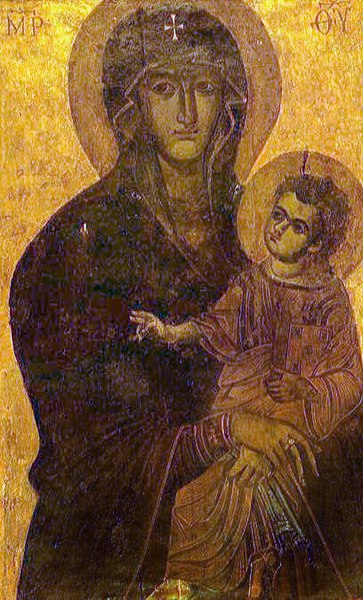
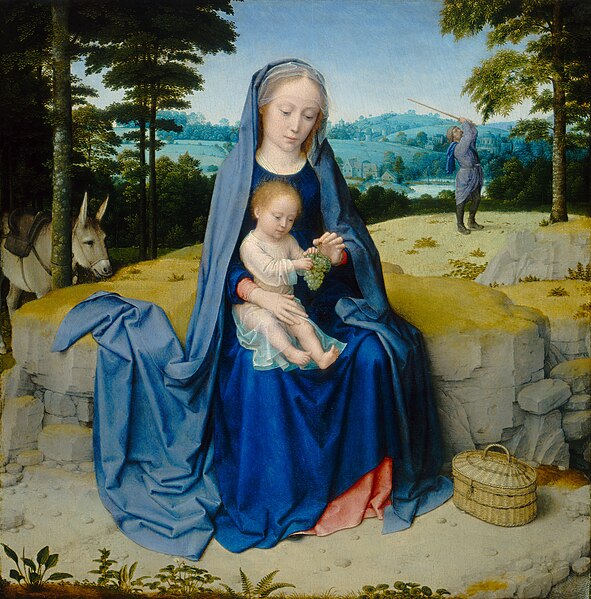
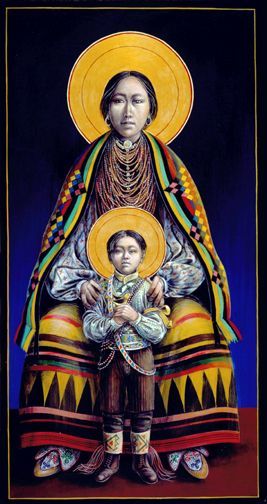
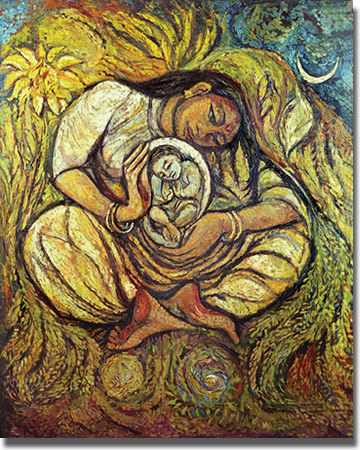
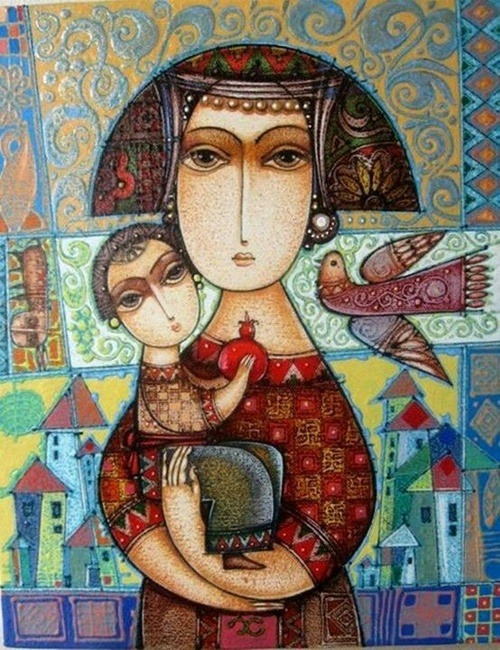
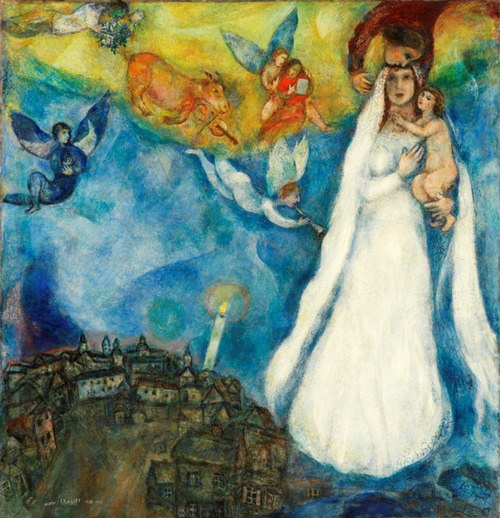
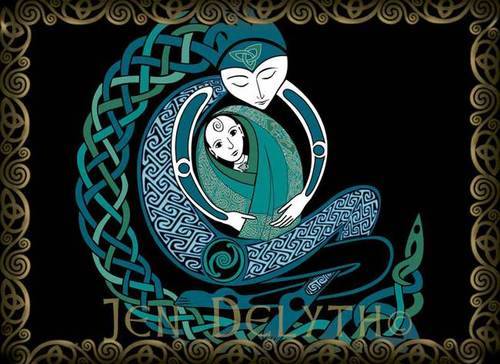
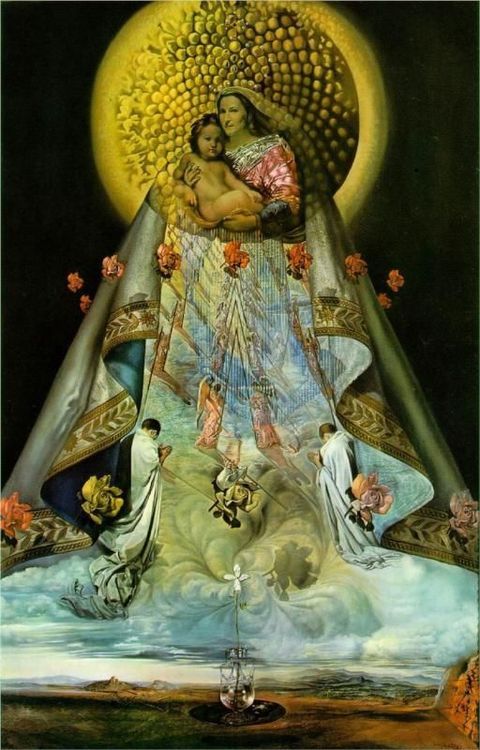
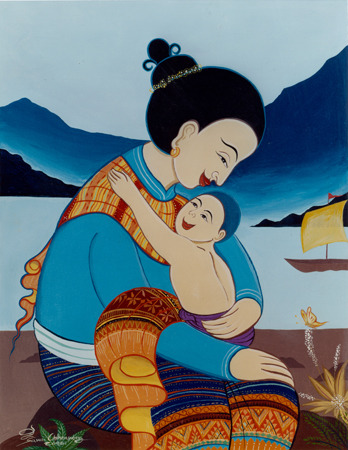
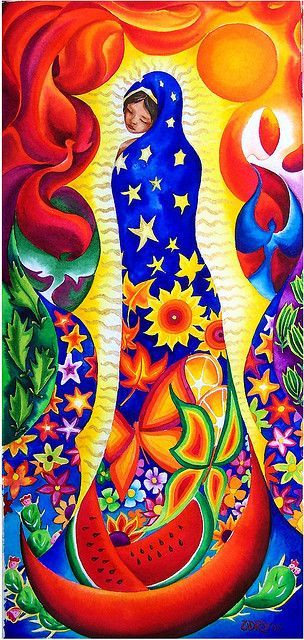
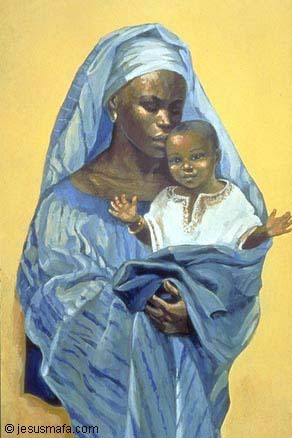
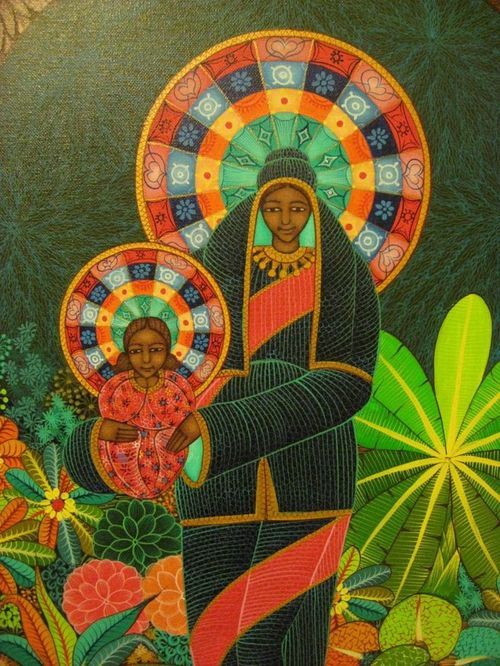
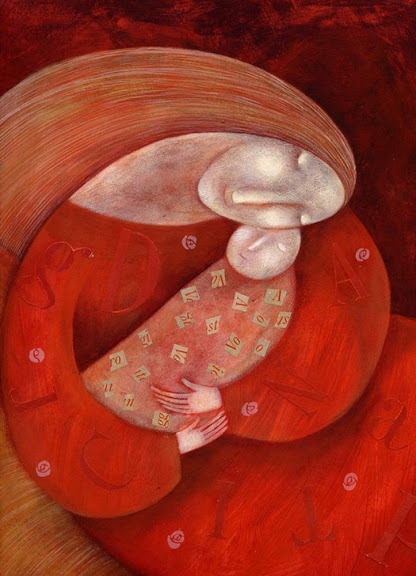
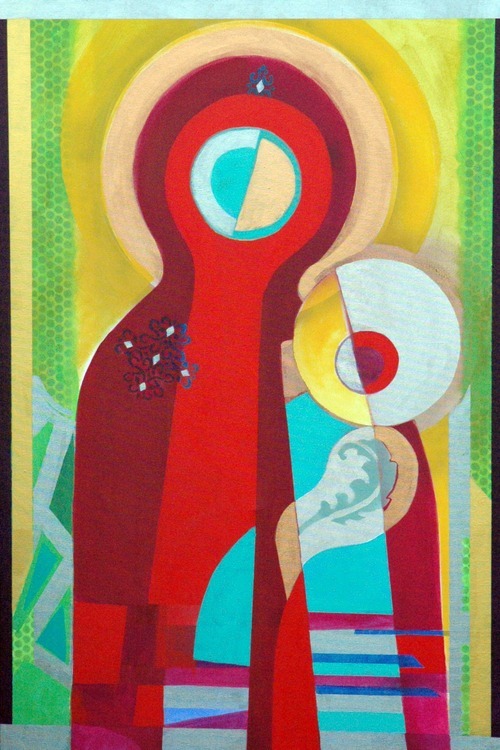
Finally, Christmas is a time of beauty, for it celebrates the most wondrous, beautiful truth of all: that God is love, and has come for us. One way to enjoy the beauty [as well as the universality] of this is by seeing how the central image of the incarnation, Madonna and Child, have been portrayed across time and place:

File:Virgin salus populi romani.jpg
6th century Roman icon
Sandro Botticelli, The Virgin and Child (The Madonna of the Book), 1480
File:Gerard David - The rest on the flight into Egypt (National Gallery of Art).jpg
Gerard David – The rest on the flight into Egypt, 1510
image
by John Giuliani, Seminole (Native American) culture


William-Adolphe Bouguereau, Virgin of the Lilies, 1889
image
Henri Matisse (“Virgin and Child on Starry Ground,” 1950-51)
image
by Tsolak Shahinyan, Ukraine


image
Marc Chagall, 1942
image
Jen Delyth, Wales
image
Salvador Dali, 1959
image
from Thailand, by Sawai Chinnawong
image
from India, by Jyoti Sahi (“The Dalit Madonna,” 2007)
image
from Democratic Republic of Congo, by Augustin Tshipamba (2002)
image
by Adry Del Rodo, Mexico (2005)
image
from Cameroon, by Jesus Mafa artist
image
“Our Lady of Peking, China” painted By John Lu Hung Nien (1914)
image
from Bali, by Nyoman Darsane (“The Chosen One”)
image
by Ismael Saincilus, Haiti


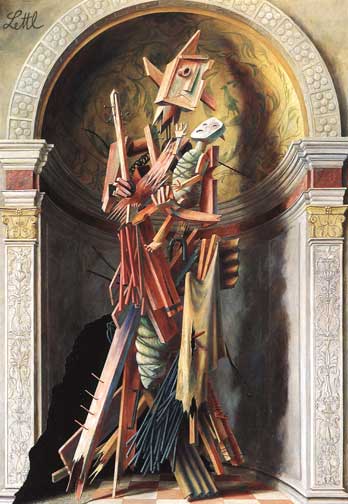
Wolfgang Lettl – Madonna (1975)
image
by Alessandra Cimatoribus, Italy
image
USA, by Christina Saj: “Virgin and Child Enthroned”
Image may contain: 2 people, people standing and child
Artist Unknown
image
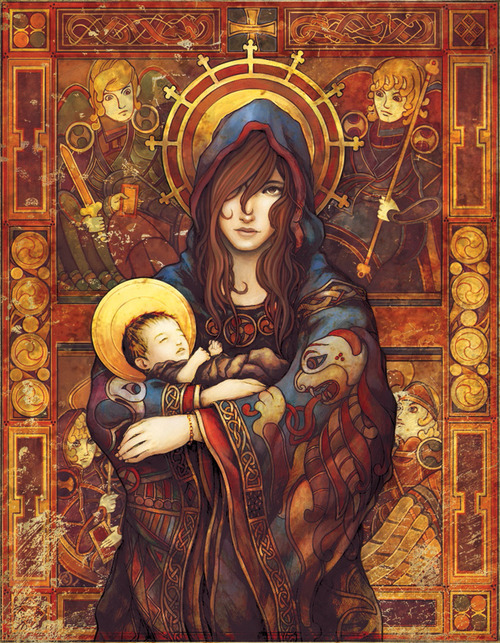
from Ireland, by Parker Fitzgerald (drawing) and Brittany Richardson (coloring):
image
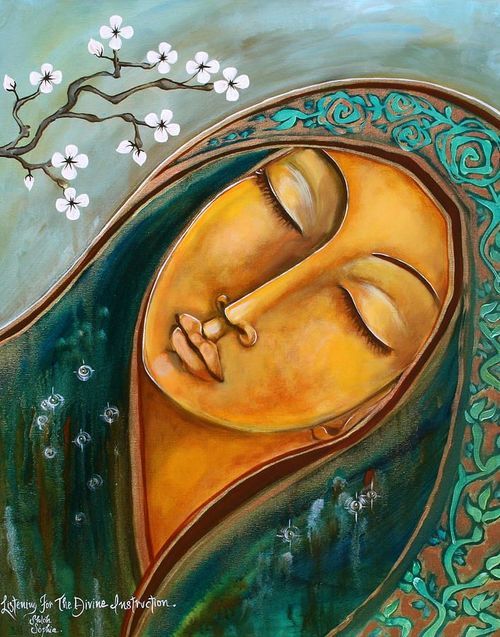
by Shiloh Sophia McCloud “Listening for the Divine Instruction”, USA
image
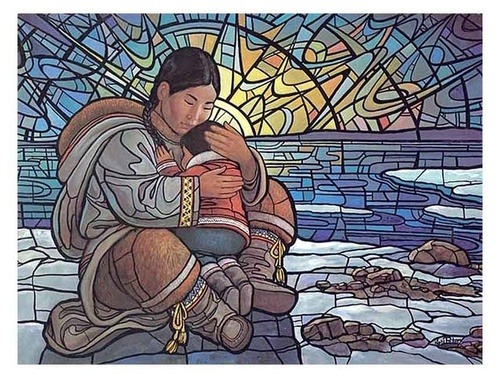
from Inuit culture of Canada, by Nori Peter (titled “Northern Lullaby”).

Well, that’s it for this week. I truly hope you have a wonderful Christmas.

Enjoying Handel’s Sublime Gift

The Palladium at the Center for the Performing Arts, Indianapolis

Pastor Dan and his wife graciously treated us by inviting us to join them last night for a performance of Handel’s Messiah at the Center for the Performing Arts here in Indianapolis. It was magnificent. The Palladium is a state of the art concert venue, and the Indianapolis Symphony Orchestra and Symphonic Choir, directed by remarkable young conductor Jacob Joyce, captured the emotion and drama of the Christ story beautifully.

Take time to listen to Messiah during this holiday season, and if possible see it performed, or better yet, join a Messiah sing in your community. Ads for the concert we saw called it the greatest story ever told set to the most majestic music ever conceived. I guarantee you’ll be moved. And the great thing is, the focus is on Christ the entire time.

Perhaps you’ve had some of your own experiences with this sublime oratorio that you’d like to share today. Feel free, and enjoy this sample, which comes from the Warsaw Philharmonic Orchestra and Choir.

Review of “Love and Quasars: An Astrophysicist Reconciles Faith and Science” by Paul Wallace, Part 7.

Review of “Love and Quasars: An Astrophysicist Reconciles Faith and Science” by Paul Wallace, Part 7.

Chapter 9 is entitled The Things God Has Made: How Science Enlarges Our View of Life and Death.  Wallace gives a lot of talks at churches.  A frequently asked question is, “What happened before the Big Bang”.  On the face of it, this seems like a reasonable question, when people ask this they are picturing something existing before all the stars and galaxies show up, even if it’s just empty space waiting around for the big boom.  So he’ll explain that empty space is not a thing.  Even space containing zero normal matter and set to a temperature of absolute zero – a condition known as the quantum vacuum – simmers with short lived electromagnetic fields and particle-antiparticle pairs popping into and out of existence.  The answer is that nobody knows what happened before the Big Bang because there was no space or time for anything to happen in.  Both space and time were produced by the Big Bang; and it stands as a wall with no seeing through it or around it.  He will usually tell the audience that, as sensible as the question sounds, asking what happens before the Big Bang is a little like asking what’s south of the South Pole.  The question is out of bounds by definition.

Wallace’s point is that the question is not just prompted by scientific curiosity but there lurks a theological question as well.  Behind the question he hears, “Yes, all this evolution business is fine, but it’s really God that wound it all up and let it rip, right?  People want to make sure that he hasn’t pushed God out of the picture, that there is a place for the Creator in an evolving cosmos.  But there is a faulty assumption at work here, the fallacy of God-of-the-Gaps.  It says God works in those places science can’t reach, such as before the Big Bang.  But the history of science shows that, time after time, science has advanced into quarters previously thought beyond its scope.  This kind of thinking results in God shrinking, because it means whenever science advances, God retreats.

But God is present in all creation, whether there exists a natural proximate explanation or not.  Wallace then invokes the anthropic principle: the philosophical consideration that observations of the universe must be compatible with the conscious and sapient life that observes it. Proponents of the anthropic principle reason that it explains why this universe has the age and the fundamental physical constants necessary to accommodate conscious life.  It’s the observation that life would not be possible anywhere in the universe if the values of various physical constants differed by small amounts.

My friend, the physicist David Heddle, liked to explain the responses to the anthropic principle fall into 3 categories with his poker analogy:

  • Suppose I take a deck of cards
  • I tell you that unless I shuffle them and deal you a royal flush of hearts (one try) you’ll die
  • And then I do just that…

There are three competing explanations…

  1. If I didn’t deal that way, you’d be dead, and we wouldn’t be talking about it, so no big deal.
  2. There are an infinite number of universes, in most of them you died, but there is an infinitely large subset in which you lived.
  3. The dealer cheated so that you would live.

The point is that nothing is evidence for God or everything is.  The world is a miracle, as are we in it.

But the story is not all starlight and fine, sturdy creatures.  If you turn the coin of evolution bright side down and consider its opposite face, you’ll encounter a nasty, brutish affair that runs on chance and death.  You’ll see that Homo sapiens is riding the leading edge of a great red tsunami, a four billion year tidal wave of violence and suffering.  Here Wallace recites the litany of evolution; death is the rule; survival is the exception.  The horrors of parasitism, the endless deaths of creatures so that a few survive, matriphagy – the eating of offspring by the mother – common in scorpions, spiders, and crabs.  Even big mammals like chimpanzees, sloth bears, and lions, are known to eat their young without warning and without known cause.

These too, are the things God has made.  “God’s eternal power and divine nature” has apparently been expressed by billions of years of inefficiency, arbitrary suffering, and violence.  God may have opted for the long road, but it’s a hard and bloody one, too.  Wallace has two thoughts about this.

First we often forget how shocking is the fact that we find ourselves in within a universe in the first place and are able to bear witness to it, know it, form sentences about it, and communicate with one another about these things we call life and death.  We should periodically be reminded of the gratuitous and astonishing gift of existence.  Art and stories and poetry and music and science and walks in the woods and acts of love large and small have the power to draw us back into the wonder, the fountainhead of both faith and science.

When we lose our capacity for wonder, we dishonor existence and forfeit the ability to place death and suffering in their proper context.  The thought of that great red tsunami will overwhelm us only if we fail to back up, take a larger view, and see all life as a gift.  I do not mean to downplay death or minimize suffering but to suggest wonder, which I think of as a pointed awareness of and gratitude for the gift of existence, as an antidote to their poison.”

Second, the Creator has not abandoned us on this beautiful but bloody planet.  God knows firsthand the worst our violent universe can dish out.  God weeps, God suffers, God dies, and God lives.  Jesus’ birth, life, death, and resurrection reveal a truth of the universe as fundamental as relativity and quantum mechanics…

Jesus, no less than you and me and T. rex, was born into the flow of evolution and is therefore intimately bound up not only with human beings but with every single creature that has ever lived and will ever live, no matter how strange or insignificant…

When we accept evolution, we see that God is woven into the very fabric of all material reality, not just the human or even the conscious part of it.  In taking on the violence and suffering inherent in physical reality, Jesus transforms it, revealing the great love of God for all creatures and all things everywhere, here and throughout the cosmos.”