The God at work behind closed doors

Communion of Dying. Alexey Venetsianov

My Internet Monk career began with an interview about something that Michael Spencer was struggling with — how Christians deal with death and dying. I wrote the following as an introduction when I edited and re-posted the original article in 2011.

On November 17, 2009, I wrote my first post for Internet Monk. Actually, it was an interview that Michael Spencer did with me called,“Chaplain Mike Mercer: Evangelicals And The Pastoral Care of the Dying: The IM Interview.”

…My work is one area of my life right now where I have a positive sense of the presence and activity of God. Being able to minister in a pastoral fashion to my neighbors has kept me spiritually hydrated as I’ve wandered the post-evangelical wilderness with regard to the church and as I’ve struggled with other issues related to mid-life.

But this is not really about me. It is about the God who is at work behind closed doors, where family members sacrifice greatly to care for dying loved ones. It is about the privilege of being able to go to them and show kindness and concern. It is about knowing that God has gone ahead of me in each encounter, that I am entering a story that has been being written for many years, and I may have a part to play. It is about working on a team of talented, compassionate people, who use their gifts and work together to bring peace to patients and their families.

It is the most Jesus-shaped thing I have ever been involved with.

I thought it only right to make one of my final posts about this theme that is so much a part of my life.

So, today (Tuesday) I did a funeral for one of the funeral homes in the city. Occasionally, they ask me when the family doesn’t have a minister. It gives me an opportunity to step outside of the hospice world and walk with folks through others kinds of death and grief experiences.

This one was certainly different. A woman my age went to bed one night last week, cuddling one of her dogs. Her husband let her sleep in because she’d had a long day. Then he made her an egg sandwich and took it in to her. She did not respond. He tried to shake her awake, and then he felt her cold, stiff arm and the chill skin on her cheek.

She had no previous health concerns. In fact, she had been taking care of him over the past few years because he had developed some serious problems. By all accounts, she was a vibrant, enthusiastic, outgoing, active person to the end. She was planning on retiring next month so that she could enjoy a retirement season pursuing artistic and travel interests along with her friends and family.

Then she went to bed. She didn’t wake up.

That was not in the plans.

That was not what anyone — anyone — would ever have expected.

Her family and friends were kind to me and expressed their appreciation for the service, but I would be surprised if they heard a thing.

As I left and made my way to the office, one of our nurses called and asked me to come pray for a patient who was close to death.

This octogenarian African-American woman has been with us a few weeks, and I observed some tension and interesting dynamics on an earlier visit. When I arrived, she was breathing rapidly in shallow spurts. Her son and daughter and their kids and grandkids were moving in and out of the room, while those in charge of caregiving were asking questions of the nurse, getting instructions about medicine, and making a plan to employ enhanced comfort measures. I went to the kitchen and sat with the daughter, said a brief word of condolence, and she started crying and lamenting as she anticipated losing the one she called her “best friend,” the central pillar and support of their family.

Then I heard stories from her and others about why the family needed Granny so badly. Stories of ingratitude, stealing, addiction, purposelessness, even murder. This woman had raised two sets of children born to other family members already. She’d even spent the last year of her life doting on a grandchild who had taken every gift and generous gesture and had, in turn, abused this dignified matriarch who had so freely shown her such kindness.

There were responsible, caring grandkids and greats as well, and they were the ones here now, weeping at the bedside, giving her loving attention, and supporting each other. At the right time, we gathered together around her and prayed and sang. One of the family played a gospel song she used to play every Sunday morning, a song about climbing the mountain and making one’s way home to God.

I was there for a good hour and a half and probably didn’t say more than a half dozen sentences until we prayed. Didn’t really need to. They said it. Some of them needed the chance to get close and say their peace to Granny and to update each other about what was happening. And I found it hard to improve many of the silences that blessed our time together.

She’ll die soon. I don’t know if I’ll see any of them again. I got dropped in for a particular moment. Maybe I helped, maybe not. The challenges they will face in the days and years to come I’ll never know and I fear the worst. No way I could begin to help them with all that. In my past life of messianic self-conceit, it would have felt like a failure and it would have bothered me and brought me down. But today I left feeling satisfied that the seeds I was meant to sow had been planted. I’m available to them if needed and it works out that I can be there, but I also know that I’m part of a whole team of trustworthy people with a lot to offer.

Whatever happens next, I’m sure I won’t forget these two families. They’ve become part of me now and I’ll be processing my experiences with them — brief though they were — for a long, long time.

I have a sneaking suspicion that, in the end, they will have helped me more than I helped them.

Struggling with God in the Modern Times

Struggling with God in the Modern Times

This BioLogos Forum encapsulates the issues I have tried to deal with during my time as a writer for InternetMonk. That time has drawn to a close as this will be my last post.  Forum poster, Sam B, writes:

Hey all. Recently I have been dealing with some doubts about God’s existence. I am a firm believer in science (evolution, age of the universe and cosmology), but I am struggling more with this knowledge. We know that these things evolved, we know all of these planets exist, and we know the facts of the universe. It seems like we know how all of us got here and how our world exists without God’s help.

For instance: There are growing theories about our universe and how it arose from “nothing”. It is possible to have a universe without a prime mover, or that something can come from nothing. How can I justify my belief in God when my very existence is a product of natural phenomena?

Sam B is just the type of Christian I have tried to target in my Science and Faith posts.  They are aware of the science with respect to evolution, either writ large as cosmic evolution, or more personally as human evolution.  How can such knowledge, which is only growing more conclusive, be reconciled with Genesis 1:1 “In the beginning God created the heavens and the earth”, and Genesis 2:7 ” Then the Lord God formed a man from the dust of the ground and breathed into his nostrils the breath of life, and the man became a living being.”

As the answering posters point out, the problem is with God as just another entity lurking around the universe, which sets up the false dichotomy of “God’s actions” versus “natural processes”.  But no such dichotomy exists because no such God exists.  Of course, it is difficult to discern the minds of the early scripture authors; were they sophisticated enough to understand that Yahweh was more than just one God among other nations Gods- just more powerful?  Or, as is I think likely, such sophistication grew over the course of the Old Testament’s compilation, culminating in the revelation of Jesus Christ.

In any event, if God is the “ground of all being” and “being itself,” then it is silly to contrast a natural process with God’s actions as they, by definition, are the same thing.  Christians, in particular evangelicals, are fine to proceed with that proposition from the spinning of universe to weather patterns to embryology, to even the germ theory of disease. Where the wheels come off is the evolution of human beings.  The religious traditionalists still object to the idea that diversity in life, including human beings, arose through natural processes without a need for supernatural intervention.

So how has the cause of reconciling science and faith fared?  On the plus side has been formation of BioLogos itself through Francis Collin’s efforts.  The organization continues to grow as evinced here.  However, despite their best efforts, as this article shows, strong opposition to BioLogos’ “theistic evolution” remains among conservative evangelicals.

Then there is the fact, that after four years of the Trump presidency, his calling the Covid-19 pandemic a hoax, saying ‘science doesn’t know‘ what’s causing wildfires, and numerous other anti-science statements , still at least 80% of evangelicals turned out to vote for him in the 2020 election .

In the short run, I’m not optimistic about a greater understanding of science among evangelicals.  But in the long run, I share Michael Spencer’s hopeful note at the end of his essay on the coming evangelical collapse:

“Despite all of these challenges, it is impossible not to be hopeful. As one commenter has already said, “Christianity loves a crumbling empire…

We can rejoice that in the ruins, new forms of Christian vitality and ministry will be born. I expect to see a vital and growing house church movement. This cannot help but be good for an evangelicalism that has made buildings, numbers, and paid staff its drugs for half a century.

We need new evangelicalism that learns from the past and listens more carefully to what God says about being His people in the midst of a powerful, idolatrous culture.”

I have certainly enjoyed sharing my thoughts and receiving the responses from the Imonk community of readers and commentators.  I wish you all the best.  I don’t what’s ahead, blog-wise, for me.  Like Mike Bell, I’m going to take some time off for reflection and prayer.  Then, we’ll just have to see…

The Coming Evangelical Collapse – Eleven Years In

On March 10, 2009, Michael Spencer penned these words in an opinion piece in the Christian Science Monitor:

We are on the verge – within 10 years – of a major collapse of evangelical Christianity…
Within two generations, evangelicalism will be a house deserted of half its occupants.

With that, a firestorm erupted. The story was picked up around the world. And with it came the accompanying criticism. How could Michael have written such words? His denomination was having record setting attendances, year after year after year. And what a denomination it was: One in twenty Americans was a member of the Southern Baptist Convention!

Mark Galli, the editor of Christianity Today wrote: “Some predictions I warm up to because of my own biases, but in the end, they don’t seem to be founded on anything substantive.” I knew in my heart that Michael Spencer was right, and I believed that there were numbers to back him up. Being a numbers guy I offered to write a couple of post to back him up statistically. Michael agreed, and with that I wrote my first two posts for Internet Monk. Part 1. Part 2.

Michael covered a lot of ground in his essay. I encourage you to stop and read the entire article in the Christian Science Monitor. I encourage you to read my responses as well. Feel free to respond in the comments to any of his or my points.

A lot of water has gone under the bridge since that time. Michael Spencer passed away just over a year after those original posts were written. Jeff Dunn and Chaplain Mike stepped in to keep the blog going, and I have written another 200 posts.

Today is going to be my very last post before the Internet Monk closes its doors on January 1st. I thought it would be very fitting that I return to the topic of my very first post and see how accurate Michael Spencer and my comments were.

Because this is my final post, and I really am a numbers guy, I want to focus on his first two statements, my original support of them, and how our predictions stand up 11 years later.

We are on the verge – within 10 years – of a major collapse of evangelical Christianity…
Within two generations, evangelicalism will be a house deserted of half its occupants.

Many people jumped on that first statement, and claimed that Michael believed that Evangelical Christianity would collapse (to nothing) in 10 years. That claim is not born out by his second statement, that within “two generations, evangelicalism will be a house deserted of half its occupants.”

In my first analysis, written two days after the Christian Science Monitor was published, I did a bunch of number crunching of Southern Baptist attendance figures. I concluded:

[Y]ou will have a net decrease in Baptists over the next ten years of roughly 10%.

So as Michael has said, the next ten years should be the beginning of the collapse, and as was shown earlier in the article, this collapse should continue for several decades until half of the Baptists are gone.

I used Baptist in my analysis because this is the group with which Michael was most familiar and they seemed to be pretty representative of American Evangelical. Michael also inferred in his essay that the decline would not be in the Charismatic/Pentecostal sector of Evangelicalism

How long a time period were we talking about? Michael said two generations. I understood this as the Miriam-Webster definition of “the average span of time between the birth of parents and that of their offspring.” So my interpretation of what Michael wrote was that this collapse would start within 10 years and that we would see it come to complete fruition “within two generations” – between 40 and 50 years from the date of writing.

So what have we seen happen in the Southern Baptists since I first predicted that they would decline 10% in ten years?

Well, from 2009 to 2019, a period of 11 years, membership in the Southern Baptists declined 10.1%. Attendance, which I consider to be a much better thermometer, declined 15.5% over the same time period. Baptisms? Because isn’t that what Baptists do? They are down an astonishing 32.6% since 2009!

Even though Membership has declined by a smaller percentage than attendance, the membership decline has been accelerating. When do I expect the Southern Baptist “be a house deserted of half its occupants.” Well if attendance decline continue at the same rate as it has over the past 11 years, we can expect that to happen 35.5 years after Michael first predicted it. I believe that we will see a similar time frame for membership as well. His predictions are holding up very well.

While I may receive some criticism for focusing on the Southern Baptists, I believe that Michael’s prediction, and my analysis, would hold true for the broader Evangelical tent.

Mark Galli, the editor of Christianity today, who initially showed so much skepticism, had a follow up of his own.

Ten years ago, the late blogger Michael Spencer sparked one of the first social media conversations about the viability of evangelicalism with his essay, “The Coming Evangelical Collapse, and Why It Is Going to Happen.” …

I was skeptical at the time he wrote this, and said so in print. But today I admit that Spencer was more right than he was wrong. Recent events and surveys bear out many of his predictions. We truly are in a moment of crisis in the American evangelicalism… contemporary evangelicalism is in serious trouble. Actually, its crisis is the same one that afflicts all Christianity in America… I believe that the crisis lies at the heart of what ails large swaths of the American church. Alexander Solzhenitsyn named it in his speech upon receiving the Templeton Prize in Religion in 1968. He was talking about Western culture when he used it. I apply it to the American church, evangelical and not:

We have forgotten God.

Thank you to Chaplain Mike and Michael Spencer for allowing me to write for Internet Monk for the past eleven years. I have greatly appreciated the opportunity and I shall miss it greatly.

Mike

Saturday Brunch, December 19, 2020

Well, friends, this is my final post at internet monk. A huge shout out to Chaplain Mike for allowing me to write, and to all of you for your kind comments and contributions over the years.

Shower thoughts of the week:

  • All numbers are closer to 0 then they are to infinity.
  • The truest example of Pavlovian conditioning is that every time you hear ‘Pavlov’ you automatically think of a dog.
  • The Moon is the most amount of land most humans will ever see at once.
  • If the telephone had been invented after email, we would have thought it was a vast improvement in communication.
  • It must be hard for dragons to blow out candles.
  • If life is a game, gravestones are participation trophies
  • UFO’s may actually be tourist carrying cruise ships from future.

You’ve been warned. By the president of Brazil, no less. “In the Pfizer contract it’s very clear: ‘we’re not responsible for any side effects.’ If you turn into a crocodile, it’s your problem,” Jair Bolsonaro said Thursday. “If you become superhuman, if a woman starts to grow a beard or if a man starts to speak with an effeminate voice, they will not have anything to do with it.”

I’m coming after you, Pfizer…

Time flies. Just in case you needed reminding of how old you are getting (yes, you) here are some pop-culture factoids.

Useless-Facts-Making-Feel-OldToy Story came out 25 years agoUseless-Facts-Making-Feel-Old

Bart Simpson is now 41

Useless-Facts-Making-Feel-OldRalph Macchio, the actor who played Daniel LaRusso, is now older than Mr. Miyagi was when Karate Kid came out

Useless-Facts-Making-Feel-Old

Madonna is 62

Time flies...

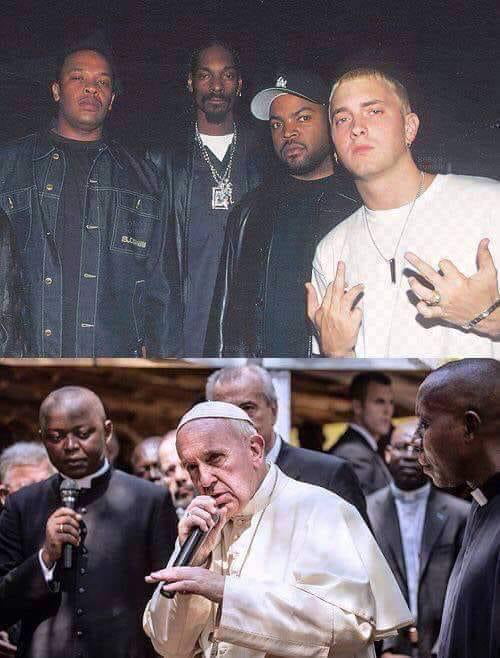
Eminem is now a Father


On a related note, Keith Richards turned 77, which is like 249 in human years.

The old adage of ‘one person’s trash is another’s treasure’ rang particularly true last week, when authorities recovered a Surrealist painting worth about $340,000 from a recycling bin at Germany’s Düsseldorf Airport. The Yves Tanguy painting found in airport dumpster after it was forgotten by its owner.

A guy on Reddit made an interesting infographic about the prevalence of search terms on google through the years.

Does this merlot taste funny to you? A supervisor was suspended last week after illegal winery found at Alabama wastewater plant.

A committee for the San Francisco Unified School District recommends renaming schools named after Abraham Lincoln (because of his attitude towards Native Americans), George Washington and Thomas Jefferson (because they owned slaves), and Dianne Feinstein (because she hugged Lindsey Graham). This story has been around for some time, but is only now gaining national attention. Back in November, the editorial board of The San Francisco Chronicle opposed the recommendations: “‘Wherever a monument to the Confederacy meets a deserved demise, its defenders can be counted on to warn that this is the top of a slippery slope toward a wholesale cleansing of every trace of our history based on the sensitivities of 21st-century leftists,’ the editorial board wrote. ‘It’s a specious, disingenuous argument, but the San Francisco school board is doing its best to prove it right.’”

Meanwhile, Japan is still trying to figure out Christmas

So…McDonalds is opening a barbershop. In Sweden. No, I don’t know why Sweden gets this treasure. But I do know the barbershop is being used to promote a specific type of haircut that was popular for a thankfully brief time in the 90’s, which McDonalds is now christening the Golden M.

McDonald’s Sweden has opened up the world’s first certified Golden M Barber Shop in Stockholm.

The brand is reclaiming the iconic '90s cut.

Maybe, if we are REAL lucky, these barbershops will come to America. I mean, we have EXQUISITE taste, right? And I want to ask for a McMullet and fries.

Odd. My spell checker did not flag McMullet. Please tell me that’s not already a thing…

I don’t want to terrorize you with more bad news. 2020 has been bad enough. But I think you should know: Tasmanian Devils can glow in the dark. No, I’m not kidding. And they look like this:a close up of a dog in a dark room: Jake Schoen/The Toledo Zoo Tasmanian Devil

This was discovered recently in, of all places, the Toledo zoo. Yeah, Toledo Ohio has a zoo. Who knew? And they are the first ones to report biofluorescence in this species. Which has got to be the most exciting thing to happen in Toledo since….

…thinking of something exciting that has happened in Toledo…

…still thinking…

…checking Wikipedia…

…still nothing…

…oh, wait…John Denver had a song about Toledo. Good note to go out on:

Off into the Unknown

This is going to be my second last post on Internet Monk. My final contribution will come Monday when I will be returning to my first ever post: The Coming Evangelical Collapse – A Statistical Analysis. Today I wanted to close up some loose ends and do a mind dump of a stream of thoughts that are circling in my head. Feel free to respond to whatever grabs your attention.

I am a person of faith. There have been several events throughout my life which up to this moment I have no rational explanation explanation other than that God was involved.

I don’t put a lot of truck into apologetics. I feel that they largely exist to convince the already convinced.
I think the moral argument – that there must be some sort of absolute standard of right and wrong – is the most convincing to me. What made what Hitler did wrong? If there is no absolute standard of right and wrong then who are we say? I understand that absolute standard to be God revealed in Jesus as the logos of John 1.

I also have a lot of doubt (which I generally keep quiet about). My greatest doubt? Our ancestors lived with a geocentric view of astronomy which ultimately got proven wrong. We live with a geocentric religion. Earth is but a speck of dust in this great cosmos. Paul tells us that the heavens reveal the handiwork of God. To me, the heavens reveal our own insignificance.

On balance though, my faith has sustained me through my doubt.

What is sin? I think the most important thing is to love God and love others – understanding that love for neighbor extends to those we have conflict with as well. I find it very difficult to construe fidelity in relationships, whether married or not, gay or straight, to be construed as sin. It strikes me as particularly relevant for today that Ezekiel says that the sin of Sodom was gluttony – our consumptions is destroying God’s creation and is showing neither love for God, nor love for others.

What is Hell? The view of Hell as a place of eternal torment seems to be more informed by the Dante’s Inferno of the 14th Century, rather than actual biblical support. I feel an equally strong biblical case can be made for the idea that Hell is a place where people cease to be. In which case, the Atheist’s view of his final end (hello Klasie) is not that different from my view of his final end! Then again, if the Atheist is right, that won’t be any different from my final end either! And in my life time I won’t be able to prove either of us right or wrong.

Fun side note (this is after all a random stream of consciousness edition): You know the bright light that people get in those near death experiences? I get a very bright light when my eyes are closed and my blood sugar drops dangerously low. It happens more often than it should. Fortunately I always wake up.

Sweden: Did you hear that the King of Sweden apologized today for failing the Swedish people. No they did not achieve herd immunity, their numbers are sky rocketing again. If I hear one more Swedish myth I am going to scream. Side note 2: Sweden report deaths based on the date they occurred. All other countries report them based on the reported date. That is why Sweden’s death graph on Worldometers always trends down for the last 10 days (as they report the deaths that actually occurred on the previous date.

In what I consider to be the biggest blunder of the Toronto Raptors’ history – though the 8th overall pick of Rafael Araujo in 2004 comes close – the Raptors announced this week that they were selling 3800 tickets per game for each of their games (in their home away from home of Tampa) this year. We need bold actions to bring down the rate of transmission, not moves in the other direction.

Good new on the vaccine front, and I wanted to add some that has largely not been reported. We have heard that about 70% of people need to be vaccinated to achieve herd immunity. That will take some time to roll out. Estimates in Canada are some time in the fall. The better news is currently the highest Rt rate in the U.S.A. is in Arizona at 1.21. We just have to bring that down by 30% for transmission to start to peter out. Guess what as long as people continue to wear masks and social distance, an Rt rate of .9 can be achieved with a vaccine rate of just 32%. Of course people will start slacking off on the mask wearing and social distancing, so the math won’t be that simple, but I fully expect that we will have beaten the virus into the ground by about May or June.

Changing Gears…

Where do I go from here?

Should I restart my own blog or join in with someone else? I have been thinking a lot about this for the last few months. I have decided to…

Do nothing. I need to lie low for a while and recharge my batteries mentally, physically, emotionally, and spiritually.

My house hasn’t been painted (interior) since we bought it 25 years ago. That is going to receive some attention. I am going to spend some time working on my garden.

And I still hope for some epic canoeing and camping adventures, along with a little more white water swimming (yup that’s me in the picture – taken not that long ago).

When I do get back to writing it will be working on Michael Spencer’s book. I really don’t want the pressure of a due date, so contrary to what I previously announced, I am going to get quite a bit further on before contacting a publisher. For those of you who have expressed interest, I will keep in touch and provide updates.

For anyone else who wants to keep in touch, email me at MichaelSpencersNewBook@gmail.com. I won’t publish my private email here, but I will give you a shout back.

Finally, I want to thank everyone at Internet Monk: Michael and Denise Spencer, Jeff Dunn, Chaplain Mike, Daniel Jepsen, Mike the Geologist, Damaris Zehner, the occasional writers both past and present, along with all the commenters. Your participation in my life over the past 12 years or so has saved my spiritual life. We have journeyed through this wilderness journey together, and without you as my constant companions I really don’t know where I would be.

Thank you for all your friendship and support over the years.

And as always, your thoughts and comments are welcome.

Dr. Fauci on his proudest moment from the pandemic so far — and the darkest

Dr. Fauci on his proudest moment from the pandemic so far — and the darkest

I think it fitting to sum up this year commenting on the pandemic.  The pandemic and the election dominated the news, and probably most of our interest this strange and trying year.  I’ve already commented last post about what I thought about Trump and Trumpism- the ideology.  I damn the ideology while I pray for the man.  I’m looking forward to noon on January 20th, 2021 when according to our constitution, that man is no longer the president.

Anyway, let’s give the last word to someone who’s become a hero to me – Dr. Anthony Fauci.  In this article from CNBC and during an interview with the Center for Strategic and International Studies Commission on Monday Dr. Fauci shared what was his proudest moment and his darkest moment of 2020.  His proudest moment was the successful development of a vaccine for Covid-19.  From the article:

“That is a historic, unprecedented achievement,” Fauci said. Vaccines typically take 10 to 15 years to develop, but the initiative “Operation Warp Speed” allowed American businesses, scientists, the federal government and the military to collaborate and accelerate the process.”

As Fauci notes, it was the collaboration of business, government, and the military that allowed the remarkable achievement to occur.  The extremist notions from either end of the spectrum- that ONLY private enterprise – or ONLY government have the solution was dramatically exploded by the accomplishment.  Collaboration is the key- an important lesson to be learned going forward.

The article also said:

That said, the year was also full of dark moments, particularly for people on the front lines fighting the pandemic.

The U.S. is recording at least 213,700 new Covid-19 cases and at least 2,400 virus-related deaths each day, based on Johns Hopkins University data. January is projected to be the worst month yet, and cases are expected to peak. The U.S. death toll topped 300,000 on Monday.

Fauci said that the “extraordinary burden of disease and death in this country” represent his darkest moments of the year.

It is my fondest hope for the new year that Americans rally together to do the necessary steps to end this pandemic as soon as possible. Fauci said:

 “Those are the things that, as a physician scientist and a public health official, are very painful,” he said.

The numbers and “the enormity of the problem, it just can actually overwhelm you,” Fauci told CNN’s Dr. Sanjay Gupta during a panel Wednesday.

Focusing on the problem at hand, ending the pandemic, is how Fauci stays motivated. “I focus like a laser on what I need to do,” Fauci said Monday.

Great advice from a great man.  Let’s take it.

Michael Spencer’s Prophetic Words on Full Display

Michael Spencer’s Prophetic Words Personified

Read “What I Saw at the Jericho March,” by Rod Dreher

Note from CM: During these last few weeks here at Internet Monk, I will be writing posts that focus on a few of the primary themes we’ve focused on over the years, giving my latest thoughts and perspectives on them. We start today with an update on what Michael called “the evangelical circus,” a religious culture of shallow spectacle that he thought would “collapse” within ten years after he wrote his most famous posts. In other words, in these days.

In my view, American evangelicalism, especially with regard to its political alignments and public postures, has moved into areas of craziness (greatly accelerated by Trumpism) that even Michael could not have foreseen. The following article by Rod Dreher describes a movement that is characterized by the worst of gnostic dualism, religious nationalism, New Apostolic Reformation theocratic views, dispensational eschatology, and pentecostal enthusiasm. To be sure, there are many, many faithful evangelical churches that are quietly going about their business and helping people in their faith. But the public leadership of the movement and a broad endorsement of Trumpism, conspiracies, and a zero-sum approach to public life has drawn many even less fanatical evangelicals into a heightened culture war that is ugly and dangerous.

Evangelicals have identified their movement with the culture war and with political conservatism. This was a mistake that will have brutal consequences. They are not only going to suffer in losing causes, they will be blamed as the primary movers of those causes. Evangelicals will become synonymous with those who oppose the direction of the culture in the next several decades. That opposition will be increasingly viewed as a threat, and there will be increasing pressure to consider evangelicals bad for America, bad for education, bad for children and bad for society.

The investment of evangelicals in the culture war will prove out to be one of the most costly mistakes in our history. The coming evangelical collapse will come about, largely, because our investment in moral, social and political issues has depleted our resources and exposed our weaknesses. We’re going to find out that being against gay marriage and rhetorically pro-life (yes, that’s what I said) will not make up for the fact that massive majorities of evangelicals can’t articulate the Gospel with any coherence and are believing in a cause more than a faith.

• Michael Spencer – 2009

Can I get a witness?

Yes, we most certainly can, because Rod Dreher was willing to subject himself to six hours of the mania that has overtaken the public face of American evangelicalism. Dreher writes about watching Saturday’s “The Jericho March” in the article linked above, and if each successive paragraph of his piece doesn’t make your mouth drop a bit wider and cause your head to shake with a growing dread that the inmates have taken charge of the asylum, then I don’t know what to say.

American evangelicalism is a mess. It may not have “collapsed” exactly, which is the word Michael Spencer used eleven years ago. However, it has clearly taken the “evangelical circus” (another of the iMonk’s descriptors) to levels heretofore unimaginable. If people like Eric Metaxas and others whom Dreher observed at the “Jericho March” in Washington on Saturday are at all representative of today’s evangelical culture, then we can stop singing “Send in the Clowns.” They are here, and they are running the show.

The “evangelical mind” — always a concept on the edge of being an oxymoron — has fallen clean off the cliff. Note some of these descriptions from Dreher’s article:

  • “It was a Trump rally by Christians (and sympathetic Jews) designed to mimic the Biblical story of the Israelite army ritually marching around the walled city of Jericho, blowing the shofar, and watching as God demolished the city’s defenses, so the Israelites could conquer. The idea of the Jericho March is that the true believers would circle the corrupt institutions of the US Government, the ones promulgating the hoax that Trump lost the election.”
  • “Festivities began with a large American-born Israeli man whose website is Shofar So Great, who says he received a blessing from his Orthodox rabbi to break Shabbat so he could fly to Washington and blow the shofar at the Jericho March, because it’s that important to support Donald Trump….Then he blew a special red, white, and blue shofar made especially for You Know Who. He referred to it as the ‘Trump Shofar.'”
  • “He was followed onto the stage by a woman in a Women For Trump t-shirt, who praised “Yeshua ha Mashiach” — Jesus the Messiah — and sang the Star Spangled Banner.”
  • “‘Hallelujah’ is American for ‘praise the Lord!’” said Eric [Metaxas].”
  • “‘When God gives you a vision, you don’t need to know anything else,’ said Eric, who then asked people to use the price code ERIC when they buy a MyPillow.com product.”
  • “Next came the MyPillow king, Mike Lindell. He spoke about all the prophetic visions and dreams he had about Donald Trump.”
  • “Metaxas came onstage after Lindell spoke, and told the crowd that the president’s helicopter, Marine One, would soon be hovering above the crowd. It was a Felliniesque moment: Trump descending from on high to bless the mighty throng. ‘Praise God!’ says Metaxas. ‘Thank you Jesus! God bless America! … That’s not the Messiah, that’s just the President.’”
  • “A man who is one of the founders of the Jericho March — I didn’t get his name — took the stage to explain how it came about. God poked him in the side one night as he slept, waking him up. ‘God said it’s not over,’ the man told the crowd. Then God showed him a literal vision of the Jericho Marches. Then God introduced him to a woman — standing there at his side — who had had the very same vision!

And what shall I say of the Colorado priest who prayed down heaven to deliver America from demons? An opera singer singing “Ave Maria”? Convicted and pardoned criminal Gen. Michael Flynn announcing that the people will decide this election, not the courts (what was he hinting at?) — after first testifying to how MyPillow gives him the best night’s sleep? Arch-conservative Archbishop Vigano proclaiming, “Trump is a holy crusade!”?

And on. And on. And on.

Manic spokesman and batshit crazy conspiracy theorist Alex Jones of InfoWars infamy brought the rally to a climax: “‘GOD IS ON OUR SIDE!’ he bellowed. Then: ‘We will never bow down to the Satanic pedophile New World Order!'”

There’s more, but I’m worn out just reading through this litany of brainless idiocy.

In summary, here is the impression Rod Dreher (Christian, conservative) had of the evangelicalism on display Saturday:

They are saints, charged by God to fight the pedophile Deep Staters, the Marxists, the Democrats, those who doubt Trump and who stab him in the back. They will create heaven on earth. I heard it myself from the stage at the Jericho March.

…Yes, it is bonkers. All of it. But you would be wrong to make fun of it and blow it off. This phenomenon is going to matter. Divinizing MAGA and Stop The Steal is going to tear churches to bits, and drive people away from the Christian faith (or keep them from coming in the first place). Based on what I saw today, the Christians in this movement do not doubt that Trump is God’s chosen, that they, by following him, are walking in light, and whatever they do to serve Trump is also serving God. They have tightly wound apocalyptic religion to conservative politics and American nationalism.

“We have to align our spirituality to our politics,” said [one] speaker today. Notice that she didn’t say “align our politics to our spirituality.” Politics determines spirituality. 

In my view, and according to Michael Spencer’s prescient pieces forecasting evangelicalism’s collapse, this has happened because the “spirituality” itself was suspect in the first place.

A “spirituality” that has no respect for tradition and is not historically informed.

A blatantly syncretistic “spirituality” that is more nationalistic than anything else.

A “spirituality” that has a deficient understanding of what the Bible is and what it’s for.

A “spirituality” that has more in common with gnosticism than with orthodox Christianity.

A “spirituality” that is incapable of recognizing its cultural captivity.

A “spirituality” whose gospel is a message of hyper-personalized faith, understood primarily in terms of morality, that gives birth to an “us” vs. “them” view of the world.

Most of all, a “spirituality” that has no place for Jesus and no recognition of Jesus as the central shaping force in faith and practice.

One thing is clear. There was no Jesus at the Jericho March.

And where Jesus is absent, the circus thrives and grows ever more bizarre.

Love in Hard Places, Matthew 5:38-48

Matthew 5:38-48

38 “You have heard that it was said, ‘Eye for eye, and tooth for tooth.’[h] 39 But I tell you, do not resist an evil person. If anyone slaps you on the right cheek, turn to them the other cheek also. 40 And if anyone wants to sue you and take your shirt, hand over your coat as well. 41 If anyone forces you to go one mile, go with them two miles. 42 Give to the one who asks you, and do not turn away from the one who wants to borrow from you.

43 “You have heard that it was said, ‘Love your neighbor[i] and hate your enemy.’ 44 But I tell you, love your enemies and pray for those who persecute you, 45 that you may be children of your Father in heaven. He causes his sun to rise on the evil and the good, and sends rain on the righteous and the unrighteous. 46 If you love those who love you, what reward will you get? Are not even the tax collectors doing that? 47 And if you greet only your own people, what are you doing more than others? Do not even pagans do that? 48 Be perfect, therefore, as your heavenly Father is perfect.

This is the part of the sermon of the mount which is, at the same time, the most admired and least obeyed section of the whole sermon. Indeed, perhaps of the whole Bible.  

Almost every thoughtful person has admired the teachings of Jesus here. But how few there are that are actually obey His words. In fact, there are not a few who have just decided that his commands are too high and unrealistic. Some preachers even go so far as to tell us that we are not to actually obey them now; they are for heaven or the millennium.  

Are they right, or are they totally and tragically missing the whole point of what Jesus is saying? Well, to answer this, let’s first spend some time actually looking at what Jesus says. Is He, for example, telling us not to use self-defense or to go to war? After all, I have heard people uses these verses to argue against the death penalty or joining the military or the police. Are they right? 

This section breaks into two parts, which each begin with Jesus quoting the old standard of righteousness, and then Him giving a new standard, the standard of the kingdom of God.  

He begins with the idea of retribution or revenge. You have heard it said, “an eye for an eye and a tooth for a tooth”. Now, where was this said? In the Old Testament. It is in a section of legal commands; when a court finds someone guilty of theft or injury, they were to exact a judgment equivalent to the offense.   

This actually was intended as an act of mercy, of sorts. The goal was to limit the damage and de-escalate the feud. Say I injured you or someone in your family in some way; it might be a physical injury, a theft, or something to injure your family’s honor. Almost certainly someone from your family would seek to get back at me by injuring me in some way, and usually beyond the original injury. They would escalate it, partly to dissuade it from happening again, and partly just out of human sin and grievance. So what would I and my family or clan do about that? We would then respond to that injury, usually by an escalation of our own. Which would lead to…well you get the picture. 

The law of eye for an eye and tooth for a tooth, then, was not intended to command revenge but to limit punishments and de-escalate conflicts. In practice, however, people being people, it often was used as a justification for personal revenge.  So, while the Old Testament did indeed include the idea of eye for an eye and tooth for a tooth, the idea was seriously abused in the popular understanding. 

Jesus then gives the way of the kingdom regarding someone who has hurt us. You can sum it up very easily and very simply. Jesus’s commands are never hard to understand, however hard they are to do. He simply says, do not resist a person who harms you. 

He then gives four illustrations of this principle, showing how to respond to people who hurt us in various situations. I emphasize: these are illustrations, not commands. They show what the principle means, not give some sort of exhaustive application of the principle.  

The first situation is when someone insults you. That is actually what Jesus means when he talks about someone striking us on the right cheek. 90 percent of people are right handed, and so to slap someone on the right cheek would mean a backhanded slap, not a fist to the jaw. And in that world it was a degrading insult, something like giving someone the middle finger today 

And you know, its good for us to realize this, for we are going to face a LOT more people insulting us than actually physically hurting us. I can’t recall a time since 8th grade when I actually got slugged by someone. But I can think of dozens of times I have been insulted in large or small ways.  

What do we do? 

Instead of slapping them back, or worse, we turn our face and offer the other cheek for them to slap also. Or, to put it in modern terms, we refrain from responding with insult to insult, with snark to snark, with sarcasm with sarcasm, to snide remark with snide remark. Instead, we allow them to think about us, and talk about us, as they want to. Yes, even on FaceBook. 

The second illustration is a legal one: if someone sues you to take away your tunic, give him your cloak as well. A tunic was, of course, your standard garment or robe, while your cloak was something of a loose jacket. Jesus imagines a situation where in some sort of dispute someone has some sort of claim against you, perhaps in a legal sense, and, instead of doing all you can to win, you do all you can to help that person, even giving them more than what they asked for legally if they need it.  

The third illustration will seem odd to us: if someone forces you to go one mile with them. Now, who would force us to walk with them a mile? This seems strange to us. But Jesus’ audience would know exactly what He was referring to. All of Israel was under Roman occupation. Soldiers would be stationed in every town. And, by law, any of these soldiers could force any citizen to carry their pack for them, with the distance limited to one mile. Now, of course, this rule was hated by the Jews or any citizens. Not only was the pack heavy, and the time likely inconvenient, but also it very graphically reminded them that they were under the yoke, the burden of Roman rule.  

So this is a situation where someone in authority demands that we do something that we don’t want to do. And the response we are to have is to actually do more than what is asked, instead of meeting that command with a surely and angry attitude, doing the bare minimum needed to avoid unpleasant consequences.

The last illustration Jesus uses here is that of someone who wants something of our possessions, either to borrow it or simply to have it. And we are told to give to the one who asks, and not to avoid those who want to borrow from us. This one does not require any cultural unpacking. We will have people who will seek to borrow from us or to ask us for money or things.  

What do we do? We give, without worrying about two things that we normally worry about when we make the decision to give or lend. First, whether they will repay; second, whether they have any claim upon me. What I mean is that if they have shown kindness to me, or if they are my family or church or race, I may be more likely to give than if they are not. Or if they have some other attribute that I like or find admirable, I may be more likely to give. But in the kingdom we are not to let our giving be determined by who they are or what they have done or whether it’s likely we will get paid back or helped in some other way. The only thing that determines our giving is love.  

Does that mean we should give to every person begging on the streets, or financially support the bad decisions of a relative? No. Because love is giving to meet the true needs of the other person, not simply their desires. If I determine that it is likely that my giving will not help that person’s true need, but instead will keep them from getting a better kind of help, then the loving thing to do is withhold my giving. Now that is not always easy to know. Which is why these are not rules Jesus lays down to us, that we are to follow at all times. They are illustrations showing us what love looks like toward other people in the kingdom. 


The last section of chapter five flows from this, in a sense. It is about loving our enemies. You have heard, Jesus says, that you are to love your neighbor and hate your enemies. Now, is that command from the Old Testament? No. Only the first half. The Old Testament nowhere says we should hate our enemies. In fact, there are commands like this: “If you find your enemy’s ram gone astray, take it back to them”. But again, to our fallen human nature, the idea of hating our enemies seems so legitimate and right that it very naturally came to be attached in people’s minds and teachings to the command to love one’s neighbor. 

Jesus again teaches us another way. “I say to you, Love your enemies, and pray for those who hurt you”.  And, obviously the context means we pray for their good, not for a fireball from the sky to land on them. 

 Let’s note a couple things about this.  

First, we are likely going to get the wrong idea about this, if we don’t remember that “love” in the Bible means something different than “love” in our culture. For us, love is primarily an emotion; It is how I feel about someone or something. In the Bible, love is primarily an action; it is not only that, of course. It is also an emotion. But, especially when used as a command, it has the idea of actually doing something, like the parallel phrase “do good to those who persecute you”. We are not being commanded to have a certain emotional affection to our enemies or to those who have hurt us or are hurting us. We are being commanded to do good to them. To pray for their good, to seek to help them, if possible, and to refuse to hurt them.  

Now, note the reason. Is it because they deserve it? No. Is it just because it is the nice thing to do? No. The motive is this: you will become children of Your father in heaven. He sends the life-giving sun, and the refreshing rain, on the good and the bad, the righteous and the unrighteous.  

To be the son of God has two aspects: relationship and likeness. In terms of relationship, we are already son or daughters of God by his grace; but in biblical times and in biblical thought, to be a son of someone was to do the same things that someone else was doing. And clearly that is what Jesus has in mind: this is what God does; be like Him.  

Anything less than this means basically falling to the level of behavior of those who don’t even know God. If you love those who love you…what are you doing more than the tax collectors (regarded as the worst sinners)? If you give honor and greeting only to your brothers, the people like you, what are you doing more than the Gentiles (those who don’t know God) doing?  

What Jesus is emphatically rejecting here by these words is not just getting back at our enemies or people who hurt us, but the tribalism that guides so much of our behavior. By tribalism I mean the unceasing human tendency to form tribes of people that we belong to, that we attach ourselves to, and find our value in.

In the ancient world, this was literally a tribe, or a subset of a tribe. The basic family unit was the family, which would include grandparents and cousins. Then the clan, which would include more distant relations. Then the tribe, which for Israel meant one of the 12 tribes descended from Jacob and his wives. And then, above them, was the nation.  

We don’t have that structure today, for the most part. But the principle of tribalism has many forms; one is nationalism, the feeling that our nation is superior to all others, and that what happens to us is more important than what happens to them. Another form of tribalism is political: an overly strong attachment to our political party, to the point where we evaluate and even value people based on whether they are a Republican or Democrat. Obviously race is a big one in our culture. For us Christians,  it may take the form of viewing with suspicion or dislike those who are gay, transsexual, or transgress traditional morality. And, of course, religion can become a tribe in this sense also. 

We are called to do good, and pray for good, toward those who hurt us, or those who are simply not in our tribe.

And what if the other people don’t do the same for us? What if they malign us or insult us?  Then we need to ask ourselves very honestly if we want to be like those people or be like God.


Now, how can we put this into practice? I would suggest two things.

First, ask God to open your eyes. Ask Him to help you see what He sees in other people. On our own, we too often see and evaluate others on criteria that is both outward and self-focused. What I mean by self-focused is that our own interests and values are in focus as we think about both the value and the needs of the other person. Have they done me good, or ill? Do they look like me? Think like me? Worship like me? Vote like me? We need help to see the inherent and eternal worth in the other person.

 Second, do what you can, not what you can’t.  This is a good rule in many areas of life. Can we live up to the words and example of Jesus every day and every way? No. Can we live up to them more tomorrow than we did yesterday? That is the real question, and the answer is obvious.

Assumptions

grow – Copyright Scott Erickson

The past couple of weeks I have started following the work of Scott Erickson. You can follow him on Instagram @scottthepainter. I particularly like what he had to say a few days ago about assumptions. He has graciously given me permission to repost. As usual, your thoughts and comments are welcome.

——

Assumptions – By Scott Erickson

It’s assumed that Mary rode on a donkey, but the Bible doesn’t say she did. ⁣

It’s assumed there was an innkeeper, but it doesn’t mention one anywhere. ⁣

It’s assumed there were three Magi, but it doesn’t give a number of those who showed up. ⁣

It’s assumed there was a star overhead when Jesus was born, but it doesn’t say that either. ⁣

It’s assumed that Jesus was born in a stable, but all it says is that He was laid in a manger – and that could’ve been any number of places. ⁣

Christmas comes with many assumptions—some helpful, some not so much. ⁣
Spirituality also comes with many assumptions, and the ones that fail us are the ones we make about what it’s supposed to look like, who is worthy for it to happen to, and what kind of outcome it’s supposed to have for us. Assumptions like . . . ⁣

You should be more than you are now to be pleasing to God. ⁣

Your weaknesses are in the way of God’s plan for your life. ⁣

Your lack of religious excitement disqualifies you from divine participation.⁣

You’re probably not doing it right.⁣

Other spiritual people have something you don’t have.⁣


Our assumptions hinder our spiritual journey in all kinds of ways, and the antidote to assumption is surprise. The surprise of Christ’s incarnation is that it happened in Mary’s day as it is happening every day in your lack of resources, your overcrowded lodging, your unlit night sky, your humble surroundings. ⁣

It’s a surprise that life can come through barren places.⁣

It’s a surprise that meek nobodies partake in divine plans. ⁣

It’s a surprise that messengers are sent all along the hidden journey of life to let you know you are not alone.⁣

It’s a surprise that you will be given everything you need to accomplish what you’ve been asked to do.⁣

It’s a surprise that nothing can separate you from the love of God.⁣

Nothing can separate you from love.Your assumptions believe there must be something that can . . . But surprise! ⁣

Nothing can. ⁣


May you thank God with joyful surprise at how much you have assumed incorrectly. ⁣